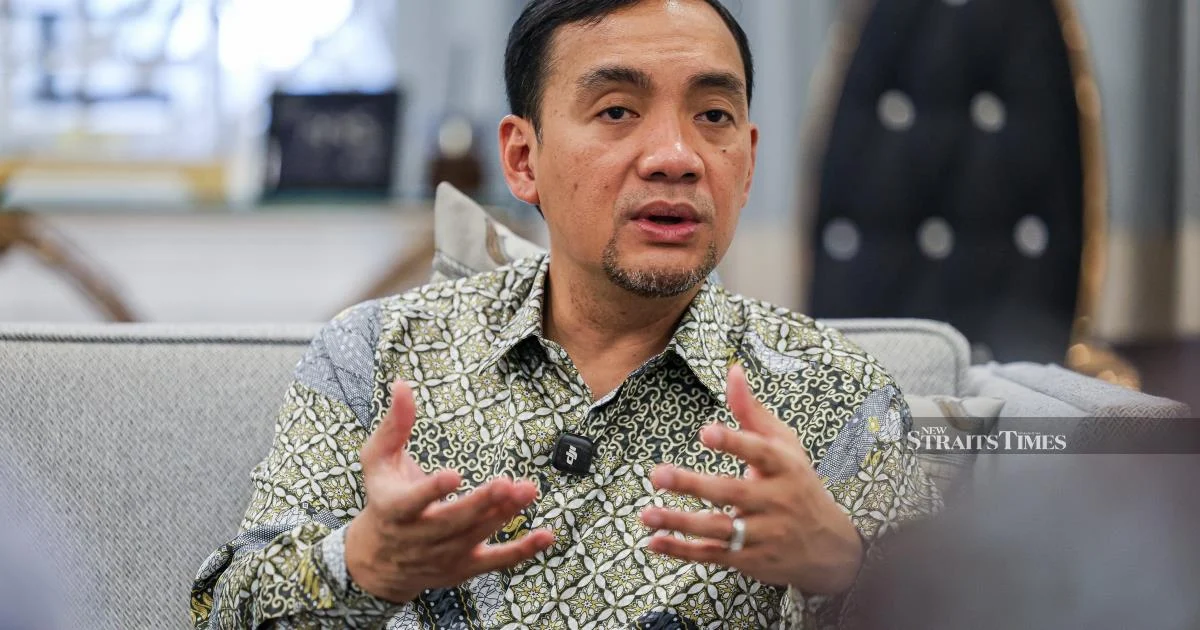
Johor's caretaker Menteri Besar Datuk Onn Hafiz Ghazi has emphatically closed the door on any possibility that Barisan Nasional might partner with DAP to establish a state government should voters return his coalition to power. Speaking in Johor Baru, the senior politician grounded his position firmly in matters of principle rather than political pragmatism, signalling that fundamental ideological differences form an insurmountable barrier to such an arrangement.
The statement represents a deliberate reaffirmation of Barisan Nasional's traditional coalition structure and reflects broader tensions within Malaysia's political landscape. By publicly rejecting DAP—a predominantly Chinese-led party with secular governance principles—Onn Hafiz appears to be reassuring Malay-Muslim voters who form the political backbone of Johor that his administration will maintain the time-honoured alliance that has anchored the state since independence. This messaging matters particularly in Johor, where communal sensitivities remain acute and where Barisan Nasional retains significant electoral strength compared to other states.
The timing of such declarations carries considerable weight in Malaysian electoral cycles. With state elections looming or recently concluded, positioning statements about potential coalition partners influence voter calculations across demographic lines. Onn Hafiz's unambiguous rejection of DAP collaboration sends a signal to conservative Malay-Muslim constituents that their interests will not be compromised through unexpected post-election political arrangements. Such assurances have proven electorally valuable in states where conservative values remain predominant in political discourse.
DAP's positioning in Malaysian politics has long been complicated by its secular, multi-racial platform and its association with progressive governance agendas. The party has sought to broaden its appeal beyond its traditional urban, non-Malay base, but it continues to face deep-rooted resistance in Malay-majority areas where religious and communal considerations heavily influence voting behaviour. Johor, despite rapid urbanisation, maintains substantial rural constituencies where traditional political alignments persist, making it precisely the sort of state where Barisan Nasional's coalition identity remains electorally protective.
Barisan Nasional itself has undergone considerable turbulence over the past decade, particularly following the 2018 general election when it lost federal power for the first time since 1957. The coalition's recovery at the 2023 general election depended significantly on reconnecting with Malay-Muslim voters who had drifted toward Perikatan Nasional. Maintaining coalition discipline and ideological clarity has become central to Barisan Nasional's reconstruction strategy, making public commitments to traditional alliance partners strategically important for the coalition's credibility.
The invocation of ideology as the primary constraint is particularly instructive. Rather than citing practical governance difficulties or administrative challenges that might characterise a cross-coalition arrangement, Onn Hafiz emphasises fundamental philosophical incompatibility. This rhetorical choice suggests that Barisan Nasional intends to compete not merely on competence or policy delivery, but on the cultural and religious preservation narratives that have historically mobilised its Malay-Muslim base. Such framing positions the electoral choice as one between distinct worldviews rather than between competing management styles.
For Malaysian federalism and state-level politics, such statements carry implications beyond Johor's immediate context. They reinforce the perception that Malaysian politics operates within distinct communal and ideological blocs that rarely merge across fundamental lines. While urban areas and particular constituencies might tolerate cross-coalition cooperation, the broader political system appears to remain structured around persistent alliance boundaries. This stability provides predictability for voters but potentially limits the flexibility that coalition politics could offer in addressing complex governance challenges requiring broader buy-in.
The rejection also reflects calculations about the next phase of Malaysia's political evolution. If Barisan Nasional consolidates its recent recovery and reestablishes itself as a dominant force federally, state-level administrations like Johor become important proving grounds for demonstrating effective governance within traditional alliance frameworks. Successful Johor administration under Barisan Nasional and its component parties becomes a template for justifying the coalition model itself as superior to alternative arrangements. From this perspective, Onn Hafiz's stance becomes not merely a local electoral statement but a contribution to a broader narrative about Malaysia's political architecture.
DAP's response to such rejections tends toward emphasising its national development credentials and capacity for effective administration, arguments that resonate in urban constituencies but struggle in contexts where cultural and religious considerations dominate political discourse. The party has demonstrated governing competence in Penang and Selangor, yet such achievements have not substantially altered communal voting patterns in Malay-majority states. This persistent divide suggests that Malaysian electoral politics continues to operate within relatively rigid bloc structures, with ideological divergence serving as both cause and consequence of limited cross-coalition cooperation.
Looking forward, Onn Hafiz's categorical rejection establishes clear parameters for post-election negotiations should Barisan Nasional secure renewal of its Johor mandate. Voters can expect governance conducted within the coalition's traditional parameters, with decision-making structures reflecting longstanding distributions of power among component parties. Whether this approach generates sufficient momentum to address Johor's pressing challenges in education, economic development, and urban planning remains a question that will ultimately determine whether ideology-based coalition loyalty translates into tangible governance success.

%22%2F%3E%3C%2Fpattern%3E%3C%2Fdefs%3E%3Crect%20width%3D%22100%25%22%20height%3D%22100%25%22%20fill%3D%22url(%23ph523ndg)%22%2F%3E%3Crect%20width%3D%22100%25%22%20height%3D%22100%25%22%20fill%3D%22url(%23ph523ndp)%22%2F%3E%3Ctext%20x%3D%2250%25%22%20y%3D%2250%25%22%20text-anchor%3D%22middle%22%20dominant-baseline%3D%22central%22%20fill%3D%22rgba(255%2C255%2C255%2C0.95)%22%20font-family%3D%22Georgia%2C%20'Times%20New%20Roman'%2C%20serif%22%20font-weight%3D%22700%22%20font-size%3D%22272%22%20letter-spacing%3D%22-0.02em%22%3EAnwar%3C%2Ftext%3E%3C%2Fsvg%3E)