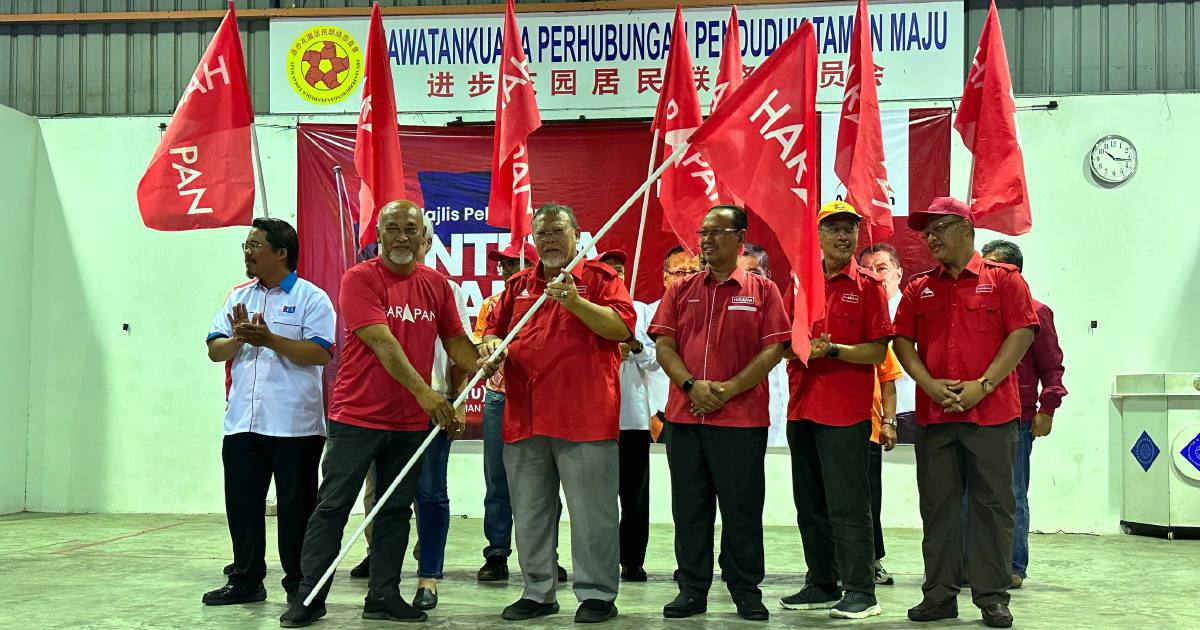
The opposition coalition party Amanah has declared ambitious targets ahead of Johor's state election scheduled for July 11, banking on substantial gains within the northern constituencies where it is mounting its strongest challenge. Officials from the party indicated at a gathering in Batu Pahat that capturing at least six seats from the ten constituencies where it has fielded candidates would represent a meaningful advance for the party's efforts in the state.
This projection reflects Amanah's confidence in its ground operations and grassroots support across the northern zone, a region that has historically been competitive and where demographic shifts and voter sentiment have created fresh opportunities for opposition formations. The party's decision to contest ten seats in this particular zone demonstrates a concentrated strategy rather than a scattered approach, allowing it to deploy resources and manpower more effectively where surveys and ground feedback suggest viability.
Johor's political landscape has undergone significant evolution over recent years, with traditional voting patterns disrupted by internal coalition dynamics and shifting public sentiment on governance issues. The northern zone, encompassing constituencies like Batu Pahat and surrounding areas, has emerged as a battleground where both ruling and opposition parties recognise competitive potential. Amanah's optimism suggests the party believes it has identified genuine openings in these constituencies where its messaging on accountability and anti-corruption resonates with voters.
The timing of Amanah's announcement carries strategic weight, as it positions the party as a consequential player in Johor politics at a critical juncture. By publicly stating concrete targets, Amanah is attempting to galvanise its supporters, attract undecided voters through demonstrated confidence, and establish credibility as a viable alternative to established coalitions. Such declarations also serve to manage expectations internally, ensuring party machinery and volunteers understand the realistic benchmarks against which performance will be measured.
For Malaysian political observers, Amanah's trajectory in Johor warrants close attention, as the state represents one of the country's largest electoral prizes and has traditionally served as a political barometer. The party's performance in this election will offer insights into opposition cohesion, the sustainability of voter dissatisfaction with incumbent administrations, and whether smaller coalition partners can translate incremental support into tangible seat gains. A significant victory in Johor would bolster Amanah's national standing and influence within broader opposition alliances.
The northern zone specifically represents demographic diversity encompassing urban, semi-urban, and rural populations with varying economic interests and priorities. Amanah's targeted approach suggests the party has conducted detailed constituency-level analysis to identify which seats align with its support base and messaging. Issues such as economic opportunities for youth, agricultural support for rural communities, and urban infrastructure likely feature prominently in campaigns tailored to individual constituencies.
Regional context adds another dimension to Amanah's ambitions. As a party with significant presence in Selangor and other states, expanding influence in Johor would strengthen its position within the broader opposition framework and potentially influence coalition dynamics at the national level. Success in Johor could translate into greater negotiating leverage in future federal arrangements and influence over portfolio allocations or policy direction.
However, achieving six seats from ten contested constituencies represents a genuine challenge requiring sustained momentum, effective campaign execution, and voter mobilisation on election day. Historical patterns show that opposition parties frequently struggle to convert polling confidence into actual electoral outcomes, particularly when facing incumbent machinery benefiting from government resources and administrative advantage. Amanah must overcome these structural disadvantages through superior grassroots organisation and compelling local narratives.
The party's public confidence also carries implicit risk, as falling short of announced targets could be portrayed as disappointment or misreading electoral conditions. Conversely, exceeding expectations would provide momentum for future campaigns and strengthen claims of ascendant political relevance. This binary outcome framework makes Amanah's declarations a significant political gamble with consequences extending beyond this single election.
For Southeast Asian political analysts, Amanah's campaign offers case study material on how smaller coalition partners navigate competitive state elections while maintaining relevance within broader political blocs. The party must balance its organisational interests with coalition requirements, potentially navigating tensions between local autonomy and coordinated opposition strategy. Its performance in Johor will indicate whether such balancing acts can yield meaningful electoral dividends.
Looking forward, the July 11 election will provide concrete data about Johor's political direction and the viability of Amanah's expansion strategy. Whether the party achieves its stated six-seat target will shape internal assessments of campaign effectiveness and inform resource allocation decisions for future contests. For Malaysian observers tracking opposition consolidation and state-level political dynamics, Johor's election represents a crucial measurement point in the country's evolving political trajectory.