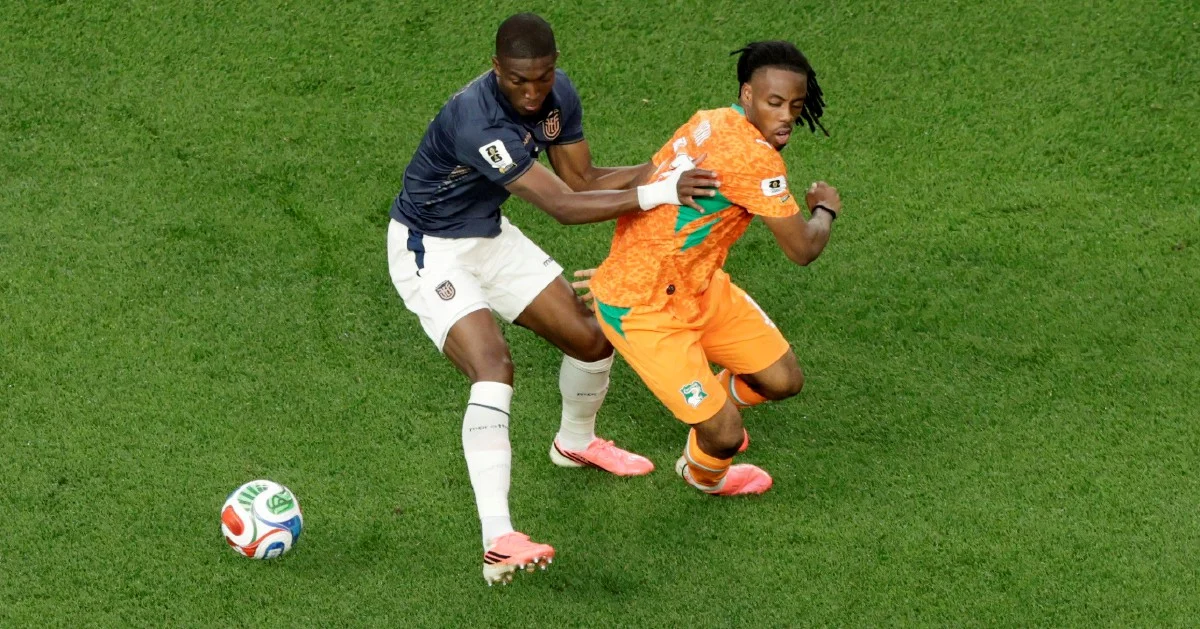
The Ivorian Football Federation has taken the unprecedented step of barring striker Elye Wahi from participating in this weekend's crucial World Cup encounter against Germany in Canada, the federation confirmed on Thursday. The decision arrives on the heels of revelations that the player has become entangled in a widening probe into potential match-fixing within French professional football, marking a significant blow to Ivory Coast's tournament preparations.
Wahi, who plays in Europe's top domestic league, found himself at the centre of an investigation into suspected corruption connected to a Ligue 1 match. The nature of these allegations remains serious enough to warrant his removal from international competition, signalling that both the French football authorities and the Ivorian federation view the matter with considerable gravity. Such interventions during major tournament windows are rare, underscoring the severity with which sports integrity violations are now treated across international football governance.
The timing of this development presents a strategic challenge for the Ivorian squad as it prepares to face Germany, a formidable opponent with considerable World Cup pedigree. Losing a key attacking player at such a critical juncture forces the team's coaching staff to recalibrate tactical approaches and elevate alternative forwards into more prominent roles. For a nation with aspirations of advancing through the group stage, such disruptions can prove costly in matches that often hinge on marginal differences in squad depth and experience.
Match-fixing investigations have become an increasingly prominent concern within European football, particularly in France's Ligue 1, where oversight mechanisms continue to evolve. The Ivorian federation's swift action to suspend Wahi reflects the international consensus that players implicated in corruption must face immediate consequences, regardless of their competitive status or importance to their national teams. This approach prioritises the integrity of global sport over short-term competitive advantage.
The French investigation suggests that illicit betting networks or other financial actors may have attempted to manipulate outcomes or specific match events for profit. Such schemes undermine the fundamental principles of fair competition and can extend far beyond individual matches, potentially compromising entire tournament structures if left unchecked. That a World Cup participant has become entangled in these allegations highlights how corruption risks permeate even the highest echelons of professional football.
For Ivory Coast, the squad adjustment demands tactical flexibility and faith in alternative personnel. The federation's handling of this situation demonstrates institutional responsibility, placing principle before expedience despite the competitive stakes involved. However, this decision inevitably raises questions about how the team will compensate for the loss of attacking depth during its German encounter.
The broader context within Southeast Asia and developing football nations is instructive. As football grows economically across the region, similar integrity threats may emerge. Malaysia and other nations watching this situation unfold may take note of how established football authorities manage corruption allegations, offering potential templates for domestic regulatory bodies to strengthen preventive measures and investigative capabilities before such problems take root locally.
From a global governance perspective, this incident exemplifies how international football bodies and national federations must coordinate swiftly when integrity concerns surface. The FIF's decision was not made in isolation but reflected broader pressure from French football authorities and implicit expectations from FIFA regarding member state conduct. Such interconnected oversight, while complex to navigate, represents an evolution in how the sport polices itself across jurisdictions.
The ramifications for Wahi personally remain substantial. Beyond immediate exclusion from the World Cup squad, his reputation and career trajectory face potential long-term damage if formal charges emerge from the investigation. Professional footballers at his developmental stage are particularly vulnerable to reputational harm, which can affect future contract negotiations, endorsement opportunities, and marketability across global clubs.
The incident also underscores how match-fixing threats extend beyond attempting to alter final results. Investigations into suspected corruption often reveal attempts to manipulate specific outcomes within matches—such as particular goal-scoring opportunities, penalty awards, or player dismissals—creating a complex web of compromised integrity that authorities must untangle. These nuanced breaches can be harder to detect and prove than outright match-rigging, yet pose equal dangers to sporting credibility.
Looking forward, this episode will likely feature prominently in discussions about football governance reforms across Africa and Europe. International federations may intensify educational programmes warning players about corruption risks and the catastrophic professional consequences of involvement, however peripheral. For Ivory Coast specifically, the squad's response to this adversity will test its mental resilience and cohesion during tournament football where psychological factors often determine outcomes.
The suspension also reflects a shifting global attitude toward sports corruption, where tolerating even tangential involvement is no longer acceptable at elite levels. As football's commercial value continues expanding, protecting competitive integrity becomes ever more crucial to maintaining public confidence and the sport's credibility across diverse markets.

%22%2F%3E%3C%2Fpattern%3E%3C%2Fdefs%3E%3Crect%20width%3D%22100%25%22%20height%3D%22100%25%22%20fill%3D%22url(%23ph523ndg)%22%2F%3E%3Crect%20width%3D%22100%25%22%20height%3D%22100%25%22%20fill%3D%22url(%23ph523ndp)%22%2F%3E%3Ctext%20x%3D%2250%25%22%20y%3D%2250%25%22%20text-anchor%3D%22middle%22%20dominant-baseline%3D%22central%22%20fill%3D%22rgba(255%2C255%2C255%2C0.95)%22%20font-family%3D%22Georgia%2C%20'Times%20New%20Roman'%2C%20serif%22%20font-weight%3D%22700%22%20font-size%3D%22272%22%20letter-spacing%3D%22-0.02em%22%3EAnwar%3C%2Ftext%3E%3C%2Fsvg%3E)