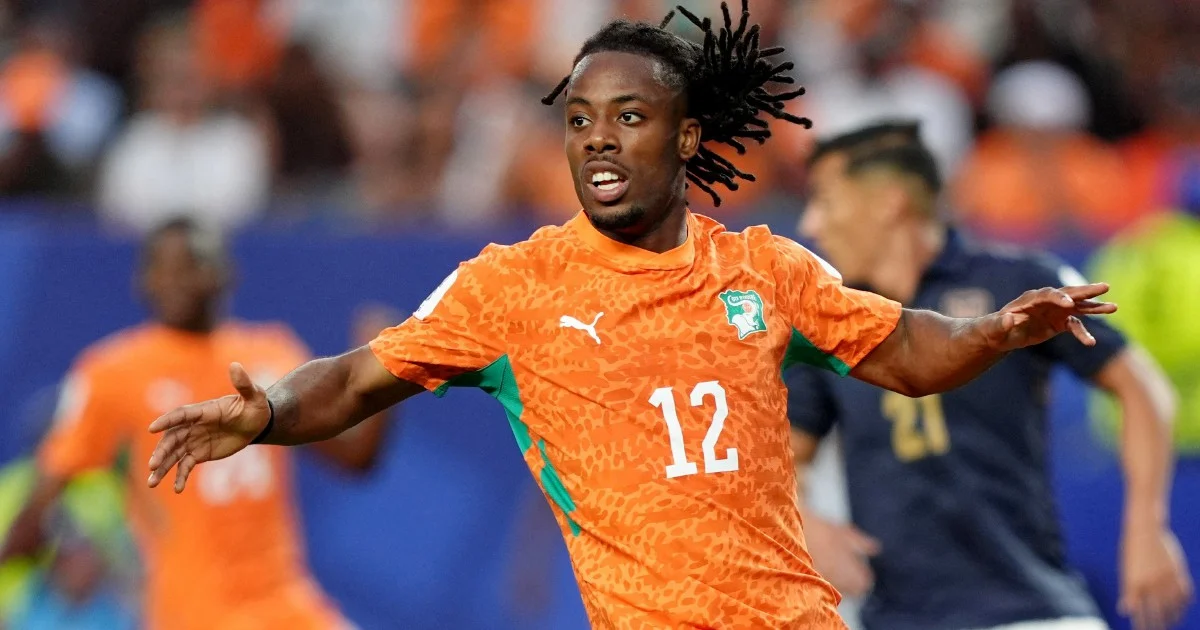
Ivory Coast striker Elye Wahi, who featured prominently in his country's World Cup triumph over Ecuador on Sunday, was detained by French authorities last month in connection with an ongoing spot-fixing investigation, according to reports emerging on Wednesday. The development casts a shadow over the African nation's recent competitive success and raises fresh questions about the vulnerability of elite football to manipulation schemes across Europe's major leagues.
The nature of spot-fixing—where conspirators arrange specific moments within a match rather than predetermined outcomes—has emerged as a particular concern for football governing bodies. Unlike match-fixing, where entire results are predetermined, spot-fixing typically involves targeting individual events such as corners, red cards, or penalty awards, making it considerably harder for authorities and broadcasters to detect. This insidious practice has infiltrated multiple European competitions over the past decade, prompting intensified monitoring by law enforcement agencies and sport integrity bodies.
French authorities launched a comprehensive investigation into alleged manipulation schemes affecting domestic football, with officers conducting dozens of arrests and detentions as part of their enforcement effort. The inclusion of an international player of Wahi's profile suggests the probe extends beyond lower-profile clubs and second-tier competitions, potentially implicating figures with significant media visibility and competitive importance. The involvement of a player active in World Cup competition demonstrates how match-fixing networks can encompass competitors at the highest levels of international football.
Wahi's role in Ivory Coast's recent World Cup encounter represents a significant detail in the unfolding narrative. As a starting forward, the player occupied a position of tactical importance, meaning any suspected manipulative activity would have direct bearing on match outcomes. The timing of the arrest—occurring in May before the World Cup fixture—suggests investigators were pursuing their enquiries independently of the player's international commitments, prioritising the investigation over any sporting calendar considerations.
Spot-fixing networks typically operate through intermediaries who approach players with financial incentives, exploiting economic vulnerabilities or personal circumstances. The schemes often involve betting syndicates based in jurisdictions with limited regulatory oversight, creating complex international dimensions that challenge law enforcement coordination. European authorities have increasingly recognised the transnational nature of such networks, necessitating cooperation between national football federations, Interpol, and domestic police forces across multiple countries.
The implications for Ivory Coast's football infrastructure merit examination. While individual player misconduct reflects personal failure rather than systemic weakness, nations with emerging football systems sometimes face elevated exposure to corruption approaches, particularly when player remuneration in domestic leagues remains modest compared to potential spot-fixing payments. This vulnerability has prompted African football bodies to strengthen integrity education and reporting mechanisms, though resources for comprehensive monitoring remain constrained across the continent.
For Malaysian and Southeast Asian readers, Wahi's detention underscores broader concerns about match-fixing vulnerability affecting Asian football. Despite significant investment in detection mechanisms, several Southeast Asian players have faced corruption allegations in recent years. The Ivory Coast case illustrates that no confederation or development level provides immunity from these schemes, with determined criminal networks continuously adapting approaches to exploit vulnerabilities wherever they perceive opportunity.
The evolution of spot-fixing as a methodology reflects criminal sophistication. Rather than attempting to control entire matches—an approach requiring coordination among multiple players and creating substantial detection risk—fixing syndicates target narrow windows where single moments can generate substantial betting returns. A corner awarded under disputed circumstances might yield odds-enhanced returns exceeding those available from predicting final scores, while involving fewer conspirators and creating reduced forensic evidence.
French football authorities face mounting pressure to demonstrate effectiveness in combating manipulation, particularly following several high-profile cases affecting Ligue 1 credibility. The Wahi investigation forms part of broader enforcement activity that has included matches across multiple divisions and ages groups. However, critics argue that reactive investigations remain insufficient without corresponding investment in technological solutions, such as real-time analytical tools monitoring unusual betting patterns across global markets.
The administrative status of Wahi's participation in subsequent Ivory Coast fixtures remains unclear. International federations traditionally maintain separation between criminal investigations and sporting eligibility determinations, though growing pressure exists to implement provisional suspensions pending investigation outcomes. This tension between due process principles and integrity protection represents an ongoing challenge for football governance structures.
Looking forward, the case may prompt renewed discussions within continental confederations regarding standardised integrity protocols. The African Football Confederation and regional bodies increasingly recognise that match-fixing represents an existential threat to competitive credibility, particularly as betting markets expand across African territories. Educational campaigns targeting young professional players about manipulation approaches and reporting mechanisms have gained momentum, though sustained commitment requires substantial financial resources.
The investigation's ultimate conclusions remain pending, with French authorities continuing their enquiries into the broader network. The uncertainty surrounding player cooperation, evidence strength, and potential sanctions will likely persist until formal charges or conclusions are announced. For Wahi personally, the experience represents a severe disruption to a promising career trajectory, regardless of investigation outcomes, given the reputational implications that accompany corruption allegations in professional sport.