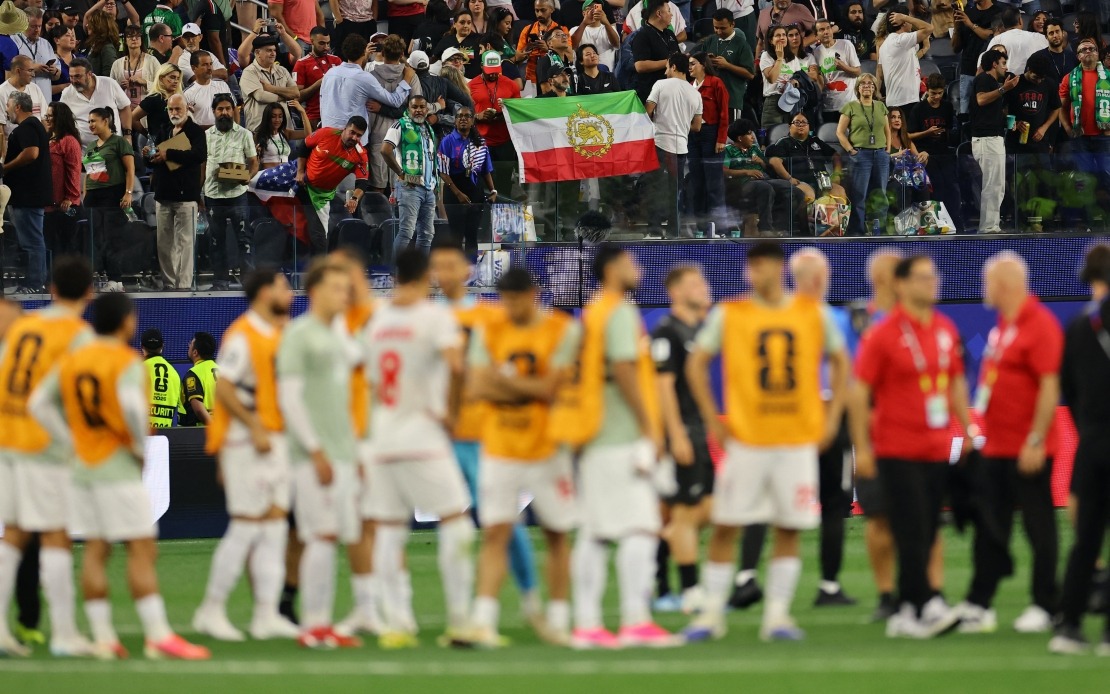
Iran's national football team has been branded the "most repressed squad in the entire World Cup" by manager Amir Ghalenoei, who disclosed that his players were instructed to vacate their Los Angeles accommodation and fly to Mexico mere hours after their opening fixture against New Zealand. The unexpected relocation disrupted the team's recovery schedule and added significant travel fatigue during a critical phase of the tournament, Ghalenoei told international sports media while speaking through an interpreter.
The coaching staff had arranged for the team to remain overnight in the California city following Monday night's match, planning a recovery session the following morning before their subsequent fixtures. However, immediately as the final whistle sounded, officials informed the squad they must depart without delay, negating any opportunity for the players to recuperate from the physical demands of international football. Ghalenoei emphasised the toll this has taken on his players, noting that excessive time spent in transit compromises their ability to prepare adequately for future matches, a significant disadvantage in a tournament where fixture congestion and recovery periods are tightly managed.
While Ghalenoei refrained from explicitly identifying the authority responsible for the abrupt departure order, Iranian captain Mehdi Taremi offered a cryptic acknowledgment that FIFA President Gianni Infantino visited the team's dressing room following the New Zealand encounter. Taremi's comments hinted at deeper geopolitical undertones, suggesting the situation involved considerations beyond straightforward logistical arrangements. His statement that "everyone knows it" and his reference to the complex relationship between the United States and Iran implied that political tensions may have influenced the decision to remove the team from American soil so rapidly.
The captain's oblique reference to the historical animosity between Washington and Tehran carries particular weight in the context of international sports diplomacy. The presence of an Iranian national team on American soil during a major sporting event carries symbolic significance for both nations, and the swift removal of the squad could reflect broader geopolitical sensitivities. Taremi's assertion that other factors beyond FIFA's control were at play suggests possible involvement of United States authorities or security considerations, though neither the Iranian delegation nor official sources have publicly confirmed such involvement.
Iran's logistical journey to secure a World Cup base encapsulates the challenges the team has faced in preparation. Initially scheduled to establish their training headquarters in Tucson, Arizona, the squad was forced to relocate their operations to Tijuana, Mexico, during late May following complications with visa processing and ground logistics. This earlier move already displaced the team's carefully planned preparation schedule, and the subsequent overnight evacuation from Los Angeles compounded these disruptions considerably. The cumulative effect of multiple relocations within a compressed timeframe places Iranian players at a structural disadvantage compared to nations enjoying stable, purpose-built training facilities.
The situation reflects the precarious position of national teams from nations with fraught international relations, particularly when competing on foreign soil. Unlike most squads that can establish permanent training bases without interference, Iran has endured successive disruptions, each eroding the stability necessary for elite athletic performance. The forced departure from Los Angeles exemplifies how geopolitical friction can penetrate sporting competition, transforming what should be neutral athletic contests into arenas where diplomatic tensions manifest indirectly.
For Malaysian observers and Southeast Asian football communities, Iran's experience offers sobering lessons about the vulnerability of international sporting events to political interference. Regional nations, several of which maintain complex diplomatic relationships with various global powers, may face analogous challenges during future tournaments. The Iranian situation demonstrates that even sanctioned international competitions are not entirely insulated from external pressures, and teams from nations experiencing diplomatic tensions may encounter unexpected obstacles that their competitors do not face.
The timing of these disruptions during the World Cup is particularly notable given that tournament performance can have profound domestic political implications for participating nations. Iran's ability to mount competitive challenges in group matches has been materially compromised by travel fatigue and inadequate recovery periods. Other teams competing simultaneously benefit from stable training environments and predictable schedules, creating an uneven competitive landscape that extends beyond tactical and athletic considerations.
From a broader Southeast Asian perspective, Iran's predicament underscores why establishing multilateral agreements and safeguards for international sports events remains important. Organisations like FIFA must develop mechanisms ensuring that geopolitical tensions do not translate into competitive disadvantages for participating nations, particularly smaller football programs that already operate with fewer resources than established football powerhouses. The incident also highlights the potential vulnerability of major tournaments when hosted by nations with existing diplomatic disputes involving participating teams.
Ghalenoei's willingness to publicly criticise the circumstances surrounding his team's treatment suggests significant frustration within the Iranian football administration. Rather than remaining silent about logistical challenges, the head coach has chosen to articulate the disadvantages his squad faces, potentially influencing international commentary about the tournament's administration and neutrality. This transparency, while admirable, also underscores the genuine difficulties Iran encountered in preparing for and competing at the World Cup.