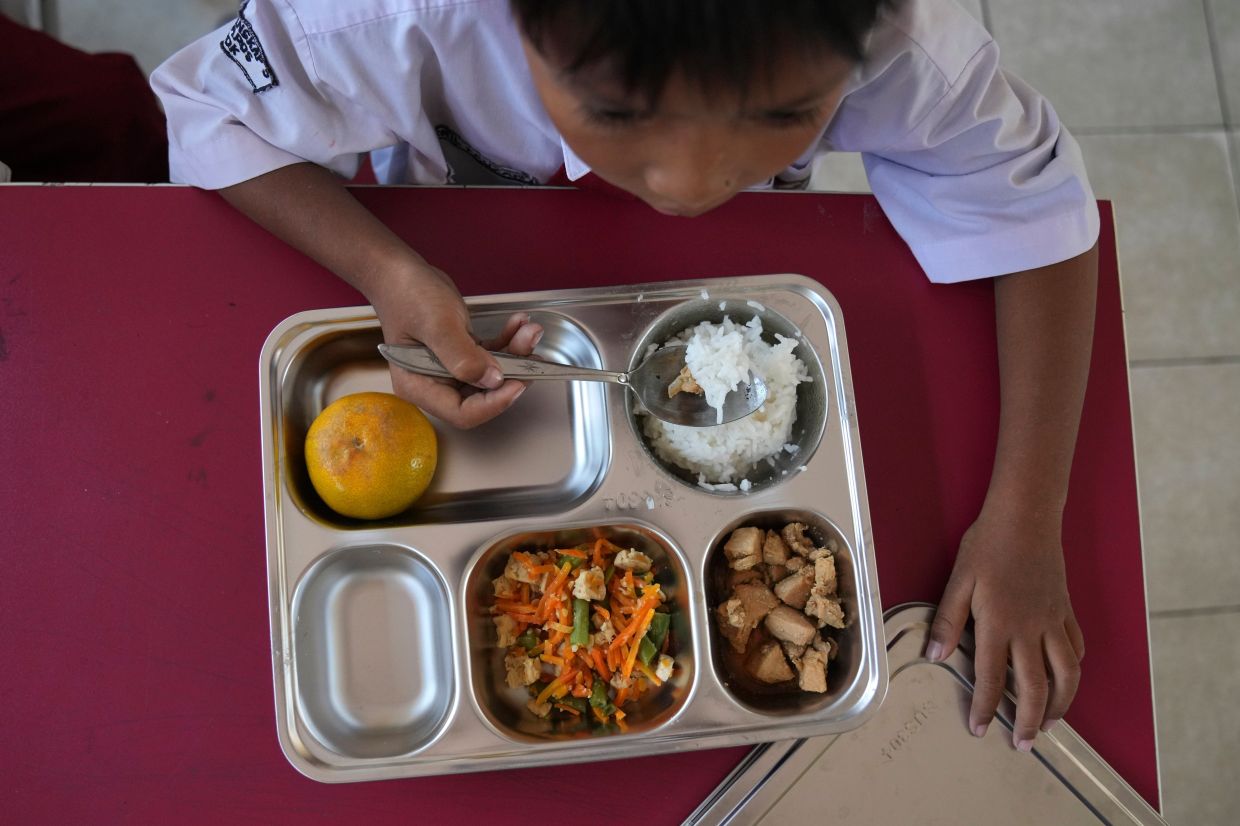
Indonesia's leading anti-corruption advocate has escalated pressure on the government to suspend President Prabowo Subianto's flagship free meals programme and expand an ongoing investigation into alleged corruption at the National Nutrition Agency responsible for its implementation. The call represents a significant challenge to one of the new administration's most visible policy commitments, which has already ensnared the agency's former chief in a graft probe just months after the programme's rapid rollout began delivering meals to more than 60 million people across the archipelago.
Wana Alamsyah, head of the law and investigation division at Indonesia Corruption Watch, has gone further than previous critics by advocating for the complete dissolution of the National Nutrition Agency, known locally as BGN. His position, articulated during recent interviews, reflects growing concern that the current investigation into Dadan Hindayana and four other detained individuals represents only the surface layer of a much deeper institutional problem. The timing of Hindayana's arrest—coming just a day after his dismissal from the agency—has fuelled speculation about whether authorities are using individual prosecutions as a smokescreen for systemic failures that extend throughout the organisation and its supply networks.
The investigation into corruption within the free meals initiative comes at a politically delicate moment for Prabowo, whose administration has staked considerable credibility on delivering tangible results for ordinary Indonesians through the roughly US$15 billion annual initiative. The programme, conceived as a mechanism for reducing malnutrition and poverty while simultaneously supporting domestic demand, has become a flashpoint for broader anxieties about fiscal management and government effectiveness. With the Attorney-General's office maintaining silence on the scope and trajectory of its investigation, significant uncertainty surrounds whether current enforcement actions will satisfy calls for institutional reform or whether they represent a contained response designed to protect the programme's fundamental structure.
Wana's intervention signals that civil society organisations are unwilling to accept surface-level accountability measures. He has specifically urged law enforcement to examine the roles of vendors and procurement committee members who have benefited from what he characterises as the agency's demonstrably poor planning and hasty implementation. This demand for comprehensive investigation reflects Indonesia Corruption Watch's earlier finding that the kitchen network underpinning the meals programme exhibits considerable vulnerability to political patronage, with ties identified between foundations running kitchens across 38 provinces and individuals including politicians, military figures, and business networks with evident conflicts of interest.
The new leadership at the National Nutrition Agency has attempted to reposition the programme through a strategic recalibration of objectives. Nanik S. Deyang, the agency's current head, has announced plans to spend less than the 268 trillion rupiah budget allocated for the year by concentrating resources in remote regions and prioritising nutritional quality over recipient numbers. This represents a deliberate retreat from the initial target of reaching 82.9 million people, acknowledging implicitly that the original scope was unsustainable or poorly designed. Deyang's declaration of a moratorium on new kitchen construction, combined with promotion of existing school facilities, suggests official recognition that the programme's infrastructure expansion proceeded without adequate planning or oversight mechanisms.
For Malaysian readers, the Indonesian experience offers instructive lessons about the risks of rapid, large-scale social programme implementation without robust institutional safeguards. The free meals initiative's vulnerability to corruption reflects familiar patterns across Southeast Asia where new agencies, operating outside established bureaucratic structures, frequently lack the institutional maturity and oversight capacity to manage substantial budgets transparently. The scale of the programme—affecting over 60 million beneficiaries—amplifies these risks exponentially, creating numerous opportunities for diversions, inflated contracts, and politically-motivated resource allocation that are difficult to detect or address once entrenched.
Public backlash against the programme has manifested in sustained protests, with police deploying more than 6,000 officers to manage demonstrations in Jakarta and major cities calling for the initiative's complete scrapping. These protests reflect not merely concerns about corruption but broader scepticism regarding whether the programme delivers promised outcomes in employment, health, and economic development. Reports of food poisoning, complaints about meal quality, and evidence of ultra-processed rather than nutritious food provision have undermined public confidence in the agency's capacity to execute its mandate competently, irrespective of whether corruption allegations are substantiated.
Economic considerations have added urgency to the controversy. Investor concerns about Indonesia's budgetary sustainability, exacerbated by rising fuel subsidy costs driven by Middle Eastern geopolitical tensions, have made the programme's massive expenditure increasingly difficult to defend at a time of fiscal constraints. Think tanks and economic observers have questioned whether allocating resources universally across all Indonesian schools represents sound policy design when concentrating investments in rural and economically disadvantaged regions might yield superior health and development outcomes. This tension between political messaging and technocratic effectiveness has become impossible to ignore as external fiscal pressures mount.
Wana Alamsyah's observation that the agency only attracted serious scrutiny following Hindayana's detention, despite widespread social media criticism and documented implementation problems throughout 2025, raises uncomfortable questions about government responsiveness and the conditions under which corruption is addressed. His characterisation of current enforcement actions as potentially serving a face-saving function—providing political cover for programme restructuring while sacrificing individual officials—suggests that institutional reform may remain insufficient without pressure from international observers, domestic civil society, and multilateral institutions concerned about governance standards.
The Centre of Economic and Law Studies and other research organisations have contributed substantial evidence of structural vulnerabilities in the programme's design and execution. A study by the Centre found that 79 percent of respondents acknowledged potential conflicts of interest in vendor selection processes, while earlier research documented risks of uneven geographical distribution, variable food quality, and budget inefficiencies. These findings, combined with Indonesia Corruption Watch's documentation of political networks embedded within the kitchen infrastructure, paint a picture of an initiative that prioritised rapid expansion over institutional capacity and accountability mechanisms.
For President Prabowo, navigating this controversy requires balancing reform impulses against political investments in the programme's continuation. His explicit warnings against corruption and pledges to prevent embezzlement carry rhetorical force but lack credibility absent comprehensive structural reforms and transparent investigation outcomes. The widening investigation, combined with sustained civil society pressure and investor nervousness, creates circumstances in which targeted prosecutions alone may prove insufficient to restore public confidence or satisfy international observers monitoring Indonesia's governance trajectory.
The unfolding crisis surrounding the free meals programme illuminates fundamental challenges confronting governments across Southeast Asia as they pursue ambitious social welfare expansions. Without pre-existing institutional capacity, transparent procurement systems, and credible oversight mechanisms, even well-intentioned initiatives become vehicles for corruption and misallocation of resources. Indonesia's experience suggests that civil society vigilance, combined with willingness to challenge official explanations and demand comprehensive rather than contained investigations, remains essential for protecting public resources and maintaining programme integrity in contexts where governance institutions remain under development.