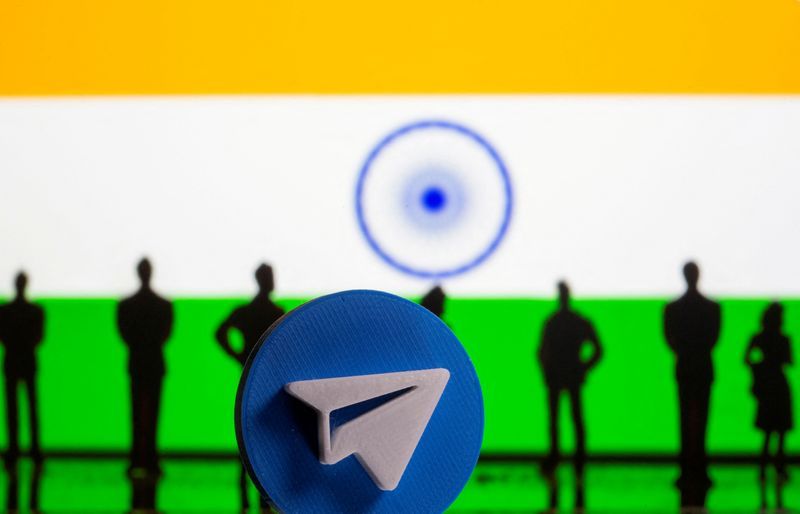
India's High Court in New Delhi has dealt a significant blow to Telegram by rejecting the messaging platform's appeal against a temporary suspension imposed this week, underscoring the government's determination to prevent exam fraud ahead of a rescheduled medical entrance examination. The ruling, delivered by Delhi High Court judge Tejas Karia on Friday, validated the Indian government's decision to block the application, finding that authorities had followed proper legal procedures and provided reasoned justification for the extraordinary step.
The context for this unprecedented action lies in a major embarrassment for India's education system. The national undergraduate medical entrance examination was originally scheduled to take place last month but had to be abandoned entirely after questions were leaked in advance. The incident raised serious questions about the integrity of the country's most competitive exam, one that determines entry to medical schools across the nation and shapes the careers of hundreds of thousands of aspirants. With reputational damage already inflicted, the government moved swiftly to prevent a repeat scenario when it announced plans to conduct a replacement test on Sunday.
The temporary suspension, which extends through June 22, was triggered by intelligence suggesting that Telegram channels were actively promoting alleged leaked questions from the upcoming exam in exchange for money. Although authorities acknowledged these particular questions might themselves be fabricated, they argued that the deception still constitutes fraud targeting vulnerable candidates who are desperate for any perceived advantage in an intensely competitive selection process. This reasoning reflects broader concerns about how digital platforms can amplify examination malpractice, a persistent challenge in Indian education.
What made this ban particularly significant was its speed and scope. Within hours of the Information Technology Ministry's announcement, Indian telecom companies along with global tech giants Google and Apple implemented the blockade, taking Telegram offline and removing it from application stores. The swiftness of implementation underscores how tightly aligned India's digital infrastructure has become with government directives, and how quickly such directives can be executed when deemed necessary for public interest. The incident has become the year's most visible confrontation between a major international technology company and the Indian state.
Telegram's position in India makes this dispute particularly consequential. The platform boasts more than 150 million users in the country, making India its single largest market globally. This dependency has given the Indian government considerable leverage, and the company's founder Pavel Durov has responded with public criticism of the ban, arguing that it penalises millions of ordinary users while doing little to prevent exam fraud, which has already migrated to alternative channels. His intervention signals how seriously Telegram views the threat to its Indian operations and market access.
The dispute between Telegram and the Indian government had been simmering for days before the ban was announced. Government officials privately pressed the messaging platform to proactively remove accounts offering purported leaked papers, expressing frustration at what they perceived as insufficient action. However, Telegram contested this characterisation in its court filings, describing the government's account of their meetings as "one-sided and inaccurate" and claiming that crucial details about the company's own proactive enforcement efforts had been deliberately omitted. According to Telegram's defence, it had already removed more than 900 links related to unlawful exam-related content, demonstrating responsiveness to the problem.
This dispute touches on a fundamental tension in the regulation of digital platforms in India and across Asia. Governments argue they must act decisively to protect public interests such as educational integrity, while technology companies contend they cannot be held solely responsible for the misuse of their platforms by users, particularly when they are taking steps to combat abuse. The Indian court's decision to uphold the ban suggests that at least in this case, the judiciary is prepared to defer to executive judgement regarding the necessity of extraordinary measures in emergencies.
For Malaysian and regional readers, the implications are considerable. India's willingness to impose a sweeping ban on a major global platform sets a precedent that other Asian governments may view as either a justified protective measure or an overreach with troubling implications for digital freedoms. The incident demonstrates how examination integrity concerns, which are genuinely pressing across Southeast Asia, can quickly translate into regulatory action that affects millions of users. It also illustrates the vulnerability of foreign tech platforms to sudden government action in large Asian markets, a concern that should resonate with users and technology policy makers throughout the region.
The broader context suggests that exam fraud facilitated through digital channels is becoming an increasingly serious problem across Asia, requiring coordinated responses that balance security with the rights and needs of ordinary users. India's approach, while dramatic, reflects desperation born of a high-stakes failure. As other countries grapple with similar challenges, they will be watching closely to see whether Telegram's ban actually prevents exam fraud or simply drives the problem underground, an outcome that will shape how governments approach platform regulation going forward.
The temporary nature of the ban through June 22 means Telegram has a narrow window to demonstrate its commitment to combating exam fraud content. However, the court's upholding of the government's action suggests that even if the company succeeds in its technical and policy responses, it faces an uncertain future in India. The government has signalled that it will act decisively if similar problems arise, and the judiciary has shown it will defer to such decisions. For a platform with such substantial Indian user base, the stakes could hardly be higher.

%22%2F%3E%3C%2Fpattern%3E%3C%2Fdefs%3E%3Crect%20width%3D%22100%25%22%20height%3D%22100%25%22%20fill%3D%22url(%23ph523ndg)%22%2F%3E%3Crect%20width%3D%22100%25%22%20height%3D%22100%25%22%20fill%3D%22url(%23ph523ndp)%22%2F%3E%3Ctext%20x%3D%2250%25%22%20y%3D%2250%25%22%20text-anchor%3D%22middle%22%20dominant-baseline%3D%22central%22%20fill%3D%22rgba(255%2C255%2C255%2C0.95)%22%20font-family%3D%22Georgia%2C%20'Times%20New%20Roman'%2C%20serif%22%20font-weight%3D%22700%22%20font-size%3D%22272%22%20letter-spacing%3D%22-0.02em%22%3EAnwar%3C%2Ftext%3E%3C%2Fsvg%3E)