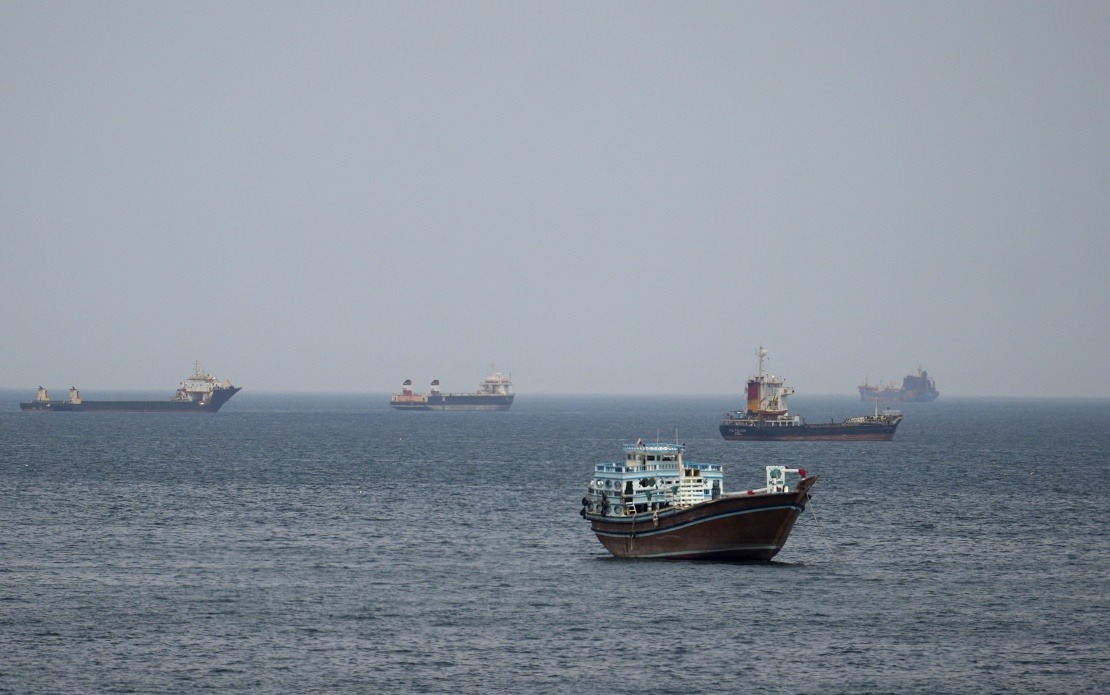
Normalcy appeared to return to one of the world's most strategically vital waterways on Thursday as an interim agreement between the United States and Iran halted active hostilities, allowing commercial shipping to resume its passage through the Strait of Hormuz. The accord, which took effect despite months of regional tension, prompted the Trump administration to lift its enforcement blockade, clearing the way for tankers to navigate the chokepoint that annually moves roughly one-fifth of global crude oil supplies. For energy markets and trading partners across Asia, including Malaysia's oil-dependent economy, the reopening of this critical maritime corridor signals potential relief from months of supply disruption and price volatility.
The immediate market response underscored investor optimism about the deal's prospects. Oil prices declined to their lowest levels since the February conflict erupted, as traders anticipated a gradual normalisation of Iranian crude exports over the coming months. This represents a substantial swing for Asian economies heavily reliant on stable energy supplies. Malaysian refiners and petrochemical manufacturers, alongside regional competitors, have endured prolonged uncertainty about feedstock availability and pricing. The potential restoration of Iranian crude to international markets could ease inflationary pressures that have rippled through Southeast Asian energy sectors and manufacturing costs.
However, the agreement brackets profound disagreements that remain unresolved between the two powers. Negotiators have been granted a 60-day window to reach consensus on Iran's nuclear programme, a matter Trump identified as justification for initiating the conflict. The deal simultaneously established a reconstruction fund valued at US$300 billion for Iran, coupled with financial incentive packages designed to facilitate further negotiations. US Vice President JD Vance, designated to head the American negotiating team, has indicated Washington intends to pursue restrictions on Iran's long-range missile capabilities—an issue equally contentious to nuclear questions and unlikely to yield swift compromise.
The rhetoric emanating from Tehran reveals deep scepticism about American intentions. Supreme Leader Ayatollah Moitaba Khamenei characterised Trump's decision to sign the accord as driven by "desperation," signalling that upcoming discussions over nuclear matters would proceed from a fundamentally adversarial posture. In a written statement, Khamenei warned that excessive American demands would encounter Iranian rejection, indicating Tehran views itself as negotiating from a position of strength. Having withstood sustained military pressure, maintained influence over critical maritime passages, and obtained sanctions relief, Iranian leadership appears unwilling to make significant concessions on its atomic programme or regional military capabilities.
Trump's original objectives when launching military operations nearly four months ago have notably gone unmet. The American president initially demanded Iran's "unconditional surrender" and articulated ambitious goals encompassing destruction of Iran's nuclear weapons programme, elimination of its capacity to threaten neighbouring states, cessation of support for allied militant organisations, and facilitation of internal regime change. The final agreement, by contrast, addresses none of these demands comprehensively. This represents a marked departure from the administration's initial maximalist position and has triggered criticism from Republican allies in Congress questioning whether excessive concessions were made to end a conflict widely unpopular with American voters.
Regional allies now scrutinise whether the ceasefire framework will endure amid ongoing violence elsewhere. Israel's continuation of military operations against Hezbollah in Lebanon casts substantial shadows over the agreement's durability. Fresh Israeli airstrikes commenced early Thursday, contradicting the ceasefire's stated objective of permanent termination of hostilities on all fronts. Lebanon's humanitarian catastrophe has intensified, with over one million civilians displaced by fighting and infrastructure devastated across the country. The persistence of Israeli operations raises fundamental questions about whether Trump can compel his wartime allies to honour commitments he has now pledged to implement.
The administration's own messaging betrays tensions over Lebanon's military situation. Trump publicly stated expectations for "a complete ceasefire on all fronts" and called for regional actors to maintain commitment to allowing diplomatic processes to unfold. Yet Israel, which remained outside formal negotiations, has explicitly rejected territorial withdrawal from Lebanon and released maps depicting an expanded occupation zone. This defiance has generated significant friction between Washington and its longtime Middle Eastern ally—a rift described as among the most severe in decades. Trump, uncharacteristically critical of Israeli military strategy, argued that attacking "the only powerful ally that I have anywhere left in the entire world" represented strategic miscalculation.
Iran's posture regarding the Strait of Hormuz reflects its strengthened negotiating position. While consenting to permit normal traffic passage during the 60-day negotiation window without charging transit fees, Tehran retained capacity to issue navigation permits and direct shipping movements through the waterway. This continued Iranian administrative authority over one of global commerce's most critical arteries signals that the agreement preserves Tehran's leverage over international energy supplies and demonstrates Iran's successful resistance to American attempts to subordinate regional maritime control.
For Malaysian policymakers and regional observers, the ceasefire's implications extend beyond immediate energy market stabilisation. Southeast Asia's trade-dependent economies confront a complex environment where geopolitical stability in the Middle East remains fundamental to maritime security and supply chain reliability. Malaysia's position as a significant maritime trading nation means the Strait of Hormuz's unobstructed operation directly affects import-export competitiveness. However, the fragility evident in the Lebanese ceasefire's implementation suggests that any broader regional settlement remains conditional, with fundamental disagreements between the parties unresolved and substantial risks of renewed confrontation if upcoming nuclear negotiations stall.
The coming 60 days will prove consequential for determining whether this interim arrangement evolves into durable settlement or merely represents a temporary pause in conflict. American and Iranian negotiators must navigate profound differences regarding nuclear programmes, missile capabilities, and regional influence—topics on which both sides have historically demonstrated inflexibility. The agreement's success hinges on whether compromise positions exist that both Washington and Tehran can accept, or whether the underlying strategic competition will resume hostilities once the current diplomatic window closes. For Asian economies watching from afar, the stakes involve not only energy security but the broader rules-based international order's capacity to manage great-power confrontation peacefully.

%22%2F%3E%3C%2Fpattern%3E%3C%2Fdefs%3E%3Crect%20width%3D%22100%25%22%20height%3D%22100%25%22%20fill%3D%22url(%23ph523ndg)%22%2F%3E%3Crect%20width%3D%22100%25%22%20height%3D%22100%25%22%20fill%3D%22url(%23ph523ndp)%22%2F%3E%3Ctext%20x%3D%2250%25%22%20y%3D%2250%25%22%20text-anchor%3D%22middle%22%20dominant-baseline%3D%22central%22%20fill%3D%22rgba(255%2C255%2C255%2C0.95)%22%20font-family%3D%22Georgia%2C%20'Times%20New%20Roman'%2C%20serif%22%20font-weight%3D%22700%22%20font-size%3D%22272%22%20letter-spacing%3D%22-0.02em%22%3EAnwar%3C%2Ftext%3E%3C%2Fsvg%3E)