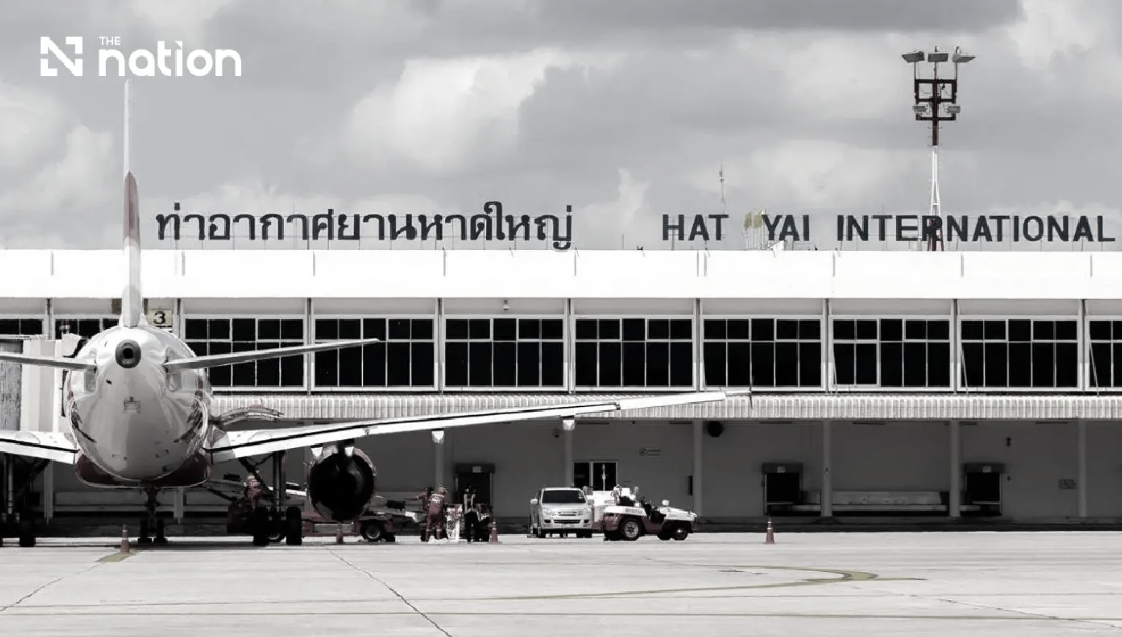
Hat Yai International Airport in Songkhla province briefly halted operations on one of its two runways after an airport fire engine was involved in an accident on Wednesday afternoon, creating a significant disruption for incoming traffic in the busy summer travel season. The temporary closure of Runway 26 lasted from 1.55pm to 4.30pm on June 17, requiring airport authorities to redirect aircraft to alternative destinations while safety teams attended to the incident zone.
The airport management issued a formal NOTAM—an aviation notice to airmen—declaring the runway temporarily unusable as a precautionary measure. Officials determined that the runway required closure to ensure the safety of both ground operations and arriving aircraft during the emergency response. The decision reflected standard aviation safety protocols, prioritising passenger security over maintaining normal flight schedules during an operational anomaly on the tarmac.
The closure immediately affected multiple inbound flights attempting to land at Hat Yai, one of Thailand's busiest regional airports serving southern provinces and Malaysian cross-border travellers. Airlines were forced to make real-time decisions about diverting aircraft to nearby Krabi Airport, which lies approximately 90 kilometres to the west. This arrangement placed additional strain on Krabi's infrastructure and created logistical challenges for passengers expecting to arrive in Songkhla province.
Flight-tracking data from Flightradar24 revealed that at least two commercial services experienced diversions during the afternoon disruption. Thai Airways International flight TG263 and Thai Lion Air flight SL712 both had to redirect to Krabi rather than completing their scheduled approaches into Hat Yai. These diversions necessitated unplanned route changes and fuel calculations, adding operational complexity for flight crews managing the unexpected routing.
Passengers booked on affected flights faced considerable uncertainty as the situation unfolded. Airlines advised travellers to maintain close contact with their service providers for updates, as flight delays and schedule modifications were likely consequences of the runway closure. Those with connecting flights or ground transport arrangements in Hat Yai found their plans significantly disrupted, requiring rapid rebooking and rescheduling efforts.
Family members and associates of passengers on these diverted flights experienced anxiety during the incident. One person attempting to obtain information from Hat Yai Airport about why aircraft were unable to land received only vague assurance that an emergency situation was unfolding, without specific explanations. This communication gap highlighted challenges airports face in balancing operational transparency with ongoing incident management.
Thailand's southern airports play a crucial role in regional connectivity, linking Malaysia, Singapore, and other Southeast Asian nations with domestic destinations. Hat Yai Airport particularly serves as a gateway for cross-border travellers between Malaysia and Thailand, making any operational disruption significant for regional commerce and tourism. The incident, though relatively brief, disrupted established travel patterns and demonstrated how ground-based accidents can cascade through airline networks.
The fire engine accident itself appeared to be an operational mishap rather than a runway infrastructure failure, distinguishing it from structural damage that might require prolonged repairs. Once airport personnel cleared the accident scene and conducted necessary safety inspections, runway operations resumed normally. This relatively quick resolution prevented extended disruption to Thursday and subsequent day operations.
For Hat Yai Airport, the incident reinforced the importance of maintaining comprehensive emergency protocols and coordinating responses across ground services. Fire and rescue operations at major airports require careful choreography to minimise runway unavailability while ensuring thorough incident assessment. The airport's decision to implement the NOTAM promptly and maintain clear closure duration expectations allowed airlines to manage diversions systematically.
Passengers who ultimately landed at Krabi instead of Hat Yai faced the practical inconvenience of alternative ground transport arrangements to reach their intended destinations in southern Thailand. The diversion added approximately 90 minutes to journeys, representing not merely a scheduling inconvenience but tangible costs for business travellers and hardship for leisure visitors with fixed accommodation check-in times.
Thailand's aviation sector continues evolving its emergency response frameworks as traffic volumes increase across regional airports. Incidents such as the Hat Yai fire engine accident serve as operational reminders about the interdependencies between ground services, runway management, and flight operations. These disruptions, while temporary, underscore the precision and coordination required to maintain safe, efficient airport operations in an increasingly congested airspace.
The resumption of normal Runway 26 operations by 4.30pm allowed Hat Yai Airport to return to standard capacity, though the afternoon's disruption had created a backlog of delayed flights requiring careful sequencing. Airlines working with airport operations teams managed the clearance of this backlog gradually, prioritising safety over speed recovery. The incident concluded without reports of injuries or major passenger incidents, though the operational disruption's ripple effects extended well beyond the three-hour window.