A collaborative initiative between Johor State Government and Harvard University is set to introduce an advanced educational programme to secondary students across the state, marking a significant step in internationalising Malaysian education at the regional level. The Programme for Scientifically-Inspired Leadership (PSIL), established by the university in 2019, will reach approximately 100 students from Sekolah Menengah Kebangsaan Tasek Utara and SMK Seri Kota Puteri 2 through Sekolah Rintis Bangsa Johor (SRBJ), according to Aznan Tamin, chairman of the Johor State Education and Information Committee.
At its core, PSIL represents a pedagogical philosophy that places active learning at the forefront of student development, complemented by instruction in critical thinking, communication skills and leadership competencies. The curriculum framework adopted by Harvard reflects contemporary global educational trends emphasising student agency and problem-solving capabilities rather than passive knowledge transmission. For Malaysian educators, this approach aligns with ongoing curriculum reforms that increasingly emphasise higher-order thinking skills and future-ready competencies.
The implementation timeline indicates a structured rollout beginning in January 2027, suggesting careful preparation and coordination between Harvard and the Johor education authorities. This extended planning horizon demonstrates the complexity of establishing international educational partnerships and the need for thorough groundwork to ensure programme quality and cultural appropriateness. The deliberate phasing of the initiative indicates a commitment to sustainability rather than superficial implementation.
Beyond the student cohort, the partnership extends professional development opportunities to 40 SRBJ teachers through dedicated workshops on active learning pedagogy. This component proves crucial for programme success, as teacher capacity represents the critical mediator between curriculum design and classroom reality. By investing in educator training, the initiative recognises that imported educational frameworks require local expertise and contextual adaptation to function effectively. Teachers equipped with interactive and creative methodologies can extend the programme's impact beyond formal structures into everyday teaching practice.
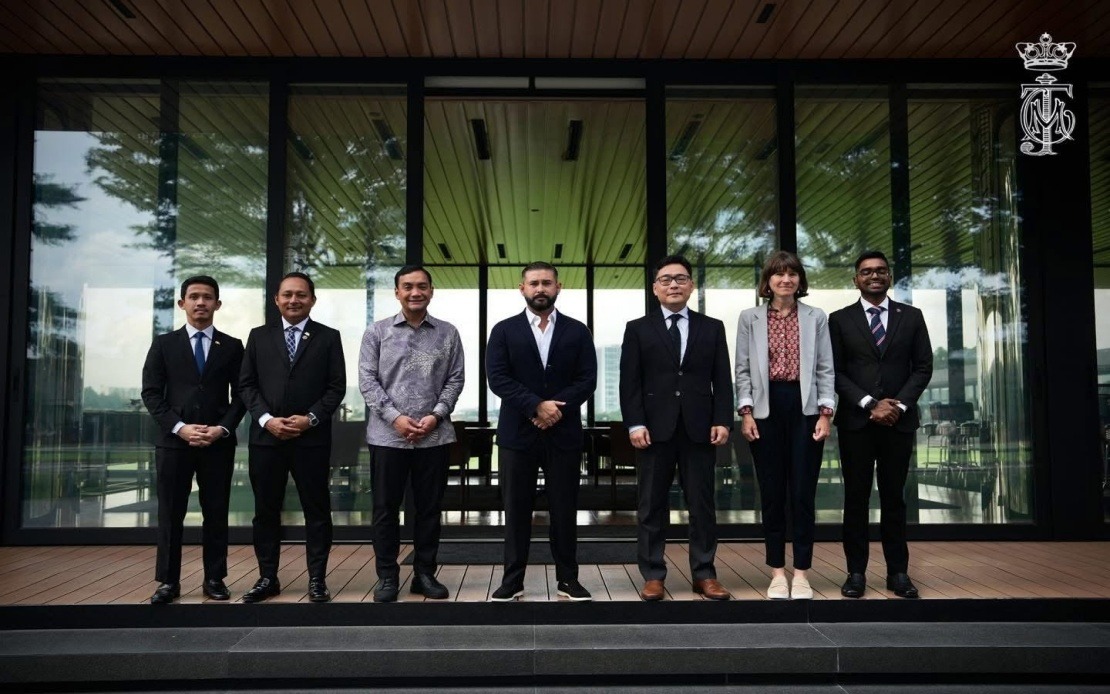
Johor's Regent Tunku Mahkota Ismail recently received a Harvard delegation comprising assistant director of Undergraduate Studies Dr Dominic Mao, who specialises in molecular and cellular biology, and Dr Andrea Wright, assistant dean of Harvard College. This high-level engagement underscores the political commitment to strengthening Johor's educational standing and positions the state as an attractive destination for international academic partnerships. Such diplomatic gestures also signal to other institutions that Johor actively pursues collaborative relationships with leading universities.
SRBJ itself maintains a distinctive educational model that balances language development with technical excellence. The institution prioritises English proficiency without diminishing Malay language competence, recognising Malaysia's bilingual reality and the importance of students maintaining cultural and national identity alongside global communication capabilities. This balanced approach distinguishes Malaysian educational philosophy from purely anglicised curricula sometimes observed in regional counterparts.
The school's emphasis on science, technology, engineering and mathematics reflects Malaysia's broader economic diversification strategy. As the nation seeks to reduce dependence on commodity exports and move up the value chain, developing a generation skilled in STEM disciplines becomes essential. Johor, home to major industrial zones and petrochemical facilities, particularly benefits from graduates capable of driving innovation and technical advancement in these sectors.
SRBJ's integration of international-standard competency assessments alongside Ministry of Education alignment demonstrates sophisticated educational governance. Rather than positioning international frameworks as alternatives to national policies, the school incorporates external benchmarking while maintaining fidelity to Malaysian educational objectives. This hybrid approach proves increasingly common among high-performing systems worldwide and suggests maturity in educational leadership.
The focus on student marketability acknowledges education's instrumental purpose in preparing young Malaysians for competitive labour markets. Beyond character development and citizenship formation, PSIL explicitly supports employability outcomes. For parents and students contemplating educational choices, this explicit connection between learning experiences and future opportunities carries considerable weight in an economically uncertain environment where skill acquisition often determines life trajectories.
For Southeast Asia more broadly, the Johor-Harvard collaboration represents expanding educational internationalisation. Regional governments increasingly recognise that world-class education attracts talented families, generates positive external publicity and builds long-term human capital advantages. Singapore's success in attracting international educational institutions has inspired emulation across the region, with Malaysian states seeking to position themselves as educational hubs attracting both students and institutional partnerships.
The programme's timing reflects post-pandemic momentum in educational innovation. Many institutions have reassessed traditional models and invested in experiential learning approaches emphasising engagement over lecture-based instruction. Harvard's PSIL sits within this broader reformation of higher-learning pedagogy filtering downward into secondary education.
Successful implementation of this partnership could catalyse broader interest among Malaysian schools in Harvard collaboration and other international partnerships. Should the initial 100-student cohort demonstrate measurable improvements in critical thinking, communication and leadership capacities, replication across other Johor schools and potentially other states becomes plausible. This demonstration effect represents perhaps the initiative's greatest long-term significance for Malaysian education.