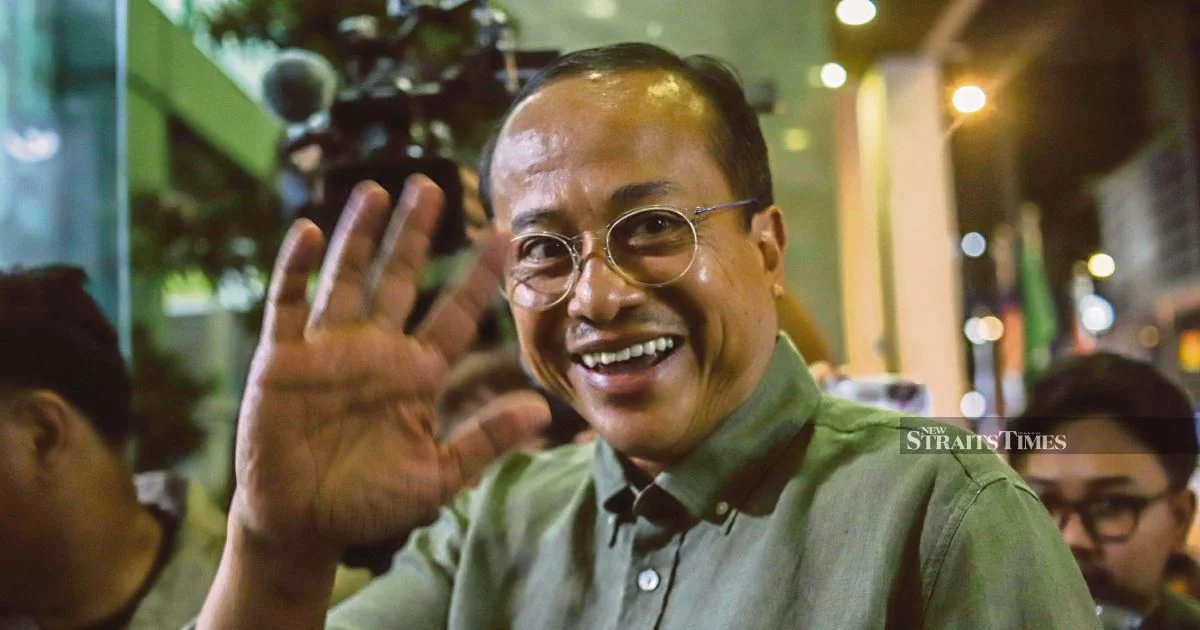
Datuk Seri Hamzah Zainudin's position as Opposition Leader in the Dewan Rakyat remains in a state of administrative limbo, with the Perikatan Nasional coalition having failed to issue formal notification to Parliament confirming his reappointment. The Larut Member of Parliament, despite expectations of his elevation following recent political developments, has yet to receive official recognition from his own coalition partners, raising questions about the clarity of leadership structures within the opposition bloc.
The absence of formal notice from PN represents an unusual procedural gap in what should be a straightforward administrative process. Parliamentary convention demands that any change in the Opposition Leader position be officially communicated to the Speaker of the Dewan Rakyat and recorded in Parliament's institutional records. This documentation serves not merely as ceremonial recognition but as a foundational element of the chamber's operational framework, determining seating arrangements, speaking protocols, and resource allocation that flow from the role.
Hamzah's situation reflects broader dynamics within PN, which comprises multiple political parties including PAS, Bersatu, and various other components. Coalition decisions of this magnitude typically require coordination among constituent parties to ensure unified messaging and procedural compliance. The delay in formalising his appointment suggests either deliberation among coalition partners or administrative oversight, both of which underscore the complexities of managing a multi-party opposition alliance in Malaysia's current political landscape.
From a parliamentary perspective, the lack of official notification creates ambiguity regarding Hamzah's standing in the chamber. While he may function operationally as Opposition Leader, the institutional weight and formal authority attached to the position remain legally incomplete without proper documentation. This distinction matters significantly when dealing with parliamentary privileges, official correspondence, and the formal recognition that accompanies the title.
The timing of this development carries implications for PN's political messaging and coherence. As the largest opposition bloc in the current Parliament, the coalition's ability to execute straightforward administrative procedures speaks to its organisational capacity and readiness for potential governance responsibilities. A coalition that struggles to formalise leadership appointments internally may face scrutiny regarding its administrative competence should broader political shifts alter the current government's composition.
For Hamzah personally, the unresolved status of his reappointment affects both his immediate authority within Parliament and his personal standing within his party. Opposition Leaders serve as primary spokespeople for their blocs, leading parliamentary questioning, articulating alternative policy positions, and representing their coalition in high-profile discussions with the government and international observers. Operating in this role without formal institutional recognition necessarily diminishes the weight and clarity of his voice.
The Malaysian political system operates within a framework of established parliamentary conventions inherited from Westminster traditions but adapted to local conditions. These conventions depend fundamentally on clear communication and formalised procedures to function effectively. When such procedures lag, it creates space for dispute and ambiguity about the legitimacy and scope of specific positions. PN's failure to immediately formalise Hamzah's appointment represents a deviation from standard practice that merits explanation to parliamentary stakeholders.
This situation also reflects the complexity of opposition politics in Malaysia, where multiple parties with distinct interests must coordinate while maintaining their individual identities. Unlike government coalitions, which are supported by established institutional machinery and civil service resources, opposition coalitions typically operate with more limited formal infrastructure. Coordinating procedural matters across multiple parties can therefore prove surprisingly challenging, particularly when decision-making requires consensus among entities with different priorities and perspectives.
Regional observers have long noted that stable opposition structures strengthen democratic accountability and provide checks on executive power. When opposition coalitions face difficulties executing basic administrative functions, it raises broader questions about their institutional stability and capacity to provide coherent alternative governance frameworks. PN's current status as the primary opposition formation means its organisational effectiveness carries implications for the broader health of Malaysia's parliamentary democracy.
The path forward likely involves PN formally notifying Parliament of Hamzah's position, an action that should have been completed as a matter of course once the coalition determined his appointment. Until such notification occurs, the situation remains technically unresolved, even if Hamzah functions operationally in the role. This gap between operational reality and formal recognition exemplifies the sometimes messy reality of Malaysian political administration, where procedures do not always align seamlessly with actual power dynamics and functional arrangements.
Forward movement on this matter depends on PN taking deliberate action to complete the notification process. This straightforward step would resolve the ambiguity, provide Hamzah with full institutional standing, and restore procedural clarity to the opposition's parliamentary presence. The coalition's ability to move quickly on this administrative matter will signal something about its internal coherence and preparedness for wider political responsibilities.