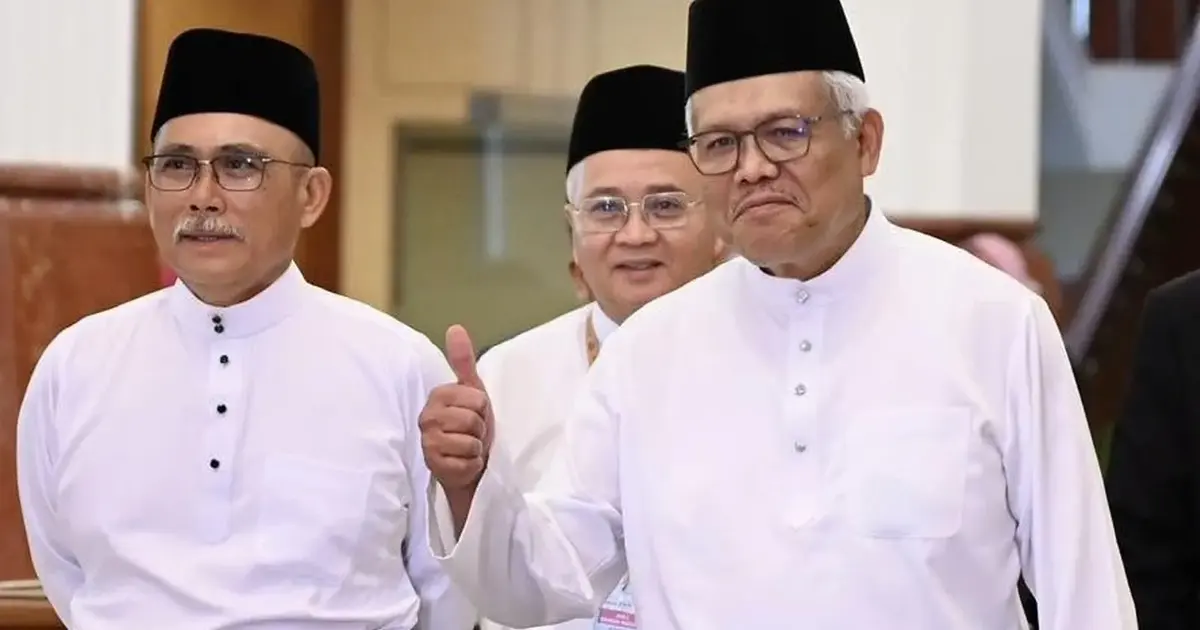
Hamzah Zainudin's appointment as opposition leader rests on a consolidated coalition of support stretching across multiple parliamentary blocs, according to remarks from a senior figure within Bersatu whose current suspension from party roles has not prevented him from commenting on high-level political developments. The Larut MP secured his position through backing that extends beyond his own party to encompass full institutional endorsement from PAS, Malaysia's largest Islamist political organisation, combined with majority support among his fellow Bersatu members in parliament.
The confirmation of Hamzah's leadership appointment carries significant implications for the parliamentary opposition's structural organisation as Malaysian politics continues to navigate the post-election period. The convergence of support from distinct parliamentary groupings—particularly the alignment of PAS with Bersatu's parliamentary wing—demonstrates the degree to which these parties have consolidated their opposition positioning. This coalition-building represents a deliberate consolidation of anti-government forces in parliament, suggesting that opposition coordination extends beyond informal consultation to structured leadership arrangements.
Bersatu's majority parliamentary caucus throwing its weight behind Hamzah reflects internal party dynamics where the substantial parliamentary delegation maintains sufficient cohesion to exercise decisive influence in selecting senior opposition representatives. The party's parliamentary strength, particularly when mobilised collectively, carries considerable weight within opposition formations. Kiandee's assertion about the scale of Bersatu support—framing it as a majority position rather than a simple plurality—emphasises that the party's MPs demonstrated consensus-building capacity rather than fractious disagreement on fundamental leadership questions.
PAS's role in providing comprehensive backing represents a critical component of Hamzah's mandate. As Malaysia's dominant Islamist political force commanding substantial parliamentary numbers, PAS endorsement signals the extent to which different ideological streams within the opposition have coordinated their leadership preferences. The bloc voting pattern Kiandee described—where PAS provided "en-bloc" support—suggests formal inter-party agreement rather than fragmented individual decisions, underlining the opposition's preference for coherent leadership structures that command genuinely broad backing.
The suspension status of Kiandee himself raises intriguing questions about Bersatu's internal management during this transition period. A vice-president speaking authoritatively on party matters despite formal suspension indicates either that certain senior figures maintain informal influence over party narratives or that suspension protocols within Bersatu do not completely isolate suspended members from participation in significant political commentary. Either interpretation suggests ongoing complexity within the party's organisational arrangements.
Hamzah's designation as opposition leader places him at the forefront of parliamentary strategy during a period when Malaysia's government commands substantial numbers. The opposition leader role carries responsibility for coordinating parliamentary responses to government initiatives, articulating alternative policy positions, and maintaining unity among disparate opposition groupings—tasks that become particularly challenging when opposition strength is dispersed across multiple parties with sometimes divergent interests. The fact that Hamzah secured explicit backing from both PAS and Bersatu majority MPs suggests parties recognised the importance of projecting unified leadership rather than allowing the position to fall into ambiguity or contestation.
The configuration of support Kiandee described represents a notable consolidation compared to scenarios where opposition leadership might be questioned or contested among the various parliamentary groups. Rather than emerging from a compromise reflecting weak consensus, Hamzah's appointment appears to derive from deliberate collective choices by substantial parliamentary delegations. This distinction matters significantly for the opposition's capacity to function as a coherent parliamentary force capable of mounting sustained challenges to government legislative programmes.
For Malaysian observers tracking opposition dynamics, the clarity of Hamzah's backing—explicitly confirmed by reference to specific party positions and numerical majorities—contrasts with periods of ambiguous leadership authority. The Larut MP enters his opposition leader responsibilities with documented support from his own party's parliamentary wing and from a major coalition partner, providing a foundation from which to build broader parliamentary effectiveness. Whether this initial consolidation translates into sustained opposition coordination depends substantially on how well different parties manage their distinct electoral interests and policy preferences within a shared opposition framework.
The statement itself, delivered by Kiandee despite his suspended status, illustrates how Bersatu leadership decisions sometimes reach the public sphere through unconventional channels. This pattern suggests the party manages internal communication challenges that extend beyond technical party management into broader strategic positioning within the opposition coalition. The willingness to have senior figures publicly confirm Hamzah's appointment indicates confidence that this leadership arrangement enjoys sufficient durability to withstand public scrutiny and potential government criticism.
Looking forward, Hamzah's leadership position depends substantially on maintaining the coalition coherence that Kiandee's remarks suggest currently exists. Opposition effectiveness historically proves constrained by the difficulty of managing multiple parties with distinct organisational interests and differing policy priorities. The backing from PAS and Bersatu provides a foundation, yet the opposition leader must navigate ongoing questions about whether minority-based opposition can translate parliamentary numbers into legislative impact on issues where government coordination permits passage of preferred legislation. Hamzah's test lies in converting his secured coalition support into tangible parliamentary achievements that reinforce opposition credibility among Malaysian voters.