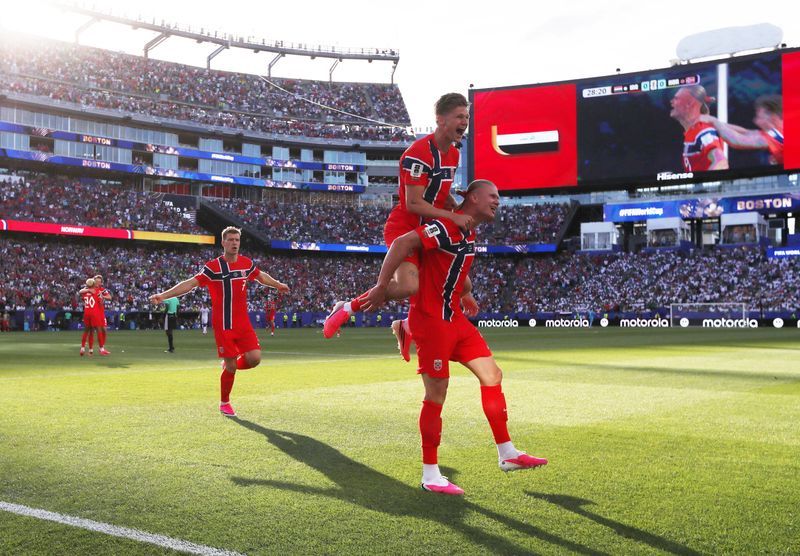
Erling Haaland wasted little time stamping his authority on the World Cup stage, delivering a commanding performance that silenced Iraq's modest resistance as Norway surged to a commanding 4-1 victory on Tuesday. The Norwegian striker's first-half brace not only provided the platform for his nation's dominant win but also extended an astonishing personal record of scoring on debut across every major competition he has joined, from the German Bundesliga to England's Premier League, the Champions League, and now the World Cup finals itself.
The significance of Haaland's contribution extended beyond the goals themselves. Entering the tournament as one of world football's most lethal marksmen, the 23-year-old carried considerable weight of expectation as his nation prepared for their first World Cup appearance in 28 years. Norway's absence from the global showpiece since 1998 meant that domestic supporters would be watching intently, and Haaland's immediate impact provided the affirmation that their team could compete at the highest level. His clinical finishing and purposeful play in the opening match demonstrated why he has become such a coveted figure in elite football.
Norway's path to victory, however, was less than straightforward despite the emphatic scoreline. Throughout the encounter, coach Stale Solbakken's side struggled to maintain consistent control, with numerous turnovers and wayward passing threatening to undermine their dominance in terms of possession and territory. The Iraqi defence, while ultimately overwhelmed, created sufficient problems during the first half to suggest that tactical discipline would need considerable improvement before Norway faced stiffer opposition later in the tournament.
Haaland's opening goal arrived through a textbook example of predatory instinct. David Moller Wolfe delivered a precise cross into the box, and the striker pounced with the instinctive movement that has made him such a consistent scorer at the highest level. His second goal proved even more demonstrative of his hunger and work ethic. By pressing the Iraqi defence aggressively, Haaland forced a panicked back-pass that left the goalkeeper vulnerable; his immediate reaction to block the subsequent clearance attempt meant the ball cannoned into the net. Together, these two finishes showcased the full range of his capabilities—both the positioning and timing of an elite poacher and the relentless pressure that forces opponents into costly mistakes.
The Norwegian team's entire tactical framework appeared to revolve around creating opportunities for their star striker. As Prime Minister Jonas Gahr Stoere had noted on the eve of the match, while individuals score goals, collective effort wins matches. The prevailing strategy within the squad was straightforward: construct the game so that Haaland could exploit the spaces offered and convert chances with his exceptional efficiency. Nevertheless, execution fell short of this blueprint in patches, particularly in midfield, where captain Martin Odegaard proved surprisingly subdued, struggling to provide the creative spark typically expected from his position.
Defensive fragmentation also momentarily blemished Norway's performance. Iraqi forward Aymen Hussein's goal, which briefly threatened to make the contest competitive, exposed a lapse in concentration and spatial awareness. The opposition's ability to pull one back, however briefly, served as a reminder that international football at World Cup level demands sustained intensity across all 90 minutes, a lesson unlikely to be lost on Solbakken and his staff as they prepare for subsequent group matches.
Norway's position atop their group, accumulated through three points from this opening fixture, provided an encouraging foundation for the remainder of their campaign. Notably, they held a marginal advantage over France—who had dispatched Senegal 3-1 in their own group opener—on goal difference alone, a reminder of how tightly contested international tournaments can be even in their opening stages. This slender margin underscored the importance of capitalizing on early momentum while maintaining the offensive potency that Haaland's presence provides.
Yet the Norwegian striker himself sounded a note of caution regarding the performance, acutely aware that the standard on display, despite the convincing margin of victory, would require substantial elevation to compete effectively throughout the tournament. His measured assessment reflected the maturity of someone who has performed consistently across Europe's most demanding competitions and recognizes the gap between comfortable first-match victories and sustained excellence in knockout football.
For Norwegian supporters, particularly those watching from the winter darkness back home, the victory represented vindication for their nation's football project. Following a quarter-century absence from the World Cup, the emphatic opening win provided immediate cause for celebration and optimism. Haaland's contribution—delivered with the understated confidence that has become his trademark—offered tangible evidence that the long wait could be rewarded with a deep tournament run. As the striker himself reflected afterwards, with characteristic grace and a knowing smile at the time difference that separated his celebrations from those erupting across Norway, the perfect start had been achieved, and the nation's football faithful could indeed look forward to extended festivities.