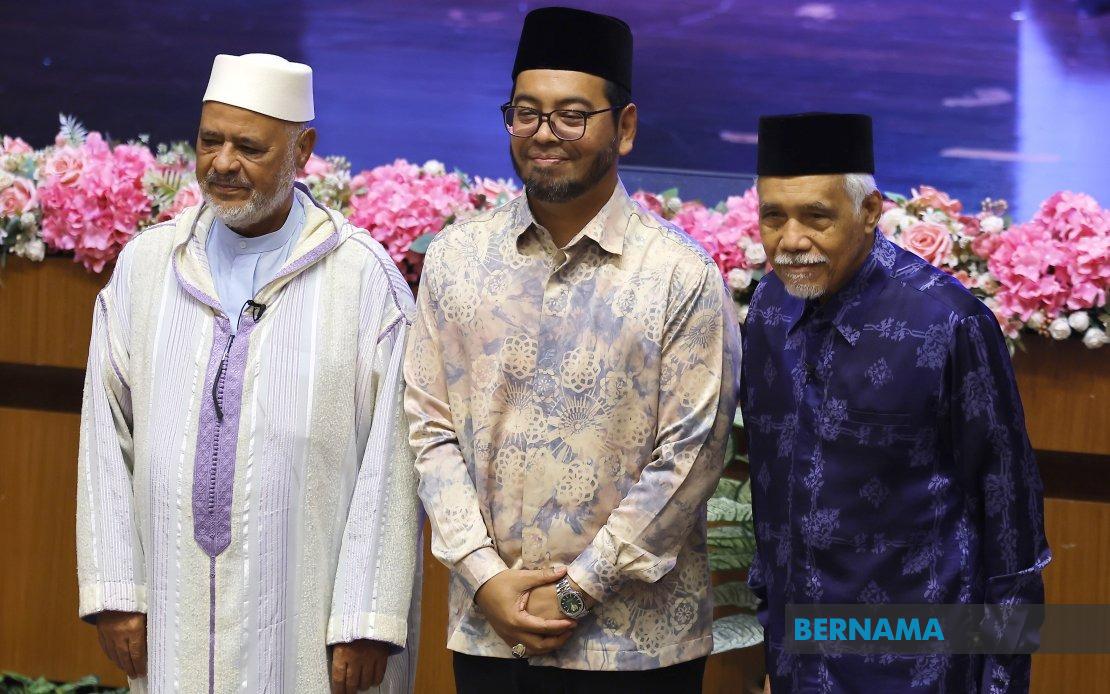
The Prime Minister's Department (Religious Affairs) has introduced a new Maal Hijrah Lecture Series designed to expand public access to the intellectual contributions of Islamic scholars recognised both domestically and on the world stage. The initiative represents a deliberate shift in how Malaysia's religious establishment approaches knowledge dissemination, moving away from a model where scholarly insights remain confined to university lecture halls and specialist circles. By broadening the reach of these ideas across diverse layers of Malaysian society, the government aims to democratise access to informed Islamic perspectives.
Dr Zulkifli Hasan, the Minister in the Prime Minister's Department (Religious Affairs), unveiled the series at an official ceremony in Putrajaya, emphasising that prominent thinkers and their contributions should not remain sequestered within restricted forums. His remarks underscored a fundamental principle: that valuable intellectual discourse benefits society most when it engages the widest possible audience rather than serving narrow institutional interests. The minister's vision suggests recognition that Malaysian society stands to gain from exposing ordinary citizens to the nuanced thinking of established scholars rather than allowing their work to circulate only among specialists.
The timing and scope of the lecture series also reflect broader strategic considerations within Malaysia's religious affairs apparatus. By launching this initiative now, the government is positioning itself as an active curator and facilitator of Islamic thought, rather than a purely regulatory body. This approach has potential implications for how religious discourse develops in Malaysia, potentially encouraging more structured public engagement with serious Islamic scholarship as opposed to ad hoc or informal religious communication. The series focuses specifically on the Maal Hijrah 1448H/2026 cohort of recognised figures, creating a framework that can be replicated annually or biennially.
The initiative has already garnered institutional support from key universities, demonstrating broad acceptance among Malaysia's academic establishment. Both Universiti Sains Islam Malaysia (USIM) and International Islamic University Malaysia (IIUM) have provided positive feedback and indicated willingness to participate. This university involvement is significant because it creates formal infrastructure for delivering lectures, managing content, and ensuring scholarly rigor. By anchoring the series within established academic institutions, the government increases credibility and reach simultaneously.
Minister Zulkifli indicated that plans exist to expand partnerships beyond the current university participants. Engaging additional institutions across Malaysia would multiply access points for lectures and extend the series' geographic footprint. For regions outside major urban centres, this expansion could prove particularly valuable, potentially bringing perspectives from acclaimed scholars to audiences otherwise limited to locally-sourced religious instruction. The scalability aspect suggests this is envisioned as a long-term program rather than a one-off event.
The lecture series also carries an ambition that extends beyond the Muslim community specifically. Minister Zulkifli expressed hope that the thoughts of Maal Hijrah figures would resonate with non-Muslim Malaysians as well, indicating an interfaith dimension to the initiative. This framing positions Islamic scholarship not as insular knowledge but as potentially enriching for all Malaysians regardless of religious affiliation. Such an approach aligns with Malaysia's multicultural character and could contribute to wider societal understanding of Islamic intellectual traditions.
Two distinguished scholars received recognition as Maal Hijrah figures at the accompanying national celebration held at Masjid Putra. Emeritus Professor Osman Bakar, the rector of IIUM, was named the national Maal Hijrah figure, while Prof Sheikh Dr Ahmad Al-Raysuni, a prominent Islamic jurisprudence expert from Morocco, received the international designation. Both were honoured by the Sultan of Perak, Sultan Nazrin Shah, who presented cash prizes, trophies, and certificates of appreciation. These selections underscore how the program bridges national and international Islamic scholarship, connecting Malaysian institutions with the broader Muslim world.
Osman Bakar's selection is particularly noteworthy given his position leading one of Malaysia's premier Islamic universities. His recognition validates the intellectual leadership of Malaysian institutions while simultaneously honouring an academic who has engaged across interfaith and international networks. Ahmad Al-Raysuni's selection from Morocco emphasises the program's international character, suggesting Malaysia is engaging with diverse Islamic schools of thought rather than limiting recognition to a single tradition or geographic region.
The Maal Hijrah Lecture Series must be understood within Malaysia's evolving relationship with Islamic knowledge production and dissemination. Historically, religious instruction in Malaysia has operated through mosques, Islamic schools, and religious departments. This new initiative suggests government recognition that contemporary knowledge-sharing demands additional channels and greater systematisation. The series potentially addresses perceived gaps where the public lacks accessible forums for encountering sophisticated Islamic thought.
For Southeast Asian readers, the initiative carries broader regional implications. Malaysia's approach to institutionalising Islamic scholarship dissemination could influence how neighbouring countries structure their own religious education and public engagement. If successful, the Maal Hijrah Lecture Series might model how Muslim-majority nations can balance religious instruction with intellectual rigour while maintaining governmental coordination.
The collaboration model outlined by Minister Zulkifli, involving government departments, universities, and international partners, suggests a sophisticated understanding of how knowledge circulates in contemporary society. Rather than relying solely on traditional media or institutional hierarchies, the series attempts to leverage multiple platforms and institutions simultaneously. This multi-channel approach acknowledges that different audience segments prefer different formats and venues for engaging intellectual content.
Looking forward, the success of the Maal Hijrah Lecture Series will partly depend on how effectively it markets itself to target audiences and how well participating institutions translate scholarly content into accessible formats for non-specialist audiences. The challenge lies not merely in bringing scholars to broader platforms but in ensuring their ideas resonate meaningfully with audiences outside academic training. How the government evaluates impact—whether through attendance metrics, media coverage, or public feedback—will shape the program's evolution.
Ultimately, the Maal Hijrah Lecture Series represents an intentional effort to position Islamic scholarship as a public resource rather than an elite concern. By creating formal mechanisms for dissemination and enlisting major universities as partners, Malaysia's Religious Affairs Ministry is asserting that informed Islamic perspectives belong in public discourse. Whether this initiative achieves its ambitious goals of mainstream engagement and cross-community appreciation will become apparent as the lecture series gains momentum throughout 2026 and beyond.

%22%2F%3E%3C%2Fpattern%3E%3C%2Fdefs%3E%3Crect%20width%3D%22100%25%22%20height%3D%22100%25%22%20fill%3D%22url(%23ph523ndg)%22%2F%3E%3Crect%20width%3D%22100%25%22%20height%3D%22100%25%22%20fill%3D%22url(%23ph523ndp)%22%2F%3E%3Ctext%20x%3D%2250%25%22%20y%3D%2250%25%22%20text-anchor%3D%22middle%22%20dominant-baseline%3D%22central%22%20fill%3D%22rgba(255%2C255%2C255%2C0.95)%22%20font-family%3D%22Georgia%2C%20'Times%20New%20Roman'%2C%20serif%22%20font-weight%3D%22700%22%20font-size%3D%22272%22%20letter-spacing%3D%22-0.02em%22%3EAnwar%3C%2Ftext%3E%3C%2Fsvg%3E)