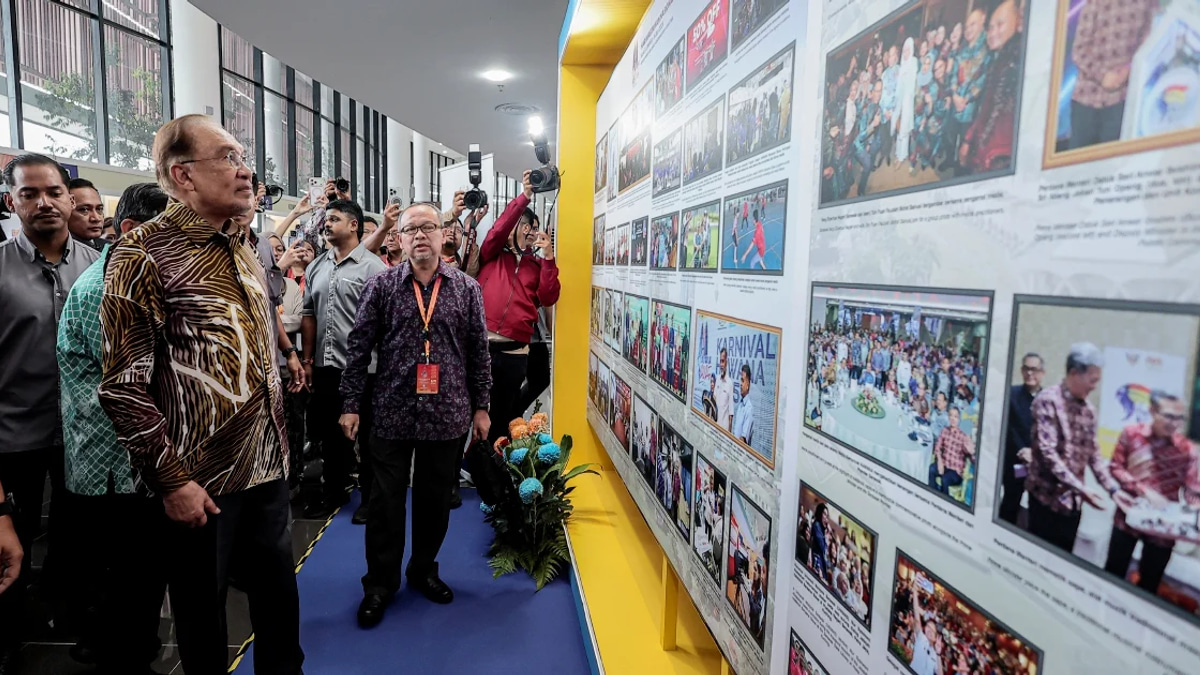
Prime Minister Datuk Seri Anwar Ibrahim has unveiled plans for Malaysia's government-linked investment companies to significantly deepen their financial commitments to Bumiputera-controlled enterprises, pledging RM2 billion in fresh capital allocation for 2026. This substantial injection represents a dramatic escalation from the RM1.3 billion channelled through these institutions during the preceding year, signalling a renewed policy emphasis on strengthening indigenous business participation across the economy.
The shift underscores the government's strategic pivot toward bolstering Bumiputera entrepreneurship at a time when calls for meaningful economic empowerment of Malaysia's indigenous communities have intensified. By mandating GLICs to expand their exposure to Bumiputera ventures, the administration aims to democratise access to patient capital and institutional expertise that historically concentrated in larger, better-connected corporations. The 54 percent year-on-year growth in commitment reflects not merely budgetary adjustment but a deliberate repositioning of how federal instruments allocate resources to support homegrown enterprise.
GLICs, encompassing entities such as Khazanah Nasional, Employees Provident Fund, and various sectoral investment vehicles, command substantial financial firepower within Malaysia's capital markets. These institutions function as keystones in the national investment architecture, deploying retirement savings, sovereign wealth, and development funds. Their strategic decisions to prioritise Bumiputera allocation sends powerful market signals that reverberate through banking relationships, supplier networks, and investor sentiment. When these anchors commit capital at scale, they create demonstration effects that encourage private-sector investors to follow suit.
The timing of this announcement carries particular significance given Malaysia's ongoing efforts to narrow wealth gaps and address persistent questions about equitable economic participation. Policy initiatives targeting indigenous business access have oscillated between protective measures and liberalisation frameworks over decades, generating periodic friction between inclusionary objectives and market-efficiency considerations. By framing the RM2 billion commitment as a proactive enhancement rather than a defensive protection, the government positions Bumiputera investment as a growth opportunity rather than a welfare provision, subtly reshaping the narrative around affirmative economic action.
Sectors likely to benefit from expanded GLIC investment span manufacturing, services, technology, and emerging green industries. Government-linked institutions increasingly recognise that Bumiputera enterprises, when properly capitalised and connected to supply chains, deliver competitive returns while simultaneously advancing social objectives. This dual mandate—financial viability coupled with community development—distinguishes GLICs from purely commercial investors, allowing them to take longer-term positions in enterprises requiring patient capital during growth phases.
The RM700 million increase warrants contextualisation within Malaysia's broader investment landscape. While the absolute figure appears modest against total GLIC portfolios exceeding RM300 billion, the proportional commitment signals genuine priority elevation. For Bumiputera entrepreneurs navigating capital-raising challenges, the visibility of government backing often unlocks secondary financing from commercial banks and private equity, amplifying the actual economic impact beyond the initial allocation. A RM2 billion GLIC commitment may catalyse RM5 billion to RM10 billion in total enterprise development spending.
Implementation mechanisms deserve scrutiny. Whether GLICs deploy capital through direct equity stakes, quasi-equity instruments, venture capital funds, or infrastructure-linked vehicles shapes outcomes significantly. Direct co-investment with private partners diffuses risk while building institutional capacity within Bumiputera firms. Conversely, passive fund allocation without accompanying governance involvement may generate paper returns without substantive capability transfer. The administration's success hinges partly on how rigorous GLIC investment committees apply due diligence and how effectively they balance portfolio performance against developmental objectives when competing priorities emerge.
For Malaysian-Chinese and Malaysian-Indian business communities, the heightened GLIC focus on Bumiputera ventures inevitably reshapes competitive dynamics. Rather than generating zero-sum rivalry, integrated value chains—where Bumiputera enterprises anchor primary activity while non-Bumiputera suppliers and service providers participate as extensions—can expand overall opportunity. Singapore and other regional peers have demonstrated that targeted support for historically marginalised groups, when coupled with market disciplines, elevates entire ecosystem productivity rather than cannibalising other communities' prospects.
Regional competitiveness considerations also inform the policy calculus. Indonesia and Thailand have experimented with comparable state-backed venture investment frameworks targeting indigenous enterprises. Malaysia's increased GLIC allocation positions the country competitively within Southeast Asia's entrepreneurial landscape, signalling to international investors that the government maintains institutional mechanisms to develop domestic champions capable of global competition. This dimension extends beyond domestic racial policy into regional economic positioning.
The RM2 billion commitment tests whether government-linked institutions can operate with genuine commercial discipline while advancing social mandates. Historical Malaysian experience shows that politically-directed investment sometimes prioritises speed of deployment over investment quality, creating underperforming assets and wasted capital. Credible implementation requires transparent governance frameworks, professional fund management insulated from patronage pressures, and honest assessment of failed investments alongside celebrated successes.
For Bumiputera entrepreneurs, access to RM2 billion in capital constitutes only partial solution to competitiveness challenges. Equally critical are human capital development, technology adoption, market access, and regulatory environments that reward efficiency. GLICs channelling capital without concurrent support for operational excellence may generate asset inflation rather than genuine productivity enhancement. The administration's parallel investments in vocational training, digital infrastructure, and regulatory modernisation therefore warrant as much attention as headline capital commitment figures.
Moving forward, monitoring how these funds deploy across geographic regions and enterprise scales will illuminate whether the policy genuinely broadens opportunities or concentrates benefits among well-connected elites already positioned to access institutional capital. Transparent reporting on deployment rates, sectoral distribution, and performance metrics enables accountability and course correction. The RM2 billion commitment signals intention, but implementation discipline determines whether the initiative delivers transformative impact or merely represents another cyclical funding episode in Malaysia's complex engagement with indigenous economic empowerment.