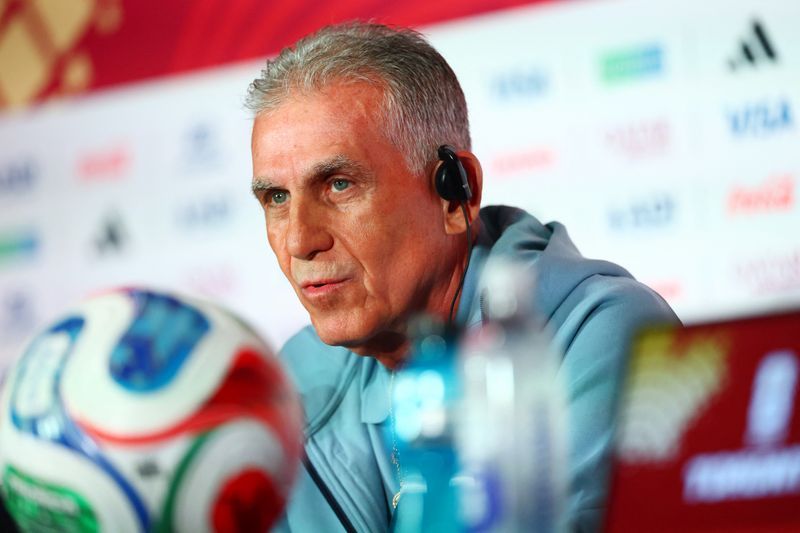
Ghana's preparation for their World Cup Group L encounter against Panama at Toronto Stadium entered a state of uncertainty on Tuesday as a Canadian federal court considered an appeal against the country's decision to deny midfielder Thomas Partey entry. Coach Carlos Queiroz, however, sought to project a sense of readiness that transcended the complications surrounding the Villarreal player, who faces legal allegations in Britain that he has consistently denied.
The timing of the appeal hearing, occurring just one day before the scheduled fixture, underscored the compressed timeline facing Ghana's coaching staff. Queiroz responded to the situation with a pragmatic demeanor befitting a coach of his experience and stature. Rather than dwelling on the uncertainties beyond his control, he framed the team's approach around adaptability and the roster of players already at his disposal. His assertion that Ghana possessed contingency plans reflected both the professionalism of a major World Cup contender and the realities of international football at the highest level, where circumstances often demand last-minute tactical recalibrations.
The allegations against Partey, encompassing rape and sexual assault charges in the United Kingdom, formed the substantive basis for Canada's initial refusal to permit his entry. The midfielder's legal position remains that he is innocent of all charges, a stance maintained throughout the proceedings. For Ghana's federation and coaching staff, the situation presented a delicate diplomatic and sporting challenge, as they sought to pursue justice through legal channels while maintaining focus on competitive objectives.
Queiroz's philosophy during the press conference became apparent when he deliberately sidestepped elaboration on the Partey matter, indicating that his role centred on tactical preparation rather than commentary on peripheral controversies. His statement that "to add more comments about issues that are nonsense is not part of my business" reflected both frustration with the distraction and a determination to maintain professional boundaries. This approach proved consistent with his declaration that he would work with "the cards that I have in front of me," a diplomatic way of signalling the team's readiness to proceed under whatever circumstances eventuated.
Regarding Panama, Queiroz offered measured respect for an opponent he characterised as well-organised and possessing substantial experience on the international stage. However, this acknowledgment of Panama's structural strengths did not translate into pessimism about Ghana's prospects. The 73-year-old coach articulated confidence in identifying weaknesses within the Panamanian setup and deploying strategic solutions to neutralise their capabilities. His assessment suggested Ghana possessed multiple dimensions of competitive advantage, including speed, technical skill, physical strength, and one-on-one tactical acumen.
The coach's remarks about Ghana's own attributes revealed a team conscious of its strengths whilst maintaining realistic expectations. His emphasis on experience, quality, speed, and skill suggested a balanced understanding of the squad's composition. Rather than relying upon a singular dimension—be it possession-based football, defensive solidity, or counter-attacking prowess—Queiroz appeared to be constructing a holistic tactical framework capable of functioning across multiple scenarios and against varied opposition styles.
One issue that attracted Queiroz's critical attention during the press conference centred on FIFA's newly implemented mandatory hydration breaks during World Cup matches. These interruptions to play had generated substantial debate amongst international coaches and players regarding their efficacy and true motivations. Rather than offering immediate judgment, Queiroz advocated for a comprehensive integrity assessment once the tournament concluded. His concern extended beyond the surface-level rationale of player protection to encompass broader institutional considerations regarding FIFA's decision-making processes.
The coach's call for an integrity report reflected deeper scepticism about whether the hydration break innovation genuinely prioritised athlete welfare or instead served commercial and marketing imperatives. This distinction carries significance for the competitive integrity of matches, as decisions that ostensibly address health and performance concerns but actually serve peripheral interests undermine the authenticity of the sporting contest. For coaches managing teams across different climatic zones and fixture densities, understanding the true motivations behind such rules becomes essential for tactical planning and long-term strategic thinking.
Queiroz's comments touched upon a broader discourse within international football regarding the escalating commercialisation of the sport and the tension between administrative decisions framed in humanitarian terms and their actual impact on competition dynamics. His articulate scepticism, grounded in legitimate coaching experience, represented a counterpoint to uncritical acceptance of FIFA's stated justifications. For Southeast Asian observers and coaches, this debate carries particular resonance given the climatic challenges that tropical and subtropical nations face during international competitions, where hydration and heat management assume heightened importance.
The immediate context of Ghana's preparation for the Panama match therefore encompassed multiple layers of complexity extending well beyond straightforward tactical analysis. The unresolved Partey situation, institutional questions about FIFA regulations, and the concrete necessity of securing three points all converged upon a single fixture. Queiroz's composure and strategic framing suggested an experienced operator comfortable navigating ambiguity and maintaining focus on controllable variables.
The coming match would provide a test not merely of Ghana's tactical sophistication or individual player quality, but also of the team's psychological resilience and adaptability. Whether Partey ultimately gained entry to Canada or remained unable to participate, Ghana's performance would reflect the depth of Queiroz's preparation and the squad's capacity to function effectively under pressure. For regional football observers, the encounter offered insights into how established African football powers navigate the contemporary complications of international football at its highest level.