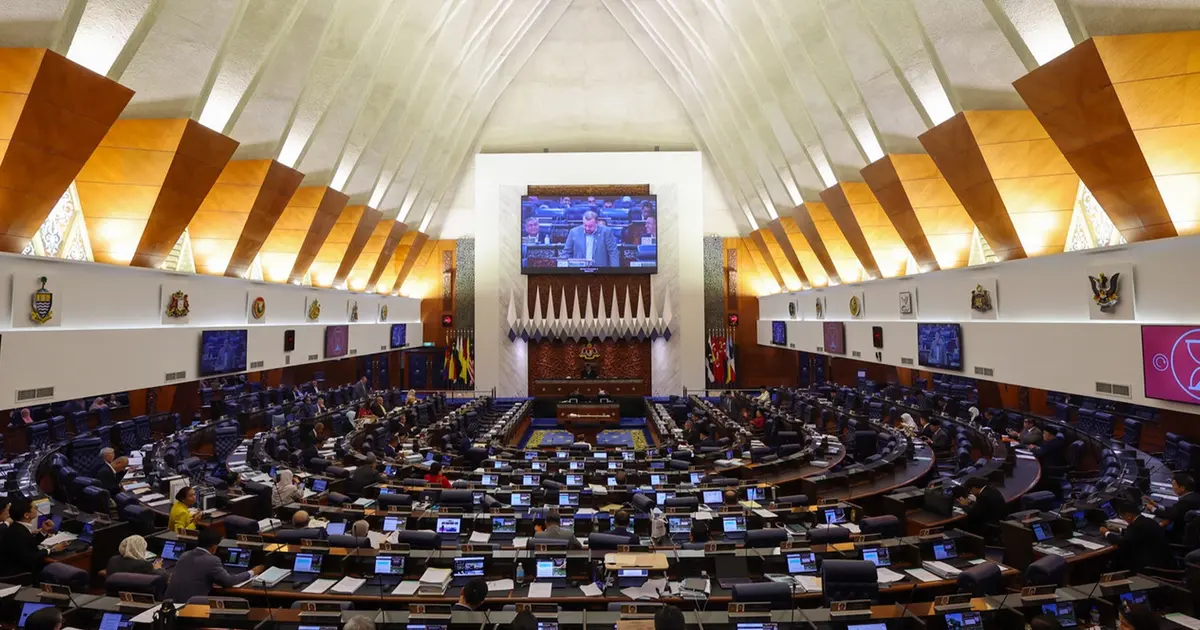
Malaysia's Parliament will begin a new sitting from Monday with four major legislative items on the agenda, spotlighting renewed efforts to introduce constitutional constraints on executive power through a decade-long cap on prime ministerial terms. The proposal to restrict a sitting prime minister's tenure to 10 years has emerged as a focal point in ongoing debates about governance reform and institutional checks within the Malaysian political system.
The most contentious measure—a constitutional amendment to impose the 10-year limit on prime ministers—represents a significant attempt to address longstanding concerns about concentrated power and the absence of formal term restrictions at the apex of the executive branch. Under Malaysia's current constitutional framework, a prime minister can theoretically serve indefinitely provided they retain the confidence of Parliament, a structural reality that has sometimes prompted discussions about potential abuse or indefinite entrenchment of executive authority.
This particular bill carries particular weight because constitutional amendments in Malaysia require a two-thirds supermajority in the Dewan Rakyat to pass, making it a difficult hurdle to clear. The measure's previous failure to achieve this threshold during the last parliamentary sitting underscores the challenge of building sufficient cross-party consensus on fundamental institutional reforms. Such obstacles are not unusual in Westminster-influenced parliaments where major constitutional changes demand broader legitimacy than ordinary legislation.
The timing of the renewed push for this bill reflects deeper conversations within Malaysian political circles about governance standards and institutional design. Proponents argue that tenure limits represent an international best practice observed in many mature democracies, serving as a safeguard against power concentration while encouraging periodic leadership renewal. They contend that a clearly defined maximum term would enhance institutional stability by reducing speculation about leadership succession and providing greater certainty to stakeholders both within and beyond government.
Opponents, however, have raised practical and philosophical objections to the proposal. Some argue that imposing artificial term limits could undermine the democratic principle that voters should determine leadership through regular elections, and that such restrictions might force out experienced administrators at potentially critical moments. Others point out that Malaysia's multi-layered political system—with federal, state, and party-level dynamics—creates complications that might be inadequately addressed by a straightforward tenure ceiling.
For Malaysian readers observing regional trends, this debate resonates with broader Southeast Asian conversations about institutional design. Several neighbours have grappled with similar questions regarding executive power and constitutional safeguards, with differing approaches reflecting distinct political traditions and historical experiences. The Malaysian deliberation therefore contributes to a wider regional discourse on balancing democratic principles with effective governance.
The inclusion of three additional bills alongside the tenure-limit proposal suggests a parliamentary agenda addressing diverse policy areas and institutional matters. Though details of these companion measures were not specified in the available information, their presence indicates that lawmakers intend to use this sitting to advance multiple reform initiatives and policy objectives. This bundling of legislative items is typical of parliamentary sittings designed to tackle accumulated business and demonstrate legislative momentum.
Successfully navigating the two-thirds requirement will demand renewed coalition-building efforts among government and opposition members. The earlier failure suggests that consensus remains elusive, though parliamentary dynamics can shift between sittings depending on various factors including changing political alignments, shifts in member perspectives, or evolving public sentiment regarding the proposal's merits. Lawmakers may also revisit their previous positions based on intervening events or revised arguments presented by proponents.
For observers tracking Malaysian governance evolution, this debate illustrates the country's ongoing grappling with institutional modernization. Rather than remaining static, Malaysia's constitutional and political framework continues adapting through parliamentary amendments that reflect contemporary values and international standards. Whether or not the 10-year tenure limit succeeds in this sitting, its recurrence on the parliamentary agenda signals that institutional reform remains a persistent priority for Malaysian policymakers across ideological lines.
The Monday sitting begins against a backdrop of public interest in governance issues, with civil society organisations and political commentators likely to monitor proceedings closely. The outcome of the tenure-limit bill will carry symbolic significance beyond its immediate legal implications, serving as a barometer of parliamentary consensus on executive power limitations and constitutional modernisation. Malaysian voters and regional observers will be watching to assess whether legislators can build the supermajority needed to advance this institutional change.

%22%2F%3E%3C%2Fpattern%3E%3C%2Fdefs%3E%3Crect%20width%3D%22100%25%22%20height%3D%22100%25%22%20fill%3D%22url(%23ph523ndg)%22%2F%3E%3Crect%20width%3D%22100%25%22%20height%3D%22100%25%22%20fill%3D%22url(%23ph523ndp)%22%2F%3E%3Ctext%20x%3D%2250%25%22%20y%3D%2250%25%22%20text-anchor%3D%22middle%22%20dominant-baseline%3D%22central%22%20fill%3D%22rgba(255%2C255%2C255%2C0.95)%22%20font-family%3D%22Georgia%2C%20'Times%20New%20Roman'%2C%20serif%22%20font-weight%3D%22700%22%20font-size%3D%22272%22%20letter-spacing%3D%22-0.02em%22%3EAnwar%3C%2Ftext%3E%3C%2Fsvg%3E)