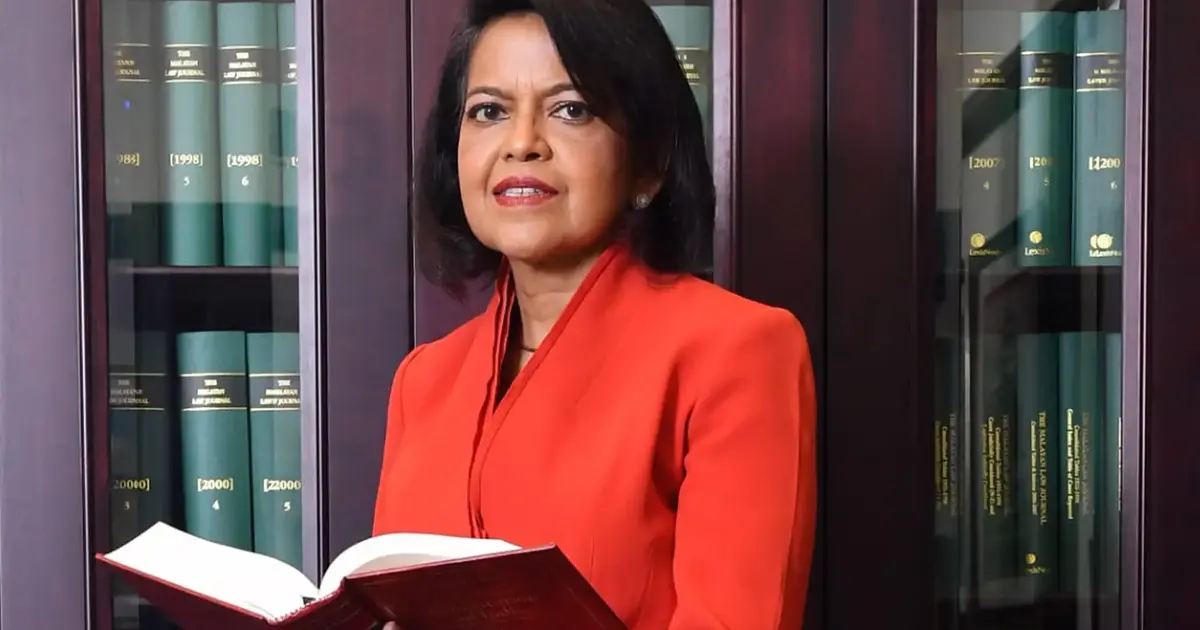
Nallini Pathmanathan, a former judge of Malaysia's highest court, has assumed leadership of the Malaysian Media Council at a pivotal moment for the country's news industry. Her appointment carries particular significance given her extensive background in the judiciary, bringing judicial perspective to an organisation tasked with navigating increasingly complex media governance issues.
The Council's announcement of Pathmanathan's appointment underscores recognition that the Malaysian media landscape faces substantial headwinds. These challenges encompass regulatory compliance, the transition to digital platforms, evolving audience expectations, and the contentious terrain of content moderation in an age of rapid information dissemination. Her judicial experience positions her to address these structural questions with the analytical rigour demanded by such complexity.
Pathmanathan's trajectory through Malaysia's legal system provides institutional credibility to the Council's operations. Her service on the Federal Court, the apex of Malaysia's judicial hierarchy, suggests familiarity with constitutional matters, press freedoms, and the boundaries between regulatory oversight and editorial independence—areas central to media governance discussions. This background may facilitate more sophisticated engagement with stakeholders across government, the private sector, and civil society.
The Malaysian media industry has contended with multiple simultaneous pressures that extend beyond typical commercial challenges. Economic headwinds have pressured traditional news outlets while digital platforms have fragmented audiences and advertising revenue. Simultaneously, questions about misinformation, journalistic standards, and the appropriate balance between state oversight and press autonomy have intensified public debate. These structural tensions require leadership capable of building consensus among ideologically diverse stakeholders.
Pathmanathan's appointment arrives as Malaysia grapples with questions about media pluralism and editorial independence. The concentration of ownership in certain outlets, the regulatory framework governing broadcast and print media, and the relationship between established newsrooms and digital-native publishers all demand attention from leadership with credibility across institutional boundaries. Her judicial pedigree may lend weight to the Council's advocacy on behalf of industry interests and professional standards.
The Council itself occupies a distinctive institutional position within Malaysia's media ecosystem. Neither purely governmental nor entirely self-regulatory, it functions as a bridge between industry practitioners and state actors, attempting to uphold professional standards while respecting editorial autonomy. This positioning requires navigation of competing interests and expectations—precisely the kind of balancing act that judicial experience cultivates.
For Malaysian newsrooms and journalism professionals, Pathmanathan's leadership may signal renewed emphasis on institutional legitimacy and professional conduct. In an era when public trust in media institutions has become fragile globally, and Malaysia is no exception, the appointment of someone with standing across multiple societal sectors might contribute to rebuilding confidence in editorial integrity and fairness standards. This could carry particular weight given ongoing concerns about polarisation in news coverage.
The broader Southeast Asian context matters here as well. Malaysian media dynamics influence and reflect regional patterns—questions about digital regulation, the relationship between traditional and online news organisations, and the persistence of misinformation traverse the entire region. Leadership transitions in major media institutions thus carry implications extending beyond national borders, potentially influencing how peer organisations in neighbouring countries approach governance challenges.
Pathmanathan's background in constitutional law and judicial reasoning suggests she may bring particular focus to press freedom arguments grounded in established legal frameworks. Malaysia's Constitution contains provisions protecting expression and press freedom, though their interpretation remains contested. A leader versed in constitutional jurisprudence might strengthen industry advocacy for maintaining adequate protective boundaries around journalistic work.
The appointment also reflects broader trends in institutional leadership, where expertise from government and judicial sectors increasingly flows into media governance roles. This cross-pollination brings both advantages and tensions—judicial experience provides analytical sophistication, yet judges historically operate with different incentives and constraints than media practitioners. Bridging these professional cultures will require Pathmanathan to develop understanding of market dynamics, audience psychology, and the daily pressures that shape editorial decision-making.
Looking forward, her tenure will likely be measured by the Council's effectiveness in addressing concrete industry challenges. Can it craft meaningful responses to digital disruption? Will it develop credible frameworks for content moderation that respect both accuracy and expression? How will it manage tensions between commercial interests and public interest journalism? Pathmanathan's answers to these questions will reveal whether her appointment catalyses substantive institutional evolution or represents a largely ceremonial transition.
The Malaysian media industry's trajectory over coming years will depend significantly on how effectively leadership can navigate conflicts between technological change, commercial pressures, regulatory expectations, and professional standards. Pathmanathan's appointment suggests the Council recognises this moment requires not merely administrative competence but elevated institutional standing and bridging authority—qualities her background may uniquely provide within Malaysia's institutional landscape.