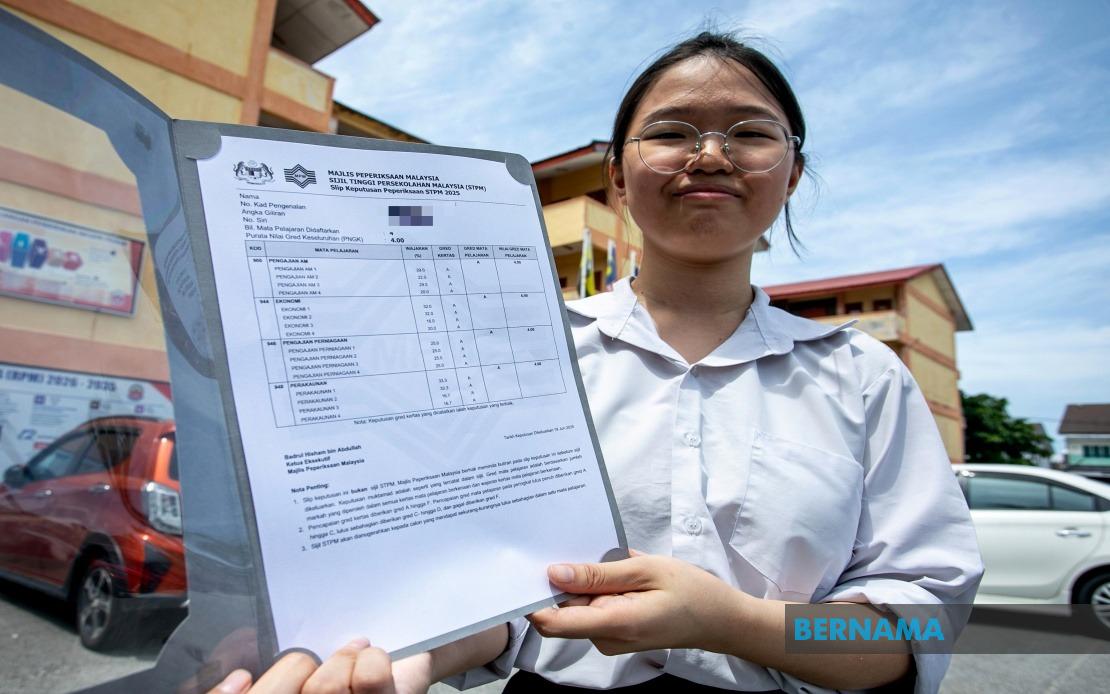
Yong Xin Yi, a 20-year-old pupil at SMK Jalan Tasek in Ipoh, has emerged as one of the year's standout achievers in the 2025 Sijil Tinggi Persekolahan Malaysia (STPM) examination, securing an impressive four A grades with a perfect Cumulative Grade Point Average of 4.00. Her academic triumph offers valuable insights into the study habits and disciplined approaches that can unlock excellence in Malaysia's pre-university qualification system.
The foundation of Xin Yi's success rests on a carefully structured daily routine that she has maintained with consistency throughout her sixth-form years. Every afternoon from 5:00 pm until 10:00 pm, she dedicates herself exclusively to revising course materials and reinforcing concepts covered during classroom instruction. This five-hour block of focused study, conducted after regular school hours, became the cornerstone of her examination preparation strategy. Rather than cramming sporadically or relying on last-minute intensive revision periods, she chose to build sustainable momentum through regular, manageable study sessions that allowed her brain to consolidate learning over time.
What distinguishes Xin Yi's approach from many high-achieving students is her conviction that classroom engagement matters more than compensating for inattention through extended home study. During teaching and learning sessions, she prioritised full concentration and active listening to her instructors' explanations. This classroom-first philosophy reduced the cognitive burden during evening revision periods, as she was already working with a foundation of understanding rather than starting from scratch when attempting homework or reviewing material. By internalising concepts as they were taught, she avoided the common pitfall of studying material twice—once in class and again at home in a state of confusion.
Her academic performance spanned General Studies, Principles of Accounting, and Economics, with each subject receiving an A grade. Among these, General Studies presented her with the most substantial challenge. This subject demands more than mere factual recall; it requires students to construct coherent written arguments, grasp the nuances of examination format expectations, and align their responses with the specific marking criteria that examiners use. Recognising this weakness early, Xin Yi strategically allocated additional attention to General Studies compared with her other subjects, demonstrating the adaptive problem-solving approach that distinguishes successful learners from those who apply uniform effort across all areas.
The completion of all assigned homework represents another non-negotiable element of her study philosophy. While some students view homework as busywork to be rushed through, Xin Yi understood that teacher-assigned tasks serve a pedagogical purpose—they provide targeted practice on recently learned topics and highlight conceptual gaps requiring clarification. By treating homework with the seriousness it deserves, she enhanced her topical mastery significantly beyond what revision alone could achieve. This holistic engagement with her coursework created multiple touchpoints for learning and reinforcement.
Xin Yi's achievement gains additional significance within the context of SMK Jalan Tasek's broader performance. She was one of five students from the school who attained four A grades in the 2025 STPM examination, suggesting that institutional factors—quality of teaching, school culture emphasising academic excellence, and peer influence—contributed to her success. Her results represent not merely individual accomplishment but also validation of the school's educational standards and the collective effort of its teaching staff.
Beyond the mechanics of study technique, Xin Yi's journey underscores the importance of emotional and familial support in academic achievement. As an only child whose parents—a clerk and a phone salesman respectively—have made sacrifices to provide her with educational opportunities, she carries a sense of responsibility to honour their investment. This motivation, grounded in filial piety and family obligation, provided psychological reinforcement during demanding study periods. Her explicit goal to improve her family's circumstances through her academic and professional success demonstrates how personal ambition and family duty can work synergistically to drive sustained effort.
Looking ahead, Xin Yi has set her sights on studying economics at Universiti Putra Malaysia (UPM), a decision she arrived at through careful consideration of her interests and the employment landscape. The discipline and methodical thinking that characterised her STPM preparation suggest she possesses the analytical mindset required for university-level economics study. Her aspiration to become an economist reflects recognition that Malaysia's economy, operating within an increasingly complex regional and global context, requires skilled professionals capable of informed policy analysis and economic decision-making.
Xin Yi's success story carries particular relevance for Malaysian parents and students navigating the pressure-cooker environment of pre-university education. Rather than glorifying innate talent or presenting achievement as mysterious, her narrative highlights actionable strategies: structured daily routines, classroom attentiveness, strategic resource allocation toward challenging subjects, completion of assigned work, and sustained motivation rooted in personal and family goals. These elements prove more instructive than vague appeals to work harder or study more. Her example suggests that excellence in STPM examinations emerges not from superhuman effort or exceptional ability alone, but from the deliberate integration of effective study habits, realistic scheduling, and psychological resilience supported by strong family bonds and clear career vision.

%22%2F%3E%3C%2Fpattern%3E%3C%2Fdefs%3E%3Crect%20width%3D%22100%25%22%20height%3D%22100%25%22%20fill%3D%22url(%23ph523ndg)%22%2F%3E%3Crect%20width%3D%22100%25%22%20height%3D%22100%25%22%20fill%3D%22url(%23ph523ndp)%22%2F%3E%3Ctext%20x%3D%2250%25%22%20y%3D%2250%25%22%20text-anchor%3D%22middle%22%20dominant-baseline%3D%22central%22%20fill%3D%22rgba(255%2C255%2C255%2C0.95)%22%20font-family%3D%22Georgia%2C%20'Times%20New%20Roman'%2C%20serif%22%20font-weight%3D%22700%22%20font-size%3D%22272%22%20letter-spacing%3D%22-0.02em%22%3EAnwar%3C%2Ftext%3E%3C%2Fsvg%3E)