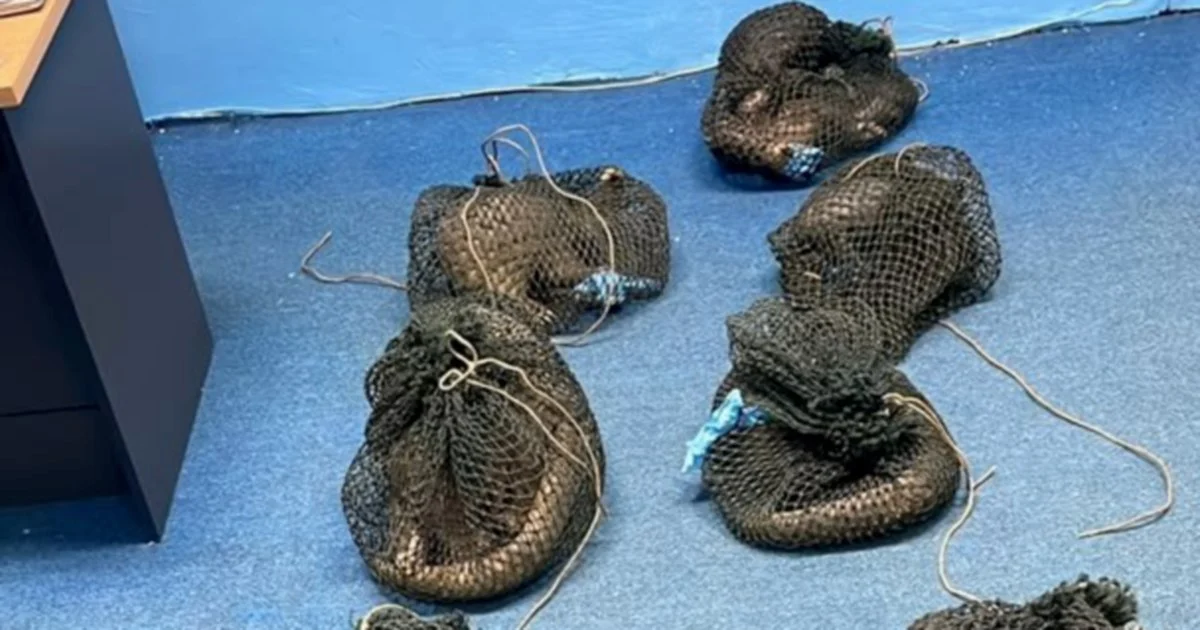
A 27-year-old Filipino national now faces investigation after Sabah authorities uncovered a substantial cache of protected wildlife during an enforcement operation at a plantation settlement in Kinabatangan. The suspect was detained when enforcement officers conducted a raid at Kampung Paris 3, where they recovered 10 living pangolins being held on the property, along with an elephant tusk, signalling involvement in a sophisticated smuggling operation targeting some of Asia's most endangered species.
The discovery represents a significant success for regional wildlife enforcement teams, who have intensified operations targeting the lucrative international black market for pangolin scales and ivory products. Pangolins rank among the world's most trafficked mammals, with their scales harvested for use in traditional medicine markets across Asia, while elephant ivory continues to command premium prices in underground networks despite decades of protection measures. The combination of both species in a single location suggests the suspect may have been operating as part of a broader trafficking syndicate rather than acting independently.
Kinabatangan, located in the eastern portion of Sabah on Malaysian Borneo, has emerged as a critical transit point for wildlife smuggling operations targeting products destined for markets in China, Vietnam, and Thailand. The district's proximity to Sabah's extensive forest reserves and its porous border regions create vulnerable corridors through which traffickers move contraband toward lucrative Asian markets. Law enforcement agencies have documented increasing activity in the area, indicating that criminal networks view Sabah as a strategic hub for consolidating shipments before international transport.
The pangolin seizure carries particular significance given the species' accelerating decline across Southeast Asia. Of eight pangolin species globally, three inhabit the Borneo region where Sabah is located, and all face unprecedented poaching pressure. International wildlife trade data reveals that trafficking volumes have tripled over the past decade, with criminal networks developing increasingly sophisticated logistics to circumvent border checkpoints and enforcement operations. The ten specimens recovered in this operation would represent substantial value in black market transactions, potentially worth tens of thousands of ringgit when sold for scale extraction.
Elephant ivory trafficking presents a parallel threat to Borneo's remaining wild elephant populations, already reduced to fewer than 2,000 individuals across the island. Sabah's Sungai Kinabatangan region supports critical elephant habitats, making it both a source zone for poaching activity and a transit corridor for ivory moving through regional networks. The discovery of a single tusk alongside pangolins suggests the suspect may have been consolidating shipments from multiple source locations before facilitating onward movement to international buyers.
The raid underscores ongoing collaboration between Sabah wildlife authorities and federal enforcement agencies in tackling transnational trafficking networks. These operations have intensified under Malaysia's commitment to international wildlife protection protocols, including the Convention on International Trade in Endangered Species (CITES), which imposes strict regulations on pangolin and elephant product commerce. Coordinated enforcement efforts have proven more effective at disrupting supply chains than unilateral actions, yet traffickers continue adapting methods to exploit gaps in coverage across porous land borders and coastal regions.
The suspect's nationality highlights the cross-border dimension of wildlife crime affecting Malaysia and its Philippine neighbours. Trafficking networks frequently exploit geographic proximity and weak border enforcement to move contraband between jurisdictions, complicating prosecution efforts when suspects operate across multiple countries. Extradition agreements and law enforcement cooperation remain critical for building comprehensive cases against international trafficking organisations, though jurisdictional complexities often limit accountability for individuals who divide their operations across borders.
Malaysian enforcement agencies face mounting pressure as demand for pangolin scales and ivory remains robust across East and Southeast Asian markets, where traditional medicine practitioners and luxury goods consumers continue purchasing despite international prohibitions and conservation awareness campaigns. Black market pricing mechanisms ensure that even aggressive seizure operations represent only a fraction of successful smuggling attempts, with criminal organisations offsetting occasional losses against high profit margins that incentivise continued operations. The economic incentives driving participation in wildlife trafficking networks remain stubbornly persistent across supplier communities, requiring sustained investment in alternative livelihood development alongside enforcement.
The investigation into the detainee's activities will likely reveal connections to broader trafficking networks operating across Sabah and neighbouring regions. Authorities typically discover during such investigations that arrested individuals occupy specific roles within larger organisational structures—roles such as collection, consolidation, transport coordination, or market interface—providing valuable intelligence about supply chain vulnerabilities. Intelligence gathered from this case may facilitate subsequent operations targeting upstream poaching operations or downstream market players, gradually mapping the criminal architecture supporting illegal wildlife trade.
Conservation organisations have called for enhanced enforcement capacity in critical wildlife corridors like Kinabatangan, arguing that current resource levels remain insufficient to maintain effective deterrence against increasingly professionalised trafficking networks. The growing sophistication of smuggling operations—including use of commercial cargo systems, bribery of officials, and falsification of documentation—demands corresponding advancement in detection technologies, intelligence analysis capabilities, and inter-agency coordination mechanisms. Without sustained investment in these areas, enforcement successes may remain sporadic rather than systematic in disrupting trafficking flows.