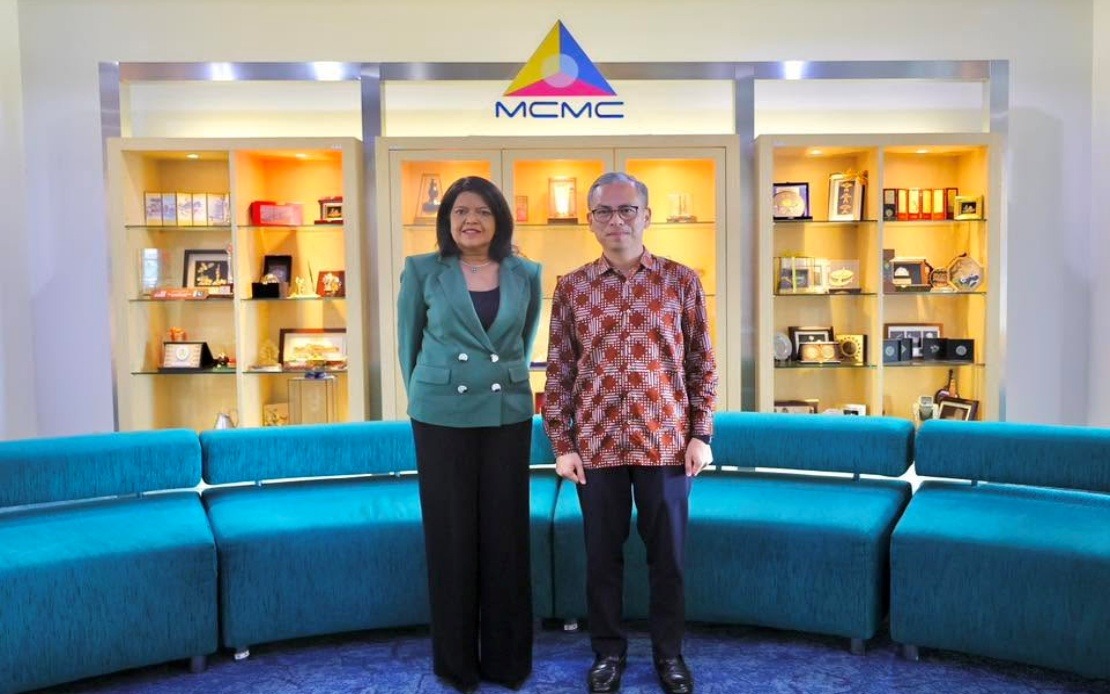
Tan Sri Nallini Pathmanathan has taken the helm of the Malaysian Media Council following her unanimous endorsement by board members in a late May gathering, marking a significant juncture for the media industry's self-regulatory apparatus. The appointment, formalised under provisions of the Malaysian Media Council Act 2025, represents the council's strategy to strengthen its standing as an impartial watchdog dedicated to protecting the public interest while maintaining industry independence.
Communications Minister Datuk Fahmi Fadzil publicly acknowledged the milestone through social media, praising Nallini's selection and articulating the government's vision for media governance. His message underscored the delicate balance between safeguarding press freedoms and ensuring journalistic standards, two imperatives that have assumed heightened importance in Malaysia's evolving media landscape.
Nallini brings substantial credentials to the position, having served previously as a Federal Court judge. Her legal background and experience within the judiciary position her to navigate the complex intersection of media rights, constitutional protections, and public accountability that defines modern media regulation. The appointment signals the council's commitment to anchoring its leadership in individuals with established institutional credibility and judicial temperament.
The Malaysian Media Council functions as a self-regulatory body tasked with monitoring adherence to ethical standards across the media sector. In an era when media credibility faces mounting pressures from misinformation, audience fragmentation, and rapidly shifting technological landscapes, the council's role has become increasingly critical to maintaining public trust in news institutions. Nallini's appointment thus carries weight beyond ceremonial significance, reflecting deliberate institutional choice about governance direction.
Fahmi's public remarks emphasised continuity in the council's mission to champion "responsible media freedom," a formulation that acknowledges competing values within democratic societies. The phrase itself encapsulates an ongoing tension in Malaysian media policy: how to preserve editorial independence and investigative journalism while preventing the dissemination of false or harmful content. This balance remains contested terrain, with civil society organisations, journalists, and government officials frequently disagreeing about where boundaries should lie.
Strengthening journalistic ethics represents the second pillar of the council's mandate articulated by the Communications Minister. Professional standards in newsrooms—from source verification to conflict-of-interest disclosure to correction procedures—underpin public confidence in reporting. Malaysia's media landscape includes outlets spanning different ownership structures, editorial philosophies, and commercial pressures, making industry-wide ethical frameworks particularly valuable for establishing baseline expectations that transcend individual publication policies.
The council's establishment under statutory legislation in 2025 constitutes a formal recognition of self-regulation's importance within Malaysia's regulatory framework. Unlike government-controlled boards or statutory authorities, self-regulatory bodies theoretically operate with greater editorial independence while remaining accountable to their industry peers and the broader public. This model, common across commonwealth democracies including Australia and the United Kingdom, attempts to preserve professional autonomy while avoiding the regulatory capture that can occur when politicians directly oversee media standards.
Nallini's appointment arrives at a moment when Malaysian media faces multifaceted challenges. The proliferation of digital platforms has fragmented audiences and advertising revenue streams, forcing traditional newsrooms to adapt business models while maintaining editorial quality. Simultaneously, concerns about misinformation, particularly during election cycles and public health emergencies, have intensified scrutiny of media's gatekeeping functions. A strengthened, credibly led council under Nallini's direction could prove instrumental in establishing industry standards that address these contemporary pressures.
The unanimity with which board members endorsed Nallini's candidacy suggests institutional consensus around her suitability, an encouraging sign for a body that functions through collegial decision-making rather than hierarchical command structures. Her capacity to build coalitions and earn trust across diverse stakeholder groups—essential for leading a self-regulatory organisation whose authority depends fundamentally on industry acceptance—appears already established.
Fahmi's invocation of media sustainability reflects economic realities confronting newsrooms across Southeast Asia. Financial pressures threaten editorial independence when outlets depend heavily on advertising or proprietor subsidies rather than diverse revenue streams. Audiences' migration to digital platforms and messaging applications, while enabling direct audience engagement, has fragmented the traditional advertising base supporting journalism. A well-functioning self-regulatory body under skilled leadership can indirectly support sustainability by enhancing public trust and demonstrating media's commitment to professional standards, potentially strengthening audience loyalty.
The appointment also carries implications for Malaysia's international standing on media freedom issues. Global indices measuring press freedom, such as Reporters Without Borders' rankings, scrutinise self-regulatory mechanisms as evidence of industry maturity and independence. Nallini's leadership, combined with the council's statutory footing, provides documentary evidence of Malaysia's commitment to professional media governance structures that respect editorial autonomy while maintaining accountability.
Looking forward, Nallini's tenure will likely focus on operationalising the council's mandate across Malaysia's diverse media ecosystem, from traditional newspapers and broadcasters to digital-native outlets and online publications. Developing relevant ethical guidelines for emerging platforms, establishing transparent complaint mechanisms, and maintaining credibility amid polarised public discourse represent immediate challenges. Her judicial experience suggests familiarity with navigating contested interpretations of principles and mediating between competing interests—capacities directly transferable to media regulation's complexities.