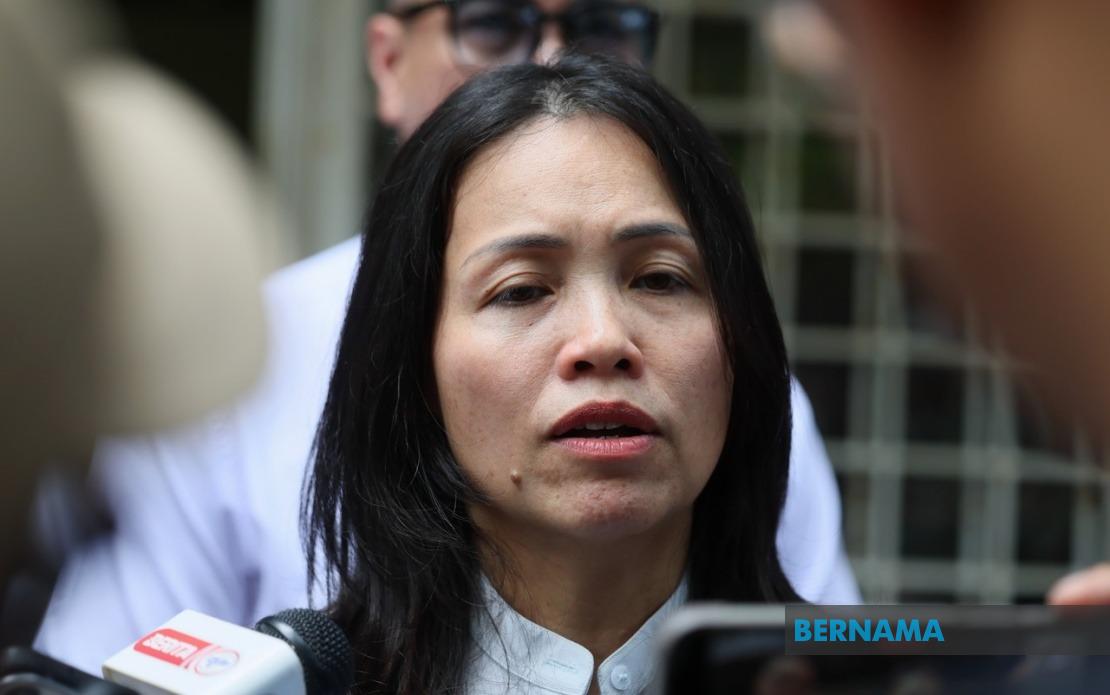
Johor DAP chairman Teo Nie Ching has called on the public to remain vigilant against smear campaigns and disinformation as the state gears up for its election, specifically flagging the circulation of doctored posters that misrepresent the party's candidates. The manipulation involves altering images to portray potential DAP contenders as Muslim women wearing headscarves in ways that deviate from normal presentation, a tactic Teo said was deliberately designed to provoke anxiety among non-Malay voters, particularly those from the Chinese community, and ultimately discourage support for Pakatan Harapan in the upcoming ballot.
The Deputy Communications Minister articulated her party's position clearly in a Facebook statement, emphasising that DAP maintains deep respect for all religious traditions and the cultural significance of Islamic dress. She stressed that the headscarf holds profound spiritual and personal meaning for Muslim women and should never become a tool for political manipulation or trivialisation. The deliberate alteration of campaign materials in this manner, Teo argued, represented a particularly contemptible approach to electioneering that sought to weaponise religious symbolism for partisan gain.
Beyond the immediate concern about religious sensitivity, Teo's statement underscored a broader dimension to the alleged misconduct: the implicit disregard for women themselves. By using doctored images of female candidates as vehicles for fear-mongering, the tactic simultaneously denigrates women's standing in political discourse and attempts to exploit gender-related anxieties. This layered offensive prompted the DAP leader to characterise the strategy as not merely a political attack but a fundamental assault on dignity and respect.
The timing of these concerns arrives as Johor enters a critical phase of its electoral cycle. The Election Commission has formally scheduled June 27 as nomination day for candidates seeking the 56 state seats, with voting set for July 11 following the dissolution of the State Legislative Assembly on June 1. This compressed timeline means that campaigns are intensifying across all party lines, creating an environment where misinformation and distortive tactics can spread rapidly among voters.
The political arithmetic underpinning the Johor contest reveals why divisive messaging focused on community fault lines holds particular appeal for certain actors. Before the dissolution, Barisan Nasional controlled 40 of the 56 seats, while Pakatan Harapan held 12, Perikatan Nasional maintained three, and MUDA claimed one. With BN commanding such dominance, opposition coalitions face significant disadvantages that can incentivise unconventional campaign tactics, though Teo's intervention suggests that at least some of the dirty tricks are originating from sources other than her party.
Teo reiterated that DAP's foundational commitment remains the championing of rights for all Malaysians irrespective of race, ethnicity, regional origin, religious faith, or gender. This declaration serves as both a defensive statement against the allegations implicit in the manipulated posters and an affirmation of the party's multiethnic coalition strategy. In Malaysian electoral politics, where communal identity frequently intersects with political allegiance, maintaining credibility as an inclusive party requires constant vigilance against perceptions of bias or discriminatory intent.
The specific nature of the poster manipulation—inserting headscarves onto female candidates—reveals strategic intent to exploit communal sensitivities in ways that might resonate differently across Malaysia's diverse electorate. For some voters, such imagery might trigger concerns about religious imposition or cultural change; for others, it could provoke guilt-by-association anxieties. The tactic essentially aims to create cognitive dissonance among DAP's traditional support base by suggesting that party candidates hold positions contrary to the secular governance model that many of the party's voters associate with the DAP brand.
This electoral challenge mirrors broader regional patterns observed across Southeast Asia, where political actors increasingly deploy sophisticated disinformation campaigns that exploit religious and communal divisions. Malaysia's experience with such tactics during the 2018 general election and subsequent state contests has demonstrated both the potency and the durability of messages that trigger identity-based concerns. The fact that these strategies persist despite growing public awareness suggests that electoral actors continue calculating positive returns on such investments.
Teo's call for voters across all communities to reject these tactics and instead embrace harmony and unity carries implicit recognition that the success of such smear campaigns depends fundamentally on public receptiveness. If voters dismiss the manipulated materials as transparent political theatre, their impact diminishes. Conversely, even a minority of voters swayed by such messaging can shift outcomes in closely contested seats, particularly in a state where the government holds overwhelming numerical advantage and opposition candidates face structural headwinds.
As the campaign period formally commences with nomination day on June 27, all political actors will face mounting pressure to accelerate their ground operations and media engagement. The environment created by social media circulation of doctored images and digital rumours demonstrates how campaign discourse has shifted fundamentally from controlled messaging through traditional channels toward rapid, decentralised dissemination of claims and counter-claims. This reality underscores why transparency and fact-checking initiatives become increasingly vital for maintaining electoral integrity.
The Johor election carries significance beyond the state itself, serving as a bellwether for national political trends and coalition viability. A strong showing by BN would reinforce the stability of Malaysia's federal government, while notable gains by opposition forces would signal shifting electoral preferences among voters. Against this backdrop, the emergence of documented smear campaigns highlights the stakes involved and the desperation some actors may feel when confronting unfavourable structural conditions.