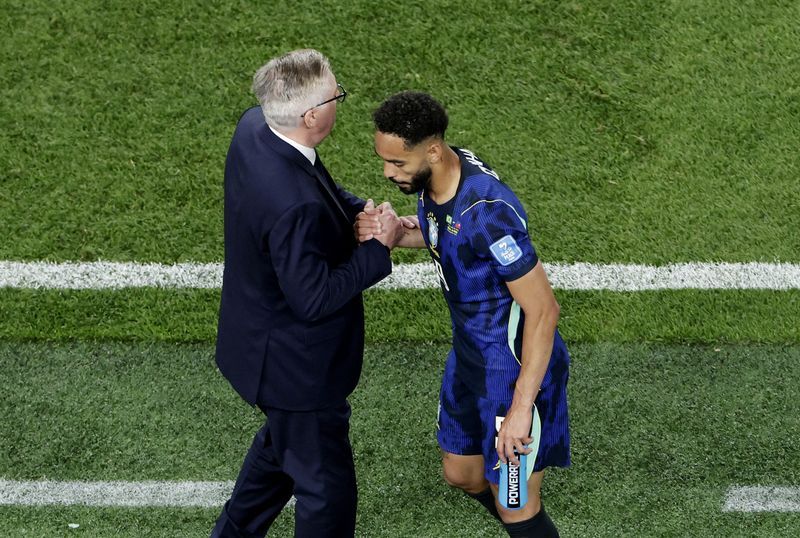
Carlo Ancelotti's Brazil side found firmer footing against Haiti in Philadelphia, easing to a 3-0 victory that, while not a complete tactical overhaul, offered a marked improvement over their opening Group C stalemate with Morocco. The Italian manager's strategic adjustments suggested the Seleção may be moving towards a more fluid, purposeful style of play after days of uncertainty about their direction in this tournament.
The most pivotal change came through the inclusion of Matheus Cunha as an attacking midfielder, displacing Igor Thiago from the side. This single personnel shift fundamentally altered how Brazil connected their deep midfield to their attacking line, introducing movement and positional fluidity that had been conspicuously absent when facing Morocco. Cunha's introduction was not merely about adding depth to the forward line but rather about creating a coherent unit where each player understood their spatial responsibilities and offensive timing.
Ancelotti's diamond midfield formation came into sharper focus during the Haiti encounter, particularly down the left flank where Brazil's most dangerous moments originated. Lucas Paqueta, who had drawn considerable criticism for his anonymous first-half display against Morocco, appeared visibly more assured operating as the left-sided midfielder within this structure. His positioning allowed him to shuttle between defensive support and attacking involvement, providing layoff options for the increasingly influential Vinicius Jr. The combination of Paqueta, Vinicius, and Cunha developed a natural understanding reminiscent of Brazil's most dangerous attacking units, with Cunha drifting infield from his starting wide position to link play and create space for his teammates.
The chemistry developing on Brazil's left side represents a critical tactical discovery for Ancelotti, particularly given the lingering absence of Neymar through injury. Since the superstar's injury absence, Brazil had struggled to generate the kind of coordinated attacking pressure down that flank that had previously been a cornerstone of their play. Cunha's tireless movement and intelligent positioning recreated this dynamic, offering Vinicius the kind of consistent support that allowed the winger to express himself more freely. The three goals against Haiti tellingly arrived predominantly from this left-sided corridor, validating Ancelotti's positional experiment.
However, the Haiti match also exposed vulnerabilities that could prove far more problematic against stronger opposition. Raphinha's performance on the right wing constituted the opposite side of Brazil's attacking coin, revealing disconnect and imprecision where fluidity and control had flourished. The Barcelona winger, already compromised by blister issues that forced him to miss a midweek training session, appeared uncomfortable with his assigned wide role. In club football, Raphinha operates with greater freedom and attacking responsibility, drifting into more central areas much like Cunha demonstrated against Haiti. His constrained positioning in this Brazil setup appeared to stifle rather than enhance his contributions, as evidenced by misplaced passes and poor first touches.
Raphinha's struggles compound existing concerns about Brazil's right flank balance. Unlike the coordinated left-sided triangle, the right side lacked the same cohesion between his positioning, Bruno Guimaraes' midfield support, and the deeper defensive cover. This asymmetry in attacking prowess could become a serious liability against teams like Scotland or more formidable opposition later in the tournament. The substitution decisions reflected Ancelotti's awareness that neither Rayan's introduction nor a continued Raphinha presence had stabilized that side of the pitch.
Deeply embedded within these tactical observations lie legitimate questions about Brazil's defensive architecture moving forward. Casemiro, now 34 years old, occupied his familiar deep-lying position but Haiti's limited attacking ambition meant his defensive competencies were never seriously tested. Against opponents with more sophisticated buildup play and aggressive pressing, whether the veteran midfielder can adequately shield Brazil's back line remains an open question. Ancelotti appears to be contemplating repositioning Bruno Guimaraes to a more defensive midfield role to provide additional cover, potentially sacrificing some attacking contribution from that position but hardening the defensive shell.
The Haiti encounter also highlighted potential bench options should the right flank situation deteriorate further. Luiz Henrique emerged as a possible alternative to Raphinha, offering different technical qualities and spatial awareness that might better fit Ancelotti's developing system. The manager's depth of options suggests he has the flexibility to adjust without wholesale changes, though finding the optimal combination of balance, defensive solidity, and attacking potency remains a work in progress.
For Malaysian and Southeast Asian observers following Brazil's tournament prospects, these emerging patterns carry significant implications. Ancelotti's willingness to experiment with formation and personnel indicates a manager committed to solving problems systematically rather than reverting to familiar patterns. The success of the left-sided combination demonstrates that tactical coherence matters as much as individual brilliance in the modern game. Nevertheless, the right-flank deficiencies suggest that even talented squads require time to develop the spatial understanding and rhythm necessary for tournament success, a lesson relevant to emerging football nations in the region seeking to elevate their international competitiveness through improved tactical organization.
Brazil's performance represented incremental progress rather than transformation, but in tournament football where momentum and confidence build through small victories and tactical coherence, this progress carries genuine significance. The clearer vision Ancelotti has provided, embodied most visibly through Cunha's presence and the emerging left-sided dynamics, offers supporters and analysts alike a roadmap for how this side might evolve. Scotland awaits next, a fixture that will test whether these patterns hold against more organized, pressing opponents, or whether additional tactical adjustments will prove necessary.
%22%2F%3E%3C%2Fpattern%3E%3C%2Fdefs%3E%3Crect%20width%3D%22100%25%22%20height%3D%22100%25%22%20fill%3D%22url(%23ph523ndg)%22%2F%3E%3Crect%20width%3D%22100%25%22%20height%3D%22100%25%22%20fill%3D%22url(%23ph523ndp)%22%2F%3E%3Ctext%20x%3D%2250%25%22%20y%3D%2250%25%22%20text-anchor%3D%22middle%22%20dominant-baseline%3D%22central%22%20fill%3D%22rgba(255%2C255%2C255%2C0.95)%22%20font-family%3D%22Georgia%2C%20'Times%20New%20Roman'%2C%20serif%22%20font-weight%3D%22700%22%20font-size%3D%22272%22%20letter-spacing%3D%22-0.02em%22%3EAnwar%3C%2Ftext%3E%3C%2Fsvg%3E)