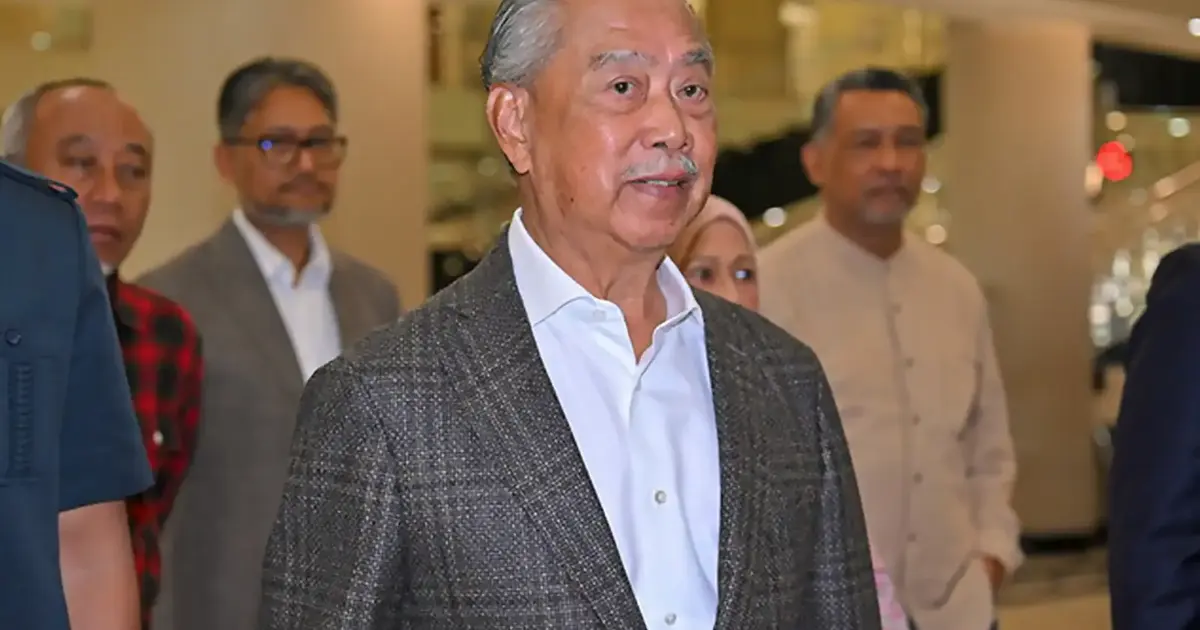
Bersatu's legal bid to restore access to its frozen bank accounts has been rejected by the High Court, marking a significant setback for the political party in its dispute with the Malaysian Anti-Corruption Commission. The court determined that the party had not successfully established that MACC acted beyond its authority or improperly when it imposed the freeze on accounts held with CIMB and AmBank. The ruling closes one avenue of challenge for the party, which has faced mounting financial pressures in recent months.
The freeze on Bersatu's accounts stems from MACC's investigations into the party's finances, a development that placed considerable strain on its operations and ability to meet routine expenses. The party mounted a vigorous legal challenge, arguing that the MACC lacked justification for the measure and that the action constituted an abuse of its investigative powers. However, the High Court's decision indicates that the judicial bench found the anti-corruption body's actions were grounded in legitimate authority and that proper procedures had been followed.
This outcome carries broader implications for Malaysia's political landscape, particularly concerning the relationship between anti-corruption enforcement and political parties under investigation. The ruling effectively upholds the MACC's latitude in imposing financial restrictions on entities deemed relevant to ongoing inquiries, suggesting that courts will typically defer to the commission's judgment in such matters unless compelling evidence of abuse emerges. For Bersatu, the decision removes one potential pathway to resolving its financial difficulties.
The party's struggle with frozen accounts reflects deeper challenges within Malaysian politics, where questions about party financing have become increasingly contentious. Several political organizations across the spectrum have faced scrutiny regarding their financial practices, but the visible impact of the freeze on Bersatu's operations has been particularly acute. Unable to access substantial portions of its funds, the party has grappled with organizational difficulties and reduced capacity for political activity and campaigning.
Bersatu's failed court challenge also underscores the complexity of balancing anti-corruption imperatives with the operational needs of political organizations. The party's argument that MACC had overstepped its authority would have required the court to second-guess the commission's investigative decisions—a position judges appear reluctant to adopt without clear evidence of procedural violation or abuse. The High Court's ruling suggests a judicial philosophy that respects the independence and judgment of specialized agencies like MACC.
The broader context of this freeze relates to investigations into various aspects of Bersatu's financial dealings. The MACC's inquiry appears to have been sufficiently substantial to justify the precautionary measure of restricting account access, in the commission's assessment, and the court has accepted this reasoning. This approach aligns with international practices where law enforcement agencies pursuing financial investigations often seek to restrict asset movement to preserve evidence and prevent funds relevant to investigations from being dispersed.
For Malaysian readers and political observers, this judgment raises important questions about the intersection of institutional oversight and political party autonomy. While anti-corruption efforts are essential to maintaining public integrity, the enforcement mechanisms employed must also respect the legitimate functioning of political organizations. The court's decision signals that it views MACC's action as falling within appropriate bounds, though this may not settle the broader debate about proportionality and necessity.
The ruling may also influence how other political parties perceive the risks associated with financial scrutiny. As Malaysia continues to grapple with corruption concerns and strengthens its institutional responses, political organizations are becoming subject to increasingly rigorous examination. Bersatu's experience demonstrates the tangible operational consequences of such investigations, even before any formal findings or charges are established.
Looking forward, Bersatu may explore whether additional legal remedies remain available, such as appeals to higher courts or requests for account restrictions to be modified or lifted conditional on compliance with specific undertakings. However, the High Court's clear rejection of the party's central argument—that MACC abused its powers—suggests that higher courts would likely reach similar conclusions unless new evidence or legal arguments emerge. The party must now reckon with the reality that its frozen accounts may remain restricted for the duration of MACC's investigation.
This development also has implications for how Malaysian political parties manage their financial practices going forward. The judicial endorsement of MACC's investigative authority, as reflected in the court's acceptance of the account freeze, sends a message that financial transparency and proper documentation will be increasingly important for political organizations seeking to defend themselves against investigative action. Parties that cannot satisfactorily explain their financial dealings face not only reputational risks but also practical operational constraints.
The case ultimately reflects Malaysia's ongoing institutional evolution regarding corruption control. While Bersatu's loss in court represents a defeat for the party's immediate objectives, it may also indicate broader acceptance within the judiciary that anti-corruption agencies require substantial operational flexibility to conduct effective investigations. This balance between oversight and functionality will likely remain a topic of intense discussion as Malaysia continues refining its approach to political party accountability.

%22%2F%3E%3C%2Fpattern%3E%3C%2Fdefs%3E%3Crect%20width%3D%22100%25%22%20height%3D%22100%25%22%20fill%3D%22url(%23ph523ndg)%22%2F%3E%3Crect%20width%3D%22100%25%22%20height%3D%22100%25%22%20fill%3D%22url(%23ph523ndp)%22%2F%3E%3Ctext%20x%3D%2250%25%22%20y%3D%2250%25%22%20text-anchor%3D%22middle%22%20dominant-baseline%3D%22central%22%20fill%3D%22rgba(255%2C255%2C255%2C0.95)%22%20font-family%3D%22Georgia%2C%20'Times%20New%20Roman'%2C%20serif%22%20font-weight%3D%22700%22%20font-size%3D%22272%22%20letter-spacing%3D%22-0.02em%22%3EAnwar%3C%2Ftext%3E%3C%2Fsvg%3E)