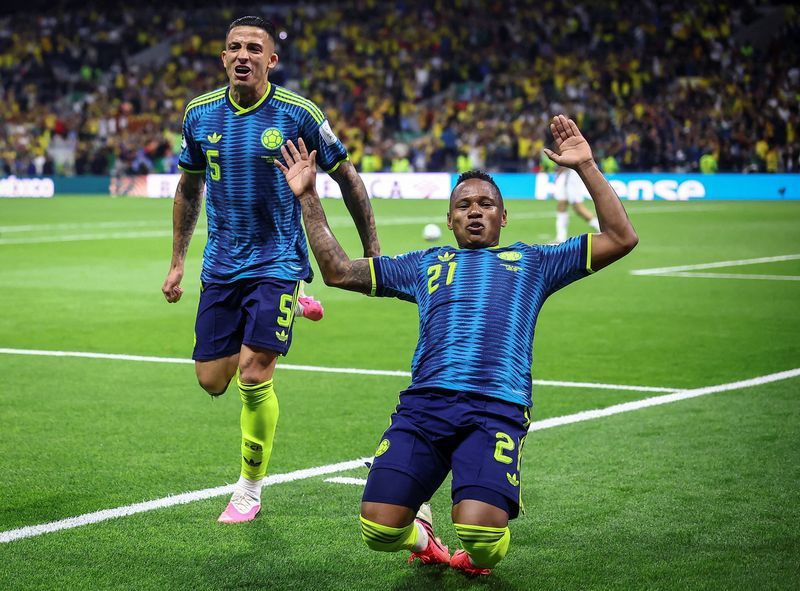
Colombia will attempt to extend their strong start to the World Cup when they confront DR Congo in Group K on Tuesday, seeking to capitalise on an opening-match victory that masks considerable defensive concerns their opponents will look to exploit. Having dispatched Uzbekistan 3-1, Nestor Lorenzo's squad know that another win would secure passage to the knockout stages and potentially confirm their grip on first place in the group, depending on how Portugal fare against the Asian side.
The opening triumph against Uzbekistan revealed troubling vulnerabilities in Colombia's rearguard during a second-half period when their opponents mounted a sustained offensive challenge. Lorenzo's men dominated possession and converted their chances into goals, yet the ease with which Uzbekistan created opportunities to penetrate their defence has emerged as a central concern heading into the encounter with a team already proven at this tournament to be considerably more dangerous on the counter-attack.
Bayern Munich's Luis Diaz emerged as Colombia's standout performer in the Uzbekistan match, combining a goal with an assist while drawing the player-of-the-match accolade for his incisive running and willingness to take on defenders directly. The winger's pace and directness proved decisive when the South Americans found themselves without clear passing lanes through the middle, and his creative output effectively compensated for the team's occasional lack of precision in the final third.
Captain James Rodriguez, by contrast, operated in the shadows during the opening fixture, his influence minimised as the team increasingly channelled its attacking play through Diaz's dynamism and direct running. Lorenzo will hope that Tuesday's encounter allows the experienced midfielder to reassert his customary authority and creative responsibility, distributing the attacking burden more evenly across his forward line and thereby offering greater variety to Colombia's approach.
DR Congo arrive in Mexico City with genuine momentum coursing through their camp following an eye-catching 1-1 draw against Portugal in their first World Cup match since representing the continent as Zaire in 1974. Yoane Wissa's opening-half strike made him his country's first goalscorer in the tournament during nearly fifty years of absence, while coach Sebastien Desabre's defensive organisation and disciplined structure repeatedly frustrated a Portuguese side widely considered among this tournament's strongest competitors.
The Congolese demonstrated tactical maturity by absorbing Portugal's attacking threat whilst remaining constantly alert to the possibilities presented by swift transitions from defence to attack. Their compact shape and refusal to be drawn into expansive football proved devastatingly effective, and Lorenzo has already publicly acknowledged that DR Congo will likely employ similar principles when confronting Colombia's attacking arsenal, though the nature of the threat differs considerably from Portugal's methodical possession football.
Lorenzo warned after the Uzbekistan match that DR Congo's emphasis on long-range passing and quick transitional movements would pose a fundamentally different examination than the challenges presented by a team seeking to dominate territory. The Argentine coach explained to gathered journalists that his side's occasional over-reliance on possession had occasionally worked to their detriment, with players frequently retreating when possession was regained rather than immediately progressing the ball toward the opponent's goal with efficiency and urgency.
Clinical finishing remains another area demanding improvement, Lorenzo suggested, noting instances where excellent passing sequences broke down before a clear shooting opportunity materialised. Colombia must therefore combine their defensive refinement with sharper decision-making in attacking phases if they are to overcome an opponent that has already demonstrated an ability to frustrate established tournament contenders through intelligent, compact defensive shape.
The Colombian contingent travelling from their tournament base in Guadalajara has already left an imprint on Mexican venues, with thousands of yellow-clad supporters transforming Mexico City's Estadio Azteca into an extension of home during the Uzbekistan encounter. That familiar atmosphere will again provide considerable psychological advantage, potentially energising the players whilst creating an intimidating backdrop that DR Congo must navigate whilst attempting to replicate the disciplined, composed performance that earned them their point against Portugal.
Despite Colombia's clear status as tournament favourites within Group K, Desabre's side has already proven that conventional rankings matter little when tactical discipline and organisation combine with the psychological freedom that accompanies low expectations. DR Congo arrive without the burden of expectation that weights upon their opponents, and their demonstrated capacity to frustrate superior attacking talent through defensive rigour and counter-attacking alertness suggests this encounter will demand considerably more from Lorenzo's squad than a straightforward progression through the group.