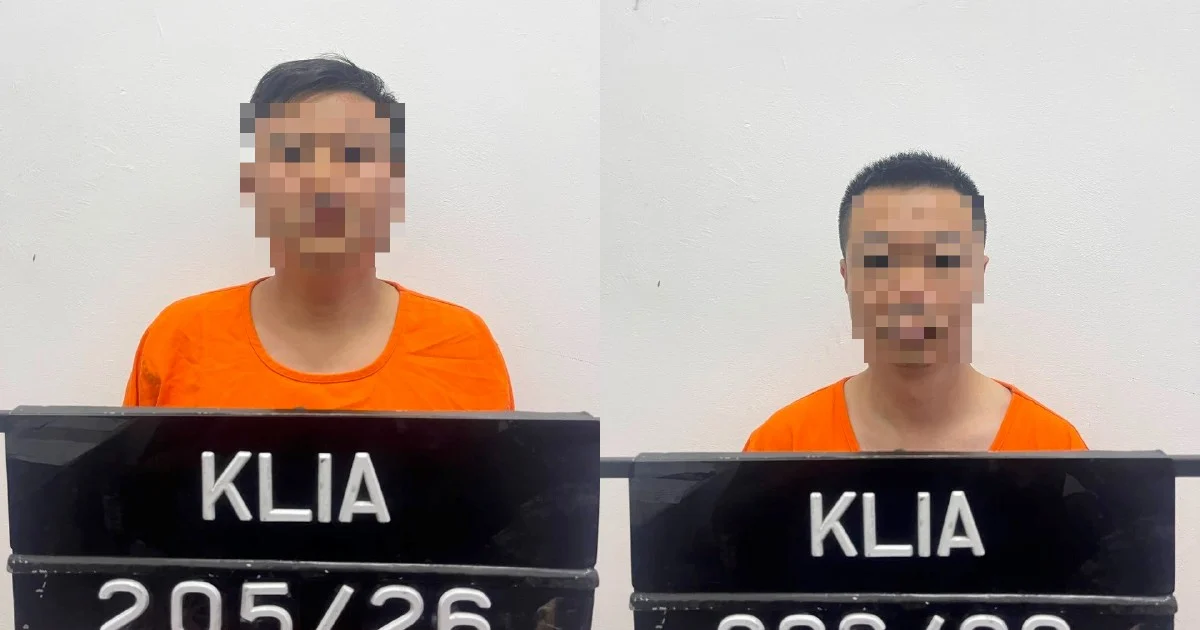
Two Chinese nationals are in police custody following their arrest in connection with an alleged theft attempt that occurred aboard an aircraft en route from Dili, Timor-Leste, to Kuala Lumpur International Airport. The pair were remanded for four days commencing today, with authorities in Sepang seeking to gather additional evidence and statements as their investigation into the incident unfolds.
The alleged attempted theft aboard the international flight has prompted a formal police inquiry, reflecting growing concerns about inflight security matters across regional aviation routes. The specific nature of the alleged theft and the circumstances surrounding the incident remain under investigation as detectives work to establish the full sequence of events that unfolded at altitude.
Incidents involving alleged criminal activity aboard commercial flights are treated with considerable seriousness by Malaysian aviation authorities and law enforcement agencies. The involvement of a flight operating between Timor-Leste and Malaysia underscores how such matters can span multiple jurisdictions and international boundaries, requiring coordinated investigative efforts. The incident also highlights the persistent security challenges that regional carriers and airport operators must continually address.
The remand period will allow investigating officers to conduct interviews with the suspects and gather crucial evidence from witnesses and airline personnel who were present during the flight. Such extensions are commonly sought in cases where investigators require additional time to corroborate accounts and establish the details of alleged offences that occurred in the unique environment of an airborne aircraft.
Flights operating the Dili-Kuala Lumpur route represent an important aviation corridor connecting Timor-Leste with Malaysia's main international gateway. This particular incident may prompt heightened scrutiny of security protocols aboard carriers operating this route, though comprehensive details regarding whether existing security procedures were compromised or circumvented are not yet available.
For Malaysian passengers and aviation users, such incidents raise questions about the adequacy of inflight security measures, though modern aircraft are equipped with various safety systems and crew training protocols designed to address untoward situations. The Malaysian aviation sector has generally maintained strong safety and security standards, supported by Malaysia Airports Holding Berhad and relevant civil aviation authorities.
The detention of the two suspects in Sepang places the investigation firmly within the jurisdiction of Malaysian federal authorities, who possess the regulatory framework and investigative resources necessary to pursue such matters. The alleged incident, if substantiated, would likely fall under provisions of Malaysian criminal law addressing theft and criminal conduct in specific contexts.
Regional aviation operators and airport management entities have grown increasingly attentive to security matters following various high-profile incidents in recent years. The investigation being conducted by local authorities will likely contribute to ongoing discussions about best practices for passenger screening, cabin crew training, and preventive measures designed to mitigate risks associated with alleged criminal activity aboard aircraft.
The cooperation expected between Malaysian law enforcement and potentially authorities in Timor-Leste underscores the transnational nature of aviation security challenges. International cooperation mechanisms exist to facilitate information sharing and coordinated responses when alleged crimes occur aboard aircraft transiting between nations.
Airline operators maintaining connections through Malaysia frequently coordinate with Malaysian civil aviation authorities regarding security matters. The outcome of this investigation may inform future training protocols and operational procedures for carriers serving the Dili-Kuala Lumpur route and similar regional corridors where preventive measures remain an ongoing priority.
The four-day remand period represents a critical window for investigators to establish whether the alleged theft was carried to completion, attempted, or perhaps abandoned, and to determine the identities and roles of any other individuals who may have been involved. The investigative process will seek to reconstruct events with precision, drawing upon statements from crew members, passengers, and any available aircraft surveillance systems.
Once the initial remand period concludes, authorities will determine whether to extend detention, file charges, or take alternative investigative steps. The legal framework governing such matters in Malaysia provides prosecutors with several options depending on the strength of evidence gathered and the precise nature of allegations substantiated through the inquiry.
The incident serves as a reminder that security challenges within aviation environments remain dynamic and multifaceted. Both airport authorities and airline operators across Southeast Asia continue to refine security measures and staff training to address emerging threats, even as the vast majority of flights operate without incident and maintain exemplary safety and security records.