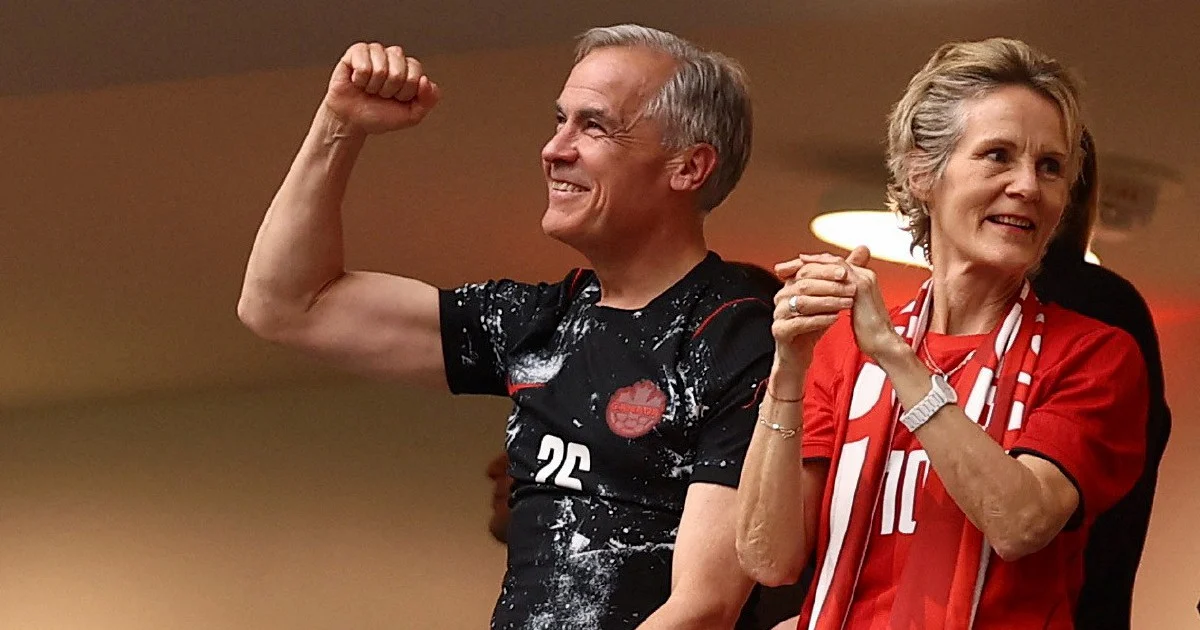
Canadian football achieved a watershed moment when the national team secured their first victory in World Cup finals competition, prompting Prime Minister Mark Carney to make an unscheduled visit to the locker room in Vancouver to personally acknowledge the historic accomplishment. The significance of the result cannot be overstated for a nation that has competed in five previous World Cup tournaments without tasting success at the final tournament stage, making this breakthrough moment a defining juncture in Canadian football history.
Carney's decision to visit the players immediately after the match underscored the political and cultural importance of the achievement within Canada, where football continues to grow in popularity despite the nation's traditional emphasis on ice hockey and other sports. The Prime Minister's presence served to elevate the team's accomplishment beyond the sporting realm, signalling national recognition of the milestone and the dedication required to overcome decades of futility in international competition.
Beyond the satisfaction of securing three World Cup points, Carney specifically commended the squad for the manner in which they conducted themselves during the match, particularly when adversity struck mid-game. One of Canada's key players suffered a broken leg during the contest, an injury that would have potentially derailed the morale and concentration of a less-disciplined unit. The fact that the team persevered through this setback to claim victory demonstrated the mental fortitude and team cohesion that Carney recognized in his remarks to the group.
The resilience displayed in the face of injury reflects broader themes in contemporary international football, where depth of squad and psychological resilience have become as important as individual technical ability. Canadian football has invested significantly in player development over recent years, and this result vindicated those long-term strategies. The capacity to absorb the loss of a major player through injury and maintain competitive performance illustrated that the investment in infrastructure and coaching expertise has begun to yield tangible results.
For Malaysian football fans and observers, the Canadian breakthrough offers instructive lessons about sustained commitment to football development. Southeast Asia has witnessed similar transitions as nations have elevated investment in youth academies, coaching standards, and player welfare programs. The Canadian model demonstrates that patience, strategic planning, and adequate resourcing can eventually overcome historical underperformance, a message that resonates across the region.
The injured player's misfortune, while concerning from a medical standpoint, paradoxically became a defining moment in the team's performance. The collective response to the injury—maintaining focus and ultimately claiming victory—revealed a maturity in the squad's approach to international competition. Such moments often become pivotal in building team identity and establishing the foundation for future success beyond a single tournament.
Carney's intervention also highlighted the intersection between political leadership and sporting achievement in contemporary society. Prime Ministers and heads of state increasingly recognize that success on the football pitch carries cultural weight and can galvanize national sentiment. His decision to personally visit the locker room rather than issuing a formal statement conveyed genuine engagement with the players' achievement and acknowledged that their success reflected positively on Canadian values and determination.
The broader context of Canadian football's development must be understood through the lens of North American sport, where football has historically occupied a secondary position. The national team's progress has accelerated substantially in recent years, driven partly by increased exposure through Major League Soccer and investment from collegiate and professional development pathways. This first World Cup finals victory represents validation of those systemic improvements.
For the regional football community, the Canadian example demonstrates that breaking through historical barriers in international competition requires institutional commitment extending well beyond the playing squad. Coaching continuity, medical support systems, and player development pathways must work in concert to create an environment where World Cup success becomes possible. These are lessons that resonate for developing football nations throughout Southeast Asia and beyond.
The significance of Carney's locker room visit extends beyond ceremonial acknowledgment. His recognition of the players' character and resilience in adversity established a narrative frame that could influence how this victory is remembered and celebrated. Rather than emphasizing merely the result itself, the Prime Minister positioned the team's response to injury as emblematic of Canadian character—a framing that elevates the achievement beyond sporting achievement into national mythology.
Looking forward, this breakthrough victory provides momentum for the Canadian squad as they navigate the remainder of their World Cup campaign. The confidence derived from securing their first finals victory, combined with the demonstrated capacity to overcome adversity, positions them favourably for subsequent matches. Whether this result represents a single achievement or the beginning of sustained success at World Cup level remains to be determined, but the foundation has clearly been established.

%22%2F%3E%3C%2Fpattern%3E%3C%2Fdefs%3E%3Crect%20width%3D%22100%25%22%20height%3D%22100%25%22%20fill%3D%22url(%23ph523ndg)%22%2F%3E%3Crect%20width%3D%22100%25%22%20height%3D%22100%25%22%20fill%3D%22url(%23ph523ndp)%22%2F%3E%3Ctext%20x%3D%2250%25%22%20y%3D%2250%25%22%20text-anchor%3D%22middle%22%20dominant-baseline%3D%22central%22%20fill%3D%22rgba(255%2C255%2C255%2C0.95)%22%20font-family%3D%22Georgia%2C%20'Times%20New%20Roman'%2C%20serif%22%20font-weight%3D%22700%22%20font-size%3D%22272%22%20letter-spacing%3D%22-0.02em%22%3EAnwar%3C%2Ftext%3E%3C%2Fsvg%3E)