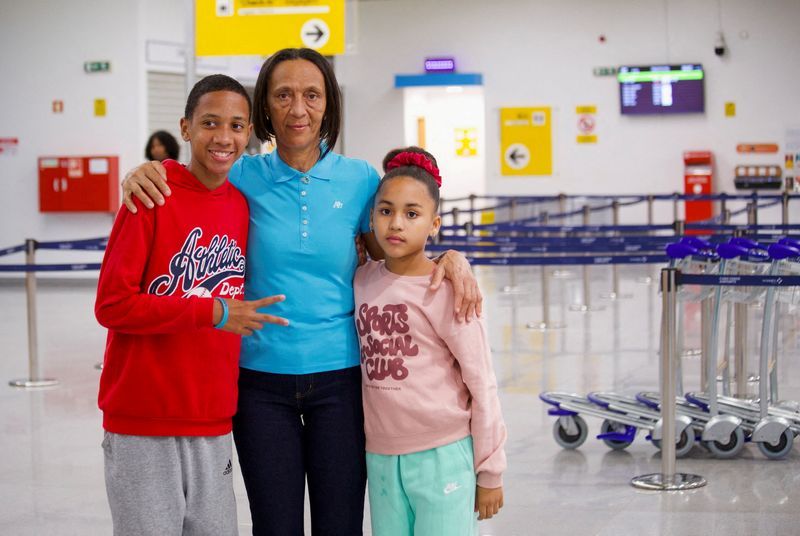
Ana Candida Evora will finally see her son play at the World Cup after the United States granted her a visa following an emotional public appeal. The 40-year-old Cape Verde goalkeeper Vozinha had tearfully revealed that his mother could not travel to watch him perform in the tournament opener against Spain in Atlanta, sparking widespread sympathy and intervention from American officials.
Vozinha's absence of his mother was particularly poignant given his exceptional display in that match. The goalkeeper orchestrated a remarkable defensive performance, making seven crucial saves to help Cape Verde achieve a 0-0 draw against Spain, the reigning European champions. His heroics earned him player-of-the-match recognition and established him as a key figure in Cape Verde's World Cup campaign, yet he was unable to share the moment with his most important supporter.
The impediment to Evora's travel illustrated the broader complications facing citizens from nations flagged under stringent immigration scrutiny. Cape Verde was among dozens of countries whose nationals faced requirements to post bonds of up to $15,000 merely to enter the United States under policies implemented during President Donald Trump's administration. For a woman from a modest background in an island nation, such financial barriers proved insurmountable, forcing her to abandon plans to witness her son's international moment.
When Vozinha publicly disclosed his mother's absence, his emotional account gained significant traction across media platforms. The visibility of his personal struggle prompted the U.S. State Department to take direct action. Officials confirmed that their visa operations team stationed in Praia, Cape Verde's capital, had engaged closely with Evora and expedited processing of her application with full assistance.
A State Department representative characterised the outcome in remarkably supportive terms, telling journalists that all procedures had been followed whilst ensuring "full steam ahead for travel for the game." This phrasing suggested a commitment to removing obstacles that had previously blocked her passage, reflecting both diplomatic goodwill and recognition of the human dimension underlying international sports competition.
Evora's newfound opportunity arrives with meaningful timing. Cape Verde will contest its second group-stage fixture against Uruguay in Miami on Sunday, providing her the chance to be present for her son's continued involvement in the tournament. The match represents another opportunity for Vozinha to showcase his abilities on a global stage with family support—a circumstance that carries profound emotional weight beyond typical sporting considerations.
The bond affair itself had undergone revision prior to Evora's visa approval. Initially, World Cup ticket holders from the affected nations remained subject to the bond requirement, creating a perverse situation where even supporters with confirmed attendance faced additional financial gatekeeping. Policymakers subsequently eliminated this requirement for individuals holding legitimate World Cup credentials, acknowledging the inconsistency of imposing immigration barriers on visitors attending America's hosting of the tournament.
For Malaysian and Southeast Asian observers, Vozinha's mother's journey underscores the unpredictable nature of travel regulations, particularly for citizens of developing nations attempting to access major international events. Many regional residents navigate similar bureaucratic complexities when seeking visas for global competitions or participation in international gatherings. The Cape Verde case demonstrates both the real hardship such policies can inflict on ordinary families and the potential for intervention when individual stories gain sufficient public attention.
Vozinha's emergence as a compelling World Cup narrative extends beyond his goalkeeping prowess. The goalkeeper's vulnerability in discussing his mother's absence revealed the emotional stakes underlying athletic performance for players from smaller football nations. For Cape Verde, a nation with limited historical World Cup appearances, each tournament represents a rare opportunity for global visibility, making family participation particularly significant.
The resolution of Evora's visa situation also reflects the peculiar tension within American immigration policy during major international events. The United States positions itself as a welcoming host for the World Cup whilst simultaneously enforcing restrictive entry requirements that initially prevented ordinary citizens from attending. Public pressure and media scrutiny effectively highlighted this contradiction, prompting bureaucratic reversal.
As Evora prepares for travel to Miami, her journey encapsulates broader themes about access, equity, and the human dimensions of international sport. Her presence at the Uruguay match will carry meaning extending far beyond the ninety minutes of play, representing the triumph of persistence over institutional barriers and the importance of family connection in athletic endeavour.

%22%2F%3E%3C%2Fpattern%3E%3C%2Fdefs%3E%3Crect%20width%3D%22100%25%22%20height%3D%22100%25%22%20fill%3D%22url(%23ph523ndg)%22%2F%3E%3Crect%20width%3D%22100%25%22%20height%3D%22100%25%22%20fill%3D%22url(%23ph523ndp)%22%2F%3E%3Ctext%20x%3D%2250%25%22%20y%3D%2250%25%22%20text-anchor%3D%22middle%22%20dominant-baseline%3D%22central%22%20fill%3D%22rgba(255%2C255%2C255%2C0.95)%22%20font-family%3D%22Georgia%2C%20'Times%20New%20Roman'%2C%20serif%22%20font-weight%3D%22700%22%20font-size%3D%22272%22%20letter-spacing%3D%22-0.02em%22%3EAnwar%3C%2Ftext%3E%3C%2Fsvg%3E)