Cambodia is making a deliberate push to reshape its industrial landscape by attracting South Korean capital into automotive components, electric vehicle systems, healthcare technology and other sophisticated manufacturing sectors. The shift represents a fundamental departure from decades of reliance on labour-intensive garment production, as Phnom Penh seeks to position itself as a hub for value-added manufacturing in Southeast Asia's evolving supply chains. This ambition became clear during an investment roadshow in Incheon last month, where Deputy Prime Minister Sun Chanthol, acting as first vice-chairman of the Council for the Development of Cambodia, led a high-level delegation to engage directly with major Korean companies and present Cambodia's investment case.
Chanthol's mission underscored the Cambodian government's determination to rewrite its economic narrative. Speaking at the 2026 Incheon-Cambodia Investment Roadshow, he pledged that "the Royal Government of Cambodia is firmly committed and fully prepared to welcome and provide all kinds of facilitation to Korean investors." The statement, while diplomatic, reflected genuine policy intent. The delegation was not content with passive promotion; instead, officials embarked on what they termed a "door-knock mission", scheduling factory visits and management meetings with firms already operating in sectors Cambodia wants to develop. This hands-on approach demonstrated how seriously Phnom Penh takes the need to deepen ties with South Korean manufacturers at a moment when global supply chains are undergoing historic reconfiguration.
The centrepiece of Cambodia's pitch involved major Korean conglomerates with existing footprints in the Kingdom. Daejoo KC Group, a sprawling South Korean conglomerate operating in metallurgy, chemicals, logistics, construction, automotive components and energy, received particular attention. The company's Cambodian operations already include Camko Motor, which assembles Hyundai vehicles for domestic consumption and produces automotive wire harnesses for export, generating approximately 500 jobs. Its sister company, Camko Infracore, handles vehicle imports and distribution alongside after-sales services. By highlighting these existing investments, Cambodian officials sought to demonstrate that Korean companies had already proven the viability of manufacturing in Cambodia, and that expansion into new sectors was both feasible and profitable.
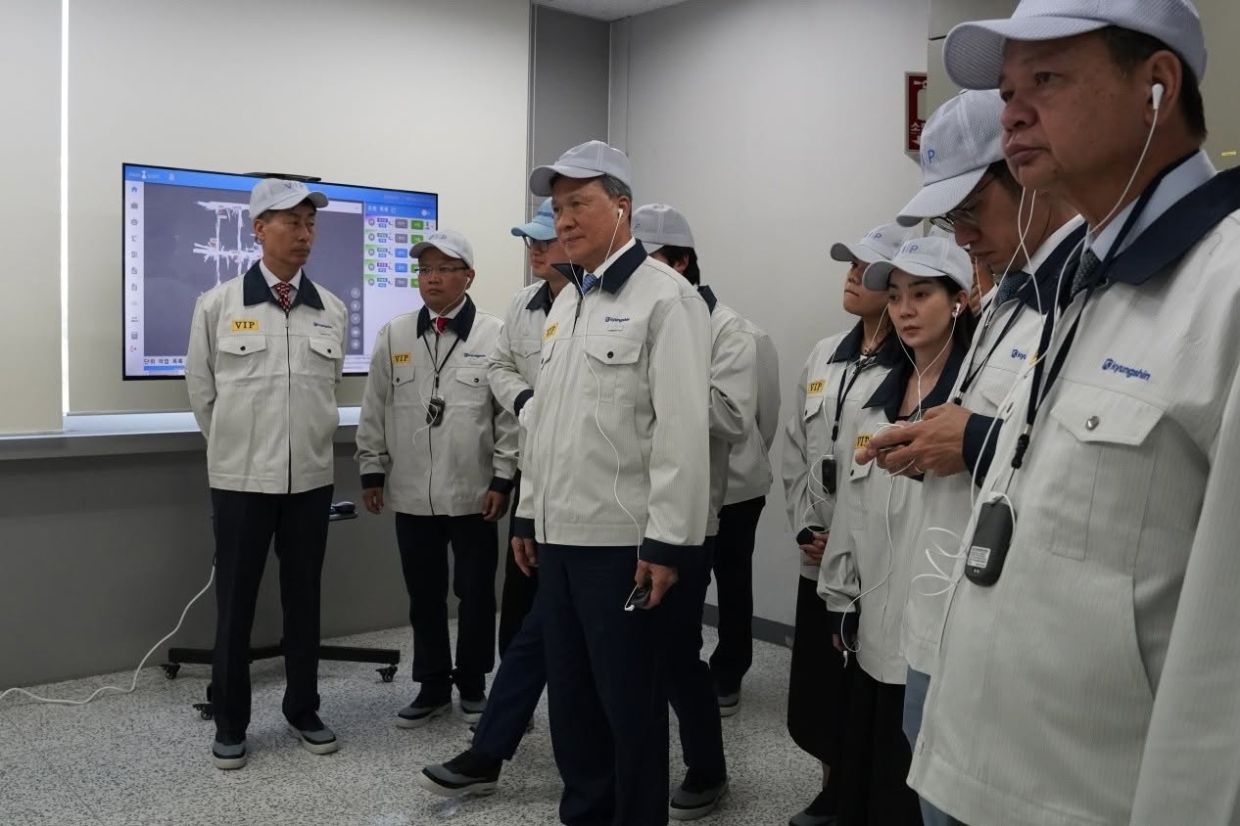
Equally significant was the focus on Kyungshin Co., Ltd., a leading manufacturer of automotive electronic components and wire harnesses founded in 1974. The company's specialisation in connectors, junction blocks, cables and advanced electrical systems for electric vehicles positions it perfectly for Cambodia's ambitions. Kyungshin has operated a wire harness factory in Kandal province since 2012, with capital investment around US$20 million and a current workforce of 1,467 employees. This long-term commitment provided Chanthol with concrete evidence that Cambodia could attract and retain sophisticated manufacturers. The factory's success also suggested that Cambodian labour forces could master complex manufacturing processes, a reassurance for Korean investors considering more advanced operations.
Cambodia's interest in automotive sectors reflects strategic thinking about regional integration. As global manufacturers pivot toward electric vehicles and smart mobility technologies, supply chain geography matters enormously. By positioning itself as a production base for automotive electronics and components, Cambodia can integrate into the broader Southeast Asian automotive ecosystem while serving South Korean manufacturers seeking to reduce dependence on traditional manufacturing hubs. The Kingdom's geographical location, existing infrastructure, and labour availability make it an attractive option, particularly as Korean companies consider diversifying their production footprint across Asia. Cambodia's push also coincides with wider regional trends, as Vietnam and Thailand consolidate automotive manufacturing dominance, creating opportunities for secondary hubs to capture parts of the value chain.
Beyond industrial manufacturing, the mission revealed Cambodia's interest in attracting service sector investment, particularly in healthcare. Chanthol's visit to Incheon Baek Hospital shifted focus from production to advanced medical technology and digital healthcare management systems. This diversification into medical services reflects Cambodia's understanding that modern economic development requires more than factories; it requires the ecosystem of professional services, technical expertise and institutional capacity that wealthy nations provide. By requesting technical assistance and knowledge transfer from Korean hospitals, Cambodian officials signalled that they view healthcare as both an opportunity for foreign direct investment and a strategic priority for national development. International-standard hospitals could serve both domestic patients and medical tourists, generating foreign exchange while improving public health infrastructure.
The breadth of the delegation itself conveyed important messages about coordination between different levels of Cambodian governance and business. The participation of the Cambodian ambassador to South Korea, CDC officials, Ministry of Commerce representatives, and business associations like the Cambodian Oknha Association demonstrated that investment promotion had become a whole-of-government undertaking. This alignment of diplomatic, regulatory and business interests suggests that Cambodia is willing to remove obstacles and provide incentives to attract quality investment. The involvement of the Korean Chamber of Commerce in Cambodia also indicated that Korean expatriate business communities were being mobilised to advocate for deeper bilateral economic ties.
Cambodia's new Investment Law featured prominently in the pitch, with officials emphasising incentive packages, fiscal benefits, macroeconomic stability and investment protection mechanisms. This legal framework represents Cambodia's attempt to signal that the operating environment for foreign investors has matured beyond earlier decades of uncertainty. For Korean companies accustomed to transparent regulatory environments, such assurances matter. Yet the law alone would not drive investment; the personal engagement of high-level officials, combined with evidence of successful Korean operations already in Cambodia, created a more persuasive case. The combination of institutional reform and practical demonstration carried more weight than promises alone.
The underlying context for Cambodia's efforts is the long-standing dominance of garment, footwear and travel goods manufacturing in the Cambodian economy. These sectors remain critical for employment and export revenue, supporting hundreds of thousands of workers and generating foreign exchange essential for national finances. However, garment manufacturing has faced sustained pressure from labour cost increases, trade volatility and environmental regulations. Global apparel companies have gradually shifted portions of production to lower-cost destinations in South Asia and Africa, squeezing Cambodia's competitive position. Cambodian policymakers have recognised that the sector alone cannot sustain long-term growth; the country needs industries offering higher wages, greater skill development and deeper integration into sophisticated global supply chains.
The automotive and electronics sectors represent precisely the kind of industries Cambodia needs. These sectors employ thousands in well-paid positions, require ongoing worker training and skill development, and create spillovers into logistics, services and professional employment. A factory producing automotive components or electronic harnesses generates demand for engineering support, quality control, supply chain management and ancillary services. These indirect effects multiply the economic benefits beyond direct factory employment. Moreover, automotive manufacturing has historically served as a stepping stone for developing economies, providing capital accumulation, technological capability and international business networks that facilitate diversification into other sectors.
Cambodia's pitch to South Korea also gains force from the broader geopolitical and economic context of Southeast Asia. Vietnam and Thailand have long dominated the region's automotive manufacturing, but both face rising labour costs and increasing strategic competition with China. Cambodia offers an alternative location for labour-intensive assembly operations, particularly for companies seeking to diversify risk or reduce concentration in single countries. For South Korean firms, Cambodia provides a productive alternative for operations that might otherwise relocate to Vietnam or Bangladesh. The Incheon roadshow essentially represented Cambodia's argument that the next wave of Korean manufacturing investment should consider the Kingdom as a viable option alongside traditional destinations.
The healthcare dimension of the investment mission also reflects awareness that future competitiveness depends on service sector development. International-standard medical facilities can attract high-value patients from across the region, generating foreign exchange and employment for doctors, technicians and support staff. Healthcare investment also builds institutional capacity and transfers knowledge that strengthens the broader economy. A modern hospital requires reliable electricity, water systems, communications infrastructure and trained professionals; investing in such facilities thus spurs broader development. For Cambodia, healthcare development represents an underexploited opportunity to attract foreign investment while improving living standards, a win-win alignment that Korean investors could find compelling.
Looking forward, the success of Cambodia's investment strategy depends on sustained execution. A single roadshow and series of factory visits, while important, must translate into concrete policy implementation, infrastructure development and follow-up engagement. Cambodian officials will need to demonstrate that incentive packages genuinely materialise, that regulatory processes function smoothly and that operational challenges receive prompt attention. The presence of successful Korean companies like Kyungshin and Daejoo KC provides powerful testimonials, but new investors will demand equal treatment and predictable governance. If Cambodia can deliver on its promises, the investment pipeline could grow substantially. If execution falters, the diplomatic goodwill demonstrated during the Incheon mission will dissipate quickly.
Ultimately, Cambodia's industrial pivot reflects a maturing recognition that manufacturing-led development requires continuous upgrading. The garment sector built Cambodia's modern industrial base, but that foundation must now support something more sophisticated. South Korea, which traversed precisely this path from light manufacturing to advanced industries, offers both a model and potential partner for the transition. By engaging Korean companies in automotive components, electric vehicles, healthcare technology and related sectors, Cambodia is investing in the possibility that it can repeat South Korea's own economic transformation. Whether this ambition translates into sustained industrial upgrading and rising prosperity remains the decisive question facing Cambodia's development trajectory over the coming decade.