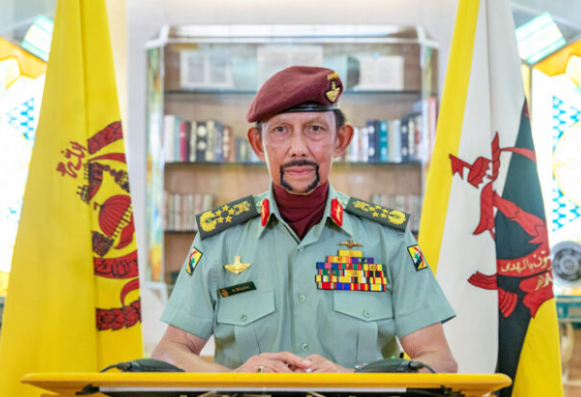
Sultan Hassanal Bolkiah marked the arrival of the Islamic New Year 1448 Hijrah by delivering a message to Brunei's population that sought to balance the pursuit of economic prosperity with the cultivation of spiritual wellbeing. In his address, the monarch articulated a vision of national development anchored in sincere religious intention, framing the new lunar year not merely as a temporal marker but as an opportunity for renewed commitment to both personal and collective responsibilities. The Sultan's emphasis on dual progress across material and spiritual dimensions reflects a governing philosophy that recognises the interconnectedness of economic advancement and moral foundation in nation-building.
The Sultan characterised the transition into a new year as a moment for recommitment rather than commencement, suggesting that sustainable progress demands ongoing dedication rather than cyclical restarts. He outlined a comprehensive framework encompassing economic growth, physical infrastructure development, religious knowledge, education and dakwah—the Islamic practice of proselytisation and moral guidance. This holistic articulation underscores an understanding that genuine national advancement cannot rest solely on financial metrics or construction projects, but must be undergirded by educational rigour and spiritual conviction that permeates society at all levels.
In contextualising Brunei's position globally, the Sultan acknowledged the turbulent international environment characterised by widespread conflict and instability. His observation that warfare invariably produces suffering without clear victors reflects a measured assessment of geopolitical realities affecting the broader Muslim world and regional stability. The juxtaposition of these external challenges against Brunei's internal peace underscores the relative fortune of the sultanate, a perspective that carries particular resonance for Southeast Asian nations navigating complex regional dynamics and security concerns.
The Sultan attributed Brunei's fortunate circumstances—its freedom from both armed conflict and major natural disasters—to the spiritual foundations upon which the nation is built. He specifically referenced the protective power of collective prayer, remembrance of Allah and Quranic recitation, framing these devotional practices as integral to state security rather than peripheral religious observances. This theological framing positions religious engagement as a civic duty with direct implications for national welfare, a perspective that elevates spiritual practice beyond personal piety to matters of public interest and collective safety.
Yet the Sultan's address pivoted significantly toward a pressing domestic concern that has evidently captured leadership attention: the rising tide of criminal activity. Rather than presenting crime as an inevitable feature of modern society, he characterised it as a threat requiring systematic, coordinated response. His specific mention of drug-related offences, theft and other criminal acts—coupled with his assertion that such activities contravene Islamic teaching—frames law enforcement not as a secular administrative function but as a religious imperative aligned with moral principles.
The Sultan's call for swift and effective action implicated multiple state institutions, with particular emphasis on security agencies and religious authorities working in concert. This institutional integration reflects a recognition that enforcement mechanisms alone cannot address root causes of criminal behaviour. By elevating the role of religious education and dakwah efforts, the Sultan signalled that prevention through spiritual awareness and moral education must accompany—and perhaps precede—punitive measures. For Malaysian observers, this approach mirrors similar efforts across the region to harness religious institutions as partners in crime prevention and social rehabilitation.
The Sultan's framing of crime prevention as fundamentally a spiritual matter underscores how Brunei's state apparatus integrates religious authority with secular governance in ways that distinguish it within Southeast Asia. Unlike secular frameworks that treat crime purely as law enforcement challenges, the Brunei model explicitly mobilises religious teaching and community leaders as frontline actors in addressing criminality. This integrated approach carries implications for how religious communities are expected to function within state structures and reflects assumptions about the compatibility between Islamic teaching and social order that resonate throughout the Muslim-majority nations of Southeast Asia.
Critically, the Sultan positioned crime prevention as a shared societal responsibility rather than solely a government function. By framing vigilance against criminal activity as a collective obligation rooted in Islamic principles, he invoked a sense of communal accountability that extends beyond institutional actors to individual citizens and families. This rhetoric appeals to Islamic concepts of collective responsibility and mutual accountability within the ummah—the global Muslim community—thereby psychologically mobilising the entire population as stakeholders in security outcomes.
The Sultan's repeated invocation of prayer as a mechanism for national protection—particularly his closing emphasis that Bruneians must remain vigilant, never negligent or complacent, while increasing prayers and remembrance of Allah—synthesises action and supplication. Rather than presenting these as alternatives, he positioned prayer and human effort as complementary approaches to security challenges. This synthesis reflects a Islamic theological understanding that divine providence works through human agency, and that prayers for protection most effectively operate alongside concrete preventive measures and institutional diligence.
For the broader Southeast Asian context, Brunei Sultan's message carries resonance particularly for Muslim-majority nations grappling with similar tensions between development ambitions and social stability. The emphasis on balancing material progress with spiritual grounding speaks to questions confronting Malaysia, Indonesia and other regional economies about whether rapid modernisation can be achieved without corresponding moral degradation. The Sultan's integration of religious institutions into crime prevention frameworks also offers a model that other governments in the region have partially adopted, albeit with varying degrees of success and controversy.
The Sultan's New Year message ultimately articulates a vision of national resilience built on triple foundations: economic competence, spiritual commitment and moral vigilance. His call for unity and collective action against crime suggests that despite Brunei's relative stability and prosperity, leadership perceives genuine threats requiring mobilisation of both institutional and communal resources. The invocation of divine blessing alongside practical governance reflects a ruling style that seeks legitimacy through alignment with Islamic principles while maintaining state authority over security matters, a delicate balance that characterises monarchical governance across the Gulf and Southeast Asia.