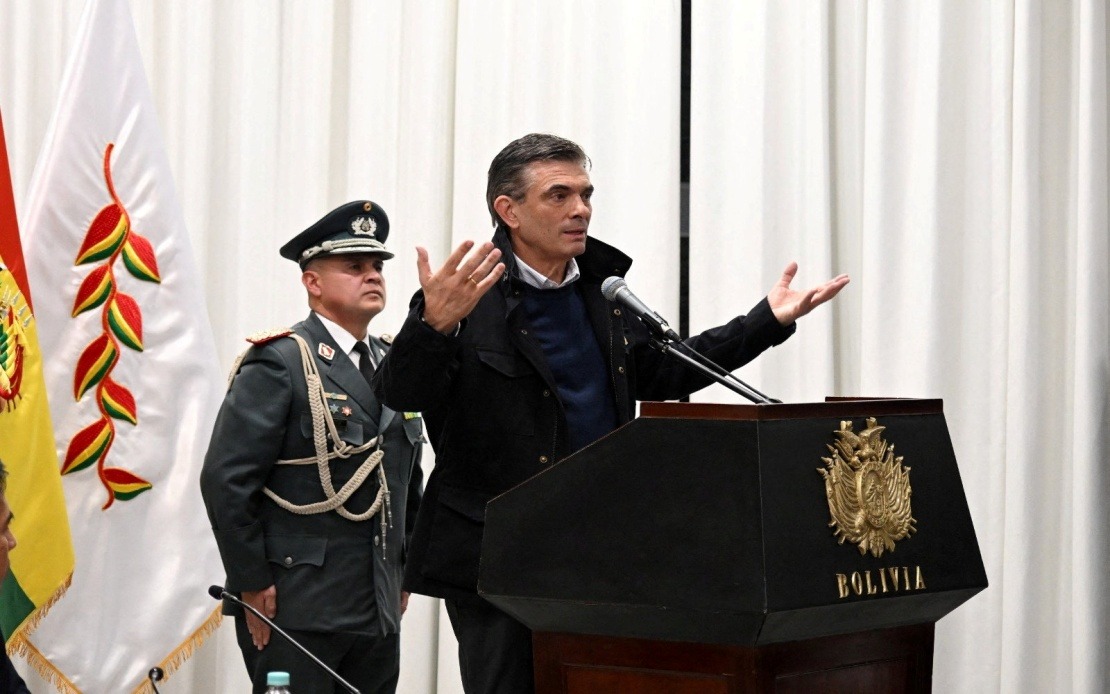
Bolivian President Rodrigo Paz has invoked emergency powers in response to an escalating political and economic crisis triggered by sustained anti-government blockades that have paralysed much of the nation. The declaration, announced through a televised address on Saturday, represents a dramatic escalation in tensions following weeks of demonstrations organised by unions and agricultural organisations demanding both his removal from office and relief from surging living costs. The emergency declaration clears the path for military mobilisation across the country in a bid to restore circulation on critical roadways and restore basic services to affected populations.
The blockade campaign has persisted for fifty days, transforming what began as localised labour disputes into a comprehensive challenge to governmental authority. Coordinated by workers' unions and farming collectives, the action reflects deep frustrations within Bolivia's agricultural and working-class sectors over deteriorating economic conditions. Organisers have weaponised the blockade tactic—traditionally a potent strategy in Bolivian politics—to prevent vehicular movement, supply deliveries, and routine economic operations, effectively creating a stranglehold on national commerce and public activity.
The humanitarian toll has become increasingly severe. Road closures have created acute scarcities of essential commodities across multiple regions, with particular shortages of foodstuffs, petroleum products, and pharmaceutical supplies reported. Medical facilities have struggled to obtain supplies and maintain operations, whilst families face difficulties acquiring basic groceries. These supply chain disruptions have compounded existing economic pressures, pushing ordinary Bolivians into deeper hardship and amplifying public anger toward the Paz administration's handling of the crisis.
In his emergency address, Paz articulated the government's perspective on the impasse, arguing that citizens have been effectively imprisoned by blockade activity that undermines fundamental freedoms. He framed the declaration as a necessity to restore Bolivians' ability to work, attend school, access healthcare, shop for provisions, and sustain their families—implicitly portraying the protest movement as illegitimate collective punishment of the general population. The rhetoric reveals the government's strategy of positioning itself as defender of ordinary citizens against what it characterises as coercive union tactics.
The decision to invoke emergency authority and deploy military forces represents a significant hardening of governmental resolve. Such declarations typically grant executive branches expanded powers to restrict movement, conduct security operations, and suppress dissent. For Paz, the measure signals determination to break the blockade through force rather than negotiation. Yet this escalation carries substantial risks, as military intervention in protest situations frequently generates backlash and can intensify rather than resolve underlying tensions.
Bolivia's history with labour movements and blockade actions provides crucial context for understanding current events. Road blockades have frequently served as powerful political tools in Bolivian society, wielded by indigenous communities, peasant organisations, and workers to challenge government policies. Previous administrations have confronted similar crises, sometimes negotiating with protest leaders and sometimes deploying security forces. The strategic utility of blockades within Bolivia's political culture explains both their continued use and the intensity of government counter-responses.
The underlying grievances motivating the protests reflect genuine economic distress. Rising costs of living have squeezed household budgets across Bolivia, particularly affecting workers and farmers whose incomes have not kept pace with inflation and commodity price volatility. The protest movement has successfully channelled this widespread discontent into organised action, leveraging the unions' organisational capacity to coordinate sustained pressure on government. This coordination distinguishes the current crisis from sporadic demonstrations, lending it greater leverage and resilience.
For Southeast Asian observers, Bolivia's predicament illustrates broader patterns affecting developing nations managing commodity dependence and economic volatility. Like several Southeast Asian countries, Bolivia faces pressures balancing labour demands with macroeconomic constraints, managing inflation, and maintaining social stability. The willingness of organised labour to employ disruptive tactics resonates with regional contexts where unions and farmer associations similarly wield considerable political influence and have demonstrated capacity for paralyising national activity.
The declaration also raises questions about democratic governance and proportionality. Whilst governments possess legitimate authority to maintain public order, emergency declarations that bypass normal legislative processes and deploy military force against civilian protesters warrant careful scrutiny. The international community, including regional bodies and democratic governance advocates, will likely monitor how Paz's administration executes the emergency declaration and whether military operations result in violence or suppression of legitimate dissent.
Looking forward, the emergency declaration may provide short-term relief by clearing roadways, yet it does not address the underlying economic grievances fuelling the protests. Sustainable resolution requires dialogue between government, unions, and farmer representatives to address inflation, develop economic relief measures, and restore confidence in state institutions. Without such engagement, blockades may resume once emergency measures expire, perpetuating the cycle of crisis and escalation.