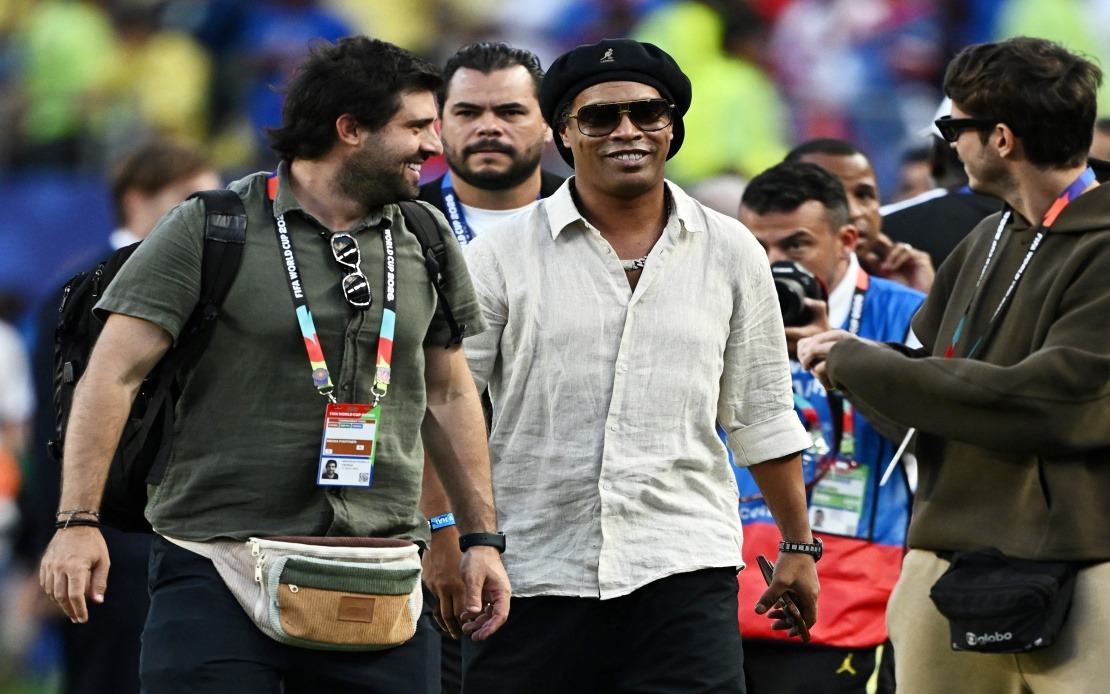
At 46 years old, Ronaldinho may yet step back onto the pitch. The Brazilian football legend has reportedly agreed to sign with Ravenna, an Italian third-division club, in what would represent a remarkable return to professional play more than a decade after his last competitive match. The move was reported by the German Press Agency citing Gazzetta dello Sport, with further details expected to emerge at a formal announcement scheduled for Miami on Tuesday.
The prospect of the legendary playmaker donning Ravenna's colours has generated considerable intrigue, though significant uncertainty surrounds whether he will actually participate in matches. Club officials have suggested that while Ronaldinho's presence alone carries prestige, his playing role may be ceremonial or limited. Vice-president Ariedo Braida told ANSA news agency that the club would determine his involvement as events unfold, remarking that "he is a champion, he knows no age," a hint that age-related limitations may not dictate his contribution.
Ronaldinho's enthusiasm for the prospect shines through available statements, with the Brazilian quoted as saying he cannot wait to "dance with the ball again and write a new story with Ignazio and the whole Cipriani family." His reference to club owner Ignazio Cipriani, a prominent businessman and hotel chain proprietor, suggests a personal connection may have facilitated the arrangement. Such relationships often define these unconventional football ventures, where sporting considerations blend with commercial and personal interests.
The timing of this potential comeback is particularly striking given how long Ronaldinho has been removed from the professional game. His final competitive match came in 2015 while playing for Rio de Janeiro's Fluminense, and he officially declared his retirement in 2017 following two stints in India's Premier Futsal League. For eight years since his formal retirement, the Brazilian has largely remained outside professional football, making this Ravenna proposal genuinely surprising to observers of the sport.
Ronaldinho's illustrious career provides context for why such a move, however unconventional, captures attention. The two-time FIFA World Footballer of the Year remains one of football's most celebrated figures, having won the World Cup with Brazil in 2002 when the nation claimed its fifth global title. His subsequent achievements included conquering European football's elite competition, claiming the Champions League with Barcelona in 2006 during a period when the club dominated continental play. His final major triumph came in 2013 when he lifted the Copa Libertadores with Atletico Mineiro, South America's premier club competition.
Ravenna's emergence as Ronaldinho's potential landing spot reflects broader trends in European football where third-tier and lower-league clubs increasingly pursue marquee signings to generate publicity and commercial interest. Italian football's third division has seen several veteran players attempt comebacks or final chapters in their careers, driven both by passion for the game and the financial opportunities such arrangements can present. For a club of Ravenna's stature, signing someone of Ronaldinho's profile would constitute a significant media coup.
The Brazilian's personality and on-field brilliance made him a global icon transcending football's traditional boundaries. His technical ability, creativity, and flair revolutionised perceptions of how football could be played at the highest level, and his infectious joy for the game never diminished even as his career wound down. This combination of residual star power and charismatic presence explains why clubs would pursue him regardless of whether he could perform at elite competitive levels.
For Malaysian and Southeast Asian football audiences, Ronaldinho's career has long held particular resonance. During his peak years, his performances captivated viewers across the region, and his willingness to play in India's futsal league demonstrated an openness to Asian markets that few superstars of his calibre had shown. A potential Ravenna appearance would offer global audiences, including Southeast Asian fans, another opportunity to witness him in action, even if in limited capacity.
The announcement scheduled for Miami suggests that serious planning surrounds this venture, with formal documentation and commercial arrangements likely already in advanced stages. The choice of Miami as the announcement venue hints at the international scope and possibly American investment interests connected to the deal. Such elaborate setup distinguishes this from casual comeback speculation, indicating genuine corporate and sporting machinery supporting the proposal.
Questioning whether Ronaldinho will actually play reflects realistic uncertainty about his physical condition after years away from professional football. Even for someone of his exceptional talent, the gap between recreational play and competitive match demands at professional level is substantial. Club officials appear to be hedging their bets, allowing for scenarios where his involvement could be ambassadorial rather than athletic.
Ravenna's location in Italy's Emilia-Romagna region, an area with strong sporting traditions and passionate football culture, provides an appropriate backdrop for such an extraordinary signing. Italian supporters appreciate technical excellence and football artistry, qualities that defined Ronaldinho's career. Whether this becomes a memorable final chapter or merely generates headlines, the move exemplifies football's enduring ability to create surprising narratives that blur the lines between sport, entertainment, and personal legacy.