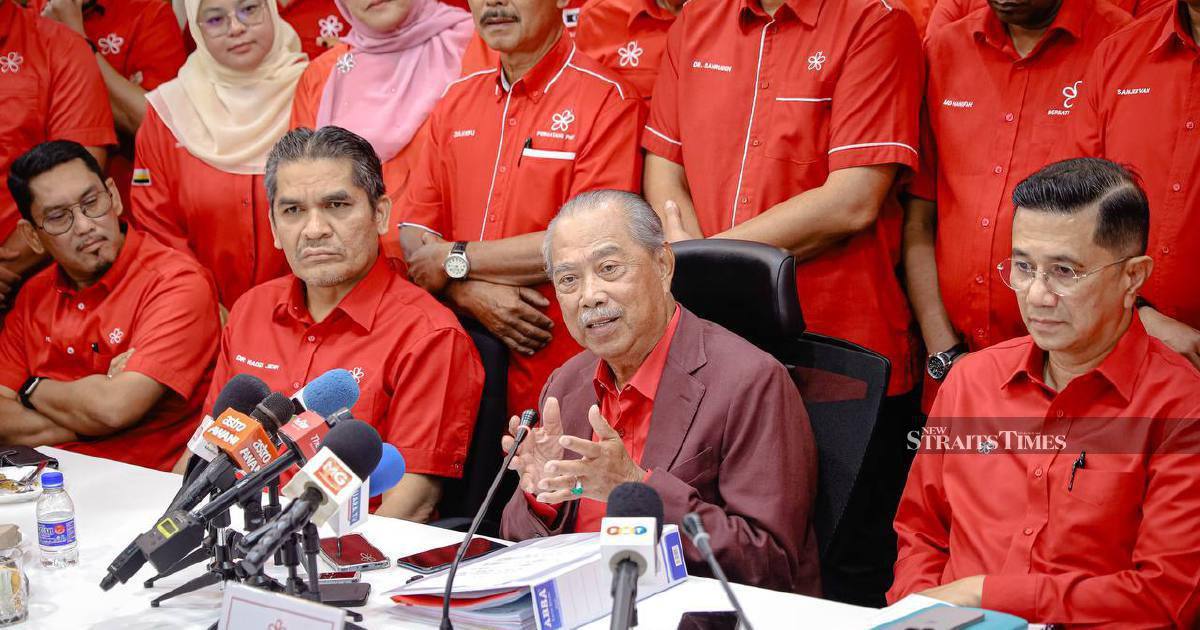
Bersatu is prepared to engage in direct electoral competition with Pas should both parties end up fielding candidates in the same Johor constituencies, according to the party's president Tan Sri Muhyiddin Yassin. His statement reflects deepening fissures within Malaysia's coalition landscape as the traditionally fractious relationship between Islamist and Malay-nationalist parties continues to shape electoral dynamics in strategically crucial states.
The declaration carries significant weight in Johor, where political alignments have undergone dramatic transformations in recent years. The southern state remains vital to any administration seeking stable parliamentary majorities at the federal level, making its electoral outcomes critically important to both Putrajaya and opposition strategists. Pas, which has consolidated considerable influence through state and federal offices, and Bersatu, which commands significant Malay-Muslim voter bases, represent two competing visions for Malaysia's political future.
Muhyiddin's readiness to engage in what could be bruising intra-coalition battles with Pas signals that Bersatu has moved beyond hopes for seamless power-sharing arrangements in Johor. Coalition politics in Malaysia has traditionally relied on seat-sharing agreements to prevent such direct clashes, as competing parties splitting the opposition or ruling alliance vote can inadvertently hand victories to rivals. However, the absence of watertight pre-electoral pacts between Bersatu and Pas suggests either genuine disputes over territorial claims or a tactical calculation that one party believes it can outcompete the other.
For Malaysian readers and observers, this friction illustrates the inherent instability within multi-party coalitions that lack foundational ideological alignment. Bersatu emerged as a splinter from the United Malays National Organisation during the tumultuous 2018-2020 period, subsequently allied with Pakatan Harapan, then shifted to partner Pas and other parties. This mobility reflects Bersatu's pragmatic approach to power-brokering but also underscores how personal loyalties and opportunistic partnerships can trump institutional coherence.
The prospect of Bersatu-Pas clashes in Johor would energise grassroots mobilisation among both parties' supporters, potentially intensifying the already competitive contest for Malay-Muslim votes in the state. Both organisations draw substantially from overlapping voter demographics, making any direct confrontation necessarily fierce and resource-intensive. Regional observers note that such internal coalition competition tends to benefit opposition parties that present unified fronts, as voter fragmentation among ruling parties historically provides openings for challengers.
Muhyiddin's comment arrives amid broader uncertainty regarding the precise timing and configuration of Johor state elections. The current political landscape in the southern state remains volatile, with various parties manoeuvring for advantageous electoral positioning. Bersatu's explicit willingness to contest against Pas suggests the party has assessed its organisational strength and voter appeal as sufficiently robust to withstand internal competition, particularly in constituencies where it maintains entrenched support bases.
The political implications extend beyond Johor itself. How Bersatu and Pas navigate their relationship in Johor electoral competition will establish precedents for other state contests and federal-level negotiations. Should one party decisively outperform the other in head-to-head contests, such outcomes would reshape hierarchies within Malaysia's broader political coalition structures. Alternatively, if direct competition produces fragmented results where both parties lose seats to opposition candidates, such outcomes could trigger recriminations and further destabilise already-tenuous coalition arrangements.
For Southeast Asian political observers, Malaysia's coalition instability reflects recurring tensions in systems where multiple religious and ethnic-based parties compete within democratic frameworks. Unlike two-party systems that enforce clear winner-take-all outcomes, Malaysia's plural party environment permits sustained ambiguity regarding which organisations control critical resources and influence. Bersatu's preparedness to confront Pas demonstrates the limits of coalition-building based purely on immediate power-acquisition rather than programmatic coherence.
Muhyiddin's statement also carries implications for federal governance continuity. Should Bersatu-Pas competition in Johor produce unexpected electoral outcomes, the resulting parliamentary arithmetic in Kuala Lumpur could shift dramatically. The southern state's representation disproportionately influences overall federal majorities, making any significant redistribution of seats between competing government coalition partners consequential for national stability and executive authority.
Looking forward, both parties face decisions regarding whether electoral pragmatism or ideological distinctions should guide pre-election negotiations. Bersatu's confidence in facing Pas directly suggests either genuine programmatic differentiation that appeals distinctly to specific voter segments, or alternatively, a belief that organisational machinery and incumbency advantages provide sufficient edge. Time will reveal whether such competitive willingness translates into tangible electoral outcomes or represents political posturing that precedes negotiated seat-sharing ultimately.