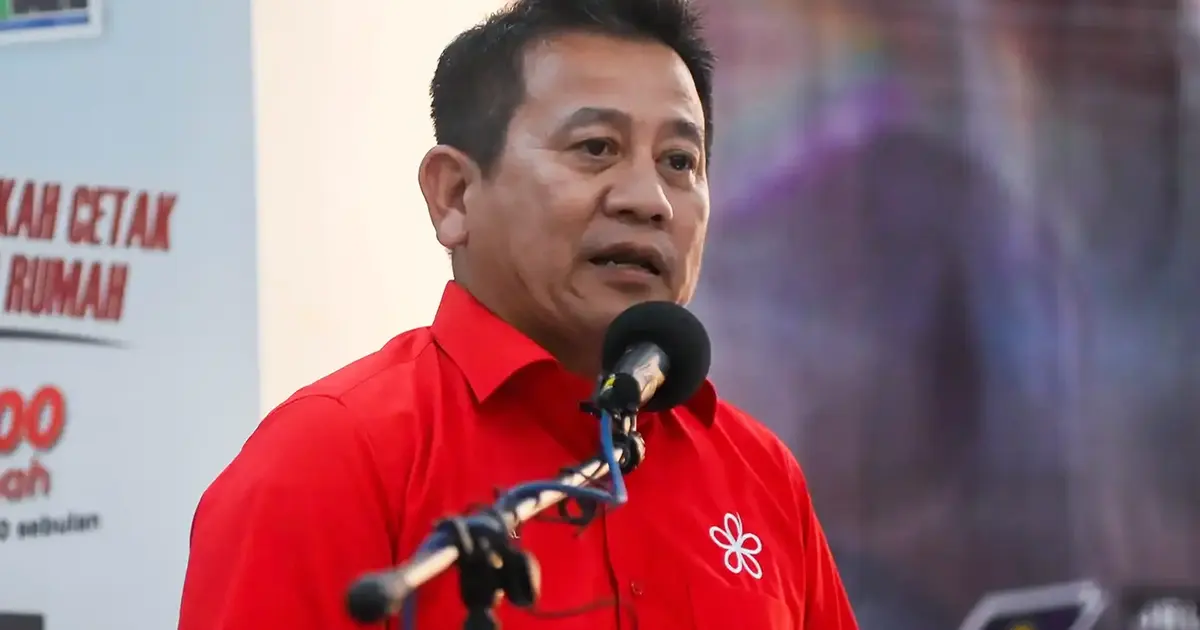
The governing coalition's fragile equilibrium has come under fresh scrutiny as Bersatu's information chief Tun Faisal Ismail Aziz raised pointed objections to what he characterises as PAS consolidating dominance within the Perikatan Nasional (PN) structure through a recent wave of organisational changes. His remarks highlight deepening fractures within the coalition that has anchored Malaysia's political landscape since the 2023 general election, underscoring the inherent tensions that emerge when ideologically disparate parties attempt to maintain unified governance at the federal level.
The broader context for this clash centres on how power is distributed and wielded within PN, which unites the Islamist-leaning PAS with the Malay-nationalist Bersatu party. Unlike Pakatan Harapan, which relied on formal coalition agreements and institutional safeguards, PN has operated through less codified arrangements, leaving space for disputes over influence and decision-making authority. Tun Faisal's accusations suggest that recent structural adjustments have disproportionately favoured PAS's organisational reach, raising concerns among Bersatu leadership about the sustainability of their role within the partnership.
The information chief's characterisation of PAS's conduct as demonstrating an increasingly authoritarian disposition carries particular weight given Bersatu's self-positioning as the ideological centrepiece of Prime Minister Anwar Ibrahim's government, though notably Bersatu is not the dominant player it once occupied in the PN framework. His critique implies that rather than engaging in collaborative decision-making typical of coalition governance, PAS is unilaterally advancing its institutional standing. This perception, whether fully accurate or not, signals that at least within Bersatu's hierarchy, frustration with inter-party dynamics is building and may require attention to prevent further deterioration.
For Malaysian observers, this intra-coalition friction carries implications beyond internal party squabbling. Coalition stability underpins the government's legislative capacity, budget passage, and broader policy agenda. If tensions between PN's major components intensify without resolution mechanisms, it could eventually compromise the administration's ability to function effectively, particularly on contentious matters requiring coalition-wide consensus. The risk is that what begins as disagreement over organisational structure could metastasise into deadlock on substantive governance questions.
PAS's electoral performance and grassroots organisation have long positioned it as the coalition's strongest component in terms of membership and mobilisation capacity, particularly in Peninsular Malaysia's heartland. The party's influence over religious and administrative portfolios at federal and state level has steadily consolidated over recent years. However, Bersatu, drawing support from both Malay-Muslim and broader constituencies, views itself as essential to PN's cross-community legitimacy and economic management credibility. This asymmetry in self-perception versus actual institutional weight may explain Tun Faisal's apparent anxiety about the organisation restructuring.
The specific nature of the reshuffle that triggered Tun Faisal's statement remains important context. Without clarity on precisely which administrative or structural changes prompted the accusation, it is difficult to assess whether his concerns reflect substantive shifts in power or represent tactical positioning within Bersatu's own internal dynamics. Nonetheless, his public articulation of these grievances indicates they have reached a threshold of visibility that suggests ongoing, unresolved disputes rather than isolated disagreements.
Regional observers should note that PN's cohesion difficulties mirror challenges faced by multi-party coalitions throughout Southeast Asia, where maintaining unity across ideologically distinct parties proves persistently difficult once governance pressures mount. Thailand's coalition governments, Indonesia's shifting party mathematics, and the Philippines' perennially fractious legislative arrangements all demonstrate how quickly coalition partners can shift from cooperation to competition. Malaysia's situation is complicated further by strong ethnic and religious cleavages that intersect with partisan identities, making compromise more fraught than in some neighbouring contexts.
Tun Faisal's comments also occur at a moment when Bersatu faces its own internal pressures, including questions about its strategic direction and the balance between its populist, anti-establishment brand identity and the realities of governing as part of the incumbent establishment. Criticism of PAS's methods may simultaneously serve as a way for Bersatu to reaffirm its distinct identity and mobilise its base around grievances against coalition partners, particularly as the next electoral cycle approaches and parties begin repositioning for electoral advantage.
The longer-term significance of this tension hinges on whether PN leadership possesses mechanisms for arbitrating such disputes before they metastasise into coalition-threatening breakdowns. Unlike coalitions with formal written agreements detailing power-sharing arrangements and dispute resolution procedures, PN has relied heavily on personal relationships and informal understandings. If those personal-relationship-based mechanisms are fraying, as Tun Faisal's public criticism suggests, then institutional vulnerability increases substantially.
Moving forward, stakeholders watching Malaysian politics should monitor whether PAS or other PN components respond publicly to Bersatu's accusations, as such exchanges could indicate whether the coalition possesses sufficient reserves of good faith to weather disagreements or whether friction is accelerating toward visible rupture. The government's performance on key policy initiatives in coming months will also test whether internal coalition tensions affect decision-making quality or legislative efficiency.