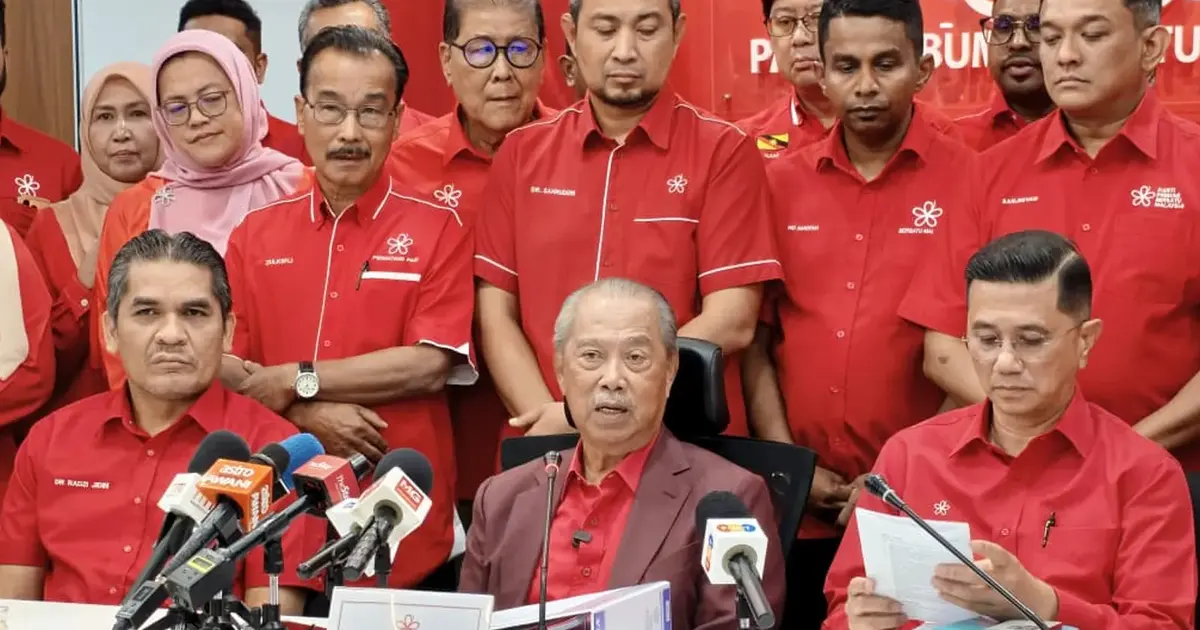
Bersatu will maintain its membership in the Perikatan Nasional coalition, according to party president Muhyiddin Yassin, who framed the decision as a reflection of popular support for the alliance among Malaysians. The announcement underscores the continued stability of the PN coalition at a time when Malaysian politics has been marked by shifting alliances and coalition realignments.
Muhyiddin's statement carries significance beyond party management, as Bersatu's role within Perikatan Nasional has been subject to speculation in recent months. The party, which emerged from a split within UMNO and has positioned itself as a distinct political force, provides crucial parliamentary support for the coalition's legislative agenda. By confirming Bersatu's continued participation, Muhyiddin is signalling that the party sees its future tied to the broader PN framework rather than pursuing alternative political arrangements.
The president's invocation of public acceptance as justification for Bersatu's position reflects a broader political strategy in Malaysian politics. Rather than emphasizing internal party calculations or leadership preferences, Muhyiddin has framed the decision in terms of democratic legitimacy and constituency support. This approach suggests that Bersatu believes its members and electoral base view the PN coalition favorably, or at least as the preferable option compared to other available political configurations.
Perikatan Nasional has evolved considerably since its formation, encompassing various parties with different regional bases and policy orientations. Bersatu's presence within the coalition represents a particular strand of Malay-Muslim politics that distinguishes itself from both the dominant UMNO-led Barisan Nasional and the opposition Pakatan Harapan. The party's continued commitment therefore helps maintain the coalition's internal ideological and structural balance, even as Malaysian politics continues to experience fluidity.
From a Malaysian political perspective, Bersatu's reaffirmation of loyalty to PN carries implications for both federal governance and state-level politics. The party maintains presence across multiple states and holds seats in parliament, meaning its coalition partners depend on its sustained participation for legislative majorities. Any shift in Bersatu's allegiance would necessitate significant realignments across Malaysia's political landscape and could trigger broader coalition instability.
The public acceptance criterion cited by Muhyiddin also reflects contemporary Malaysian political culture, where electoral performance and perceived grassroots support have become crucial metrics for party leaders justifying their strategic decisions. This is particularly relevant for Bersatu, which must maintain legitimacy among members who left UMNO alongside Muhyiddin during the earlier political crisis. Demonstrating that the party's current direction aligns with public sentiment helps consolidate internal party support and reduces susceptibility to defections.
For the broader Southeast Asian region, Malaysia's coalition politics serve as an interesting case study in managing multi-party systems without formal, institutionalized coalition agreements. Unlike parliamentary democracies with established coalition conventions, Malaysian politics requires ongoing negotiation and re-negotiation of partnership terms. Bersatu's continued participation in PN contributes to the coalition's ability to function effectively in this fluid environment.
The stability that Bersatu's commitment provides is particularly important given Malaysia's demographic and electoral complexities. The country's ethnically diverse electorate requires political coalitions capable of bridging different communities and interests. Perikatan Nasional's ability to maintain its coalition partners, including Bersatu, demonstrates that the alliance possesses sufficient internal cohesion to manage these challenges, at least in the short to medium term.
Looking ahead, Muhyiddin's statement effectively closes off speculation about Bersatu's future direction, at least for the present moment. By anchoring the party's decision to public acceptance rather than making it conditional on specific political developments, the Bersatu president has created space for the party to remain engaged with PN while preserving flexibility should future circumstances change. This allows Bersatu to navigate the ongoing complexities of Malaysian coalition politics without appearing either rigidly committed or opportunistically volatile.
The reaffirmation also addresses questions that have periodically emerged within political circles about whether Bersatu might seek alternative partnerships or pursue a more independent course. Such discussions had raised uncertainty about the coalition's durability. Muhyiddin's clear statement resolves this ambiguity, at least temporarily, providing greater predictability for PN's governance partners and opponents alike.
Ultimately, Bersatu's continued membership in Perikatan Nasional reflects both party calculation and genuine political conviction. The alliance has provided Bersatu with ministerial positions and policy influence that the party might struggle to achieve independently. Simultaneously, the party's leaders appear convinced that PN represents a viable vehicle for advancing their political vision within Malaysia's competitive landscape.
For Malaysian voters and political observers, Bersatu's commitment signals that Perikatan Nasional will continue functioning as a coherent political force in the foreseeable future. This stability, while perhaps less dramatic than coalition changes, has practical importance for government continuity and policy implementation across federal and state administrations where PN holds responsibility.