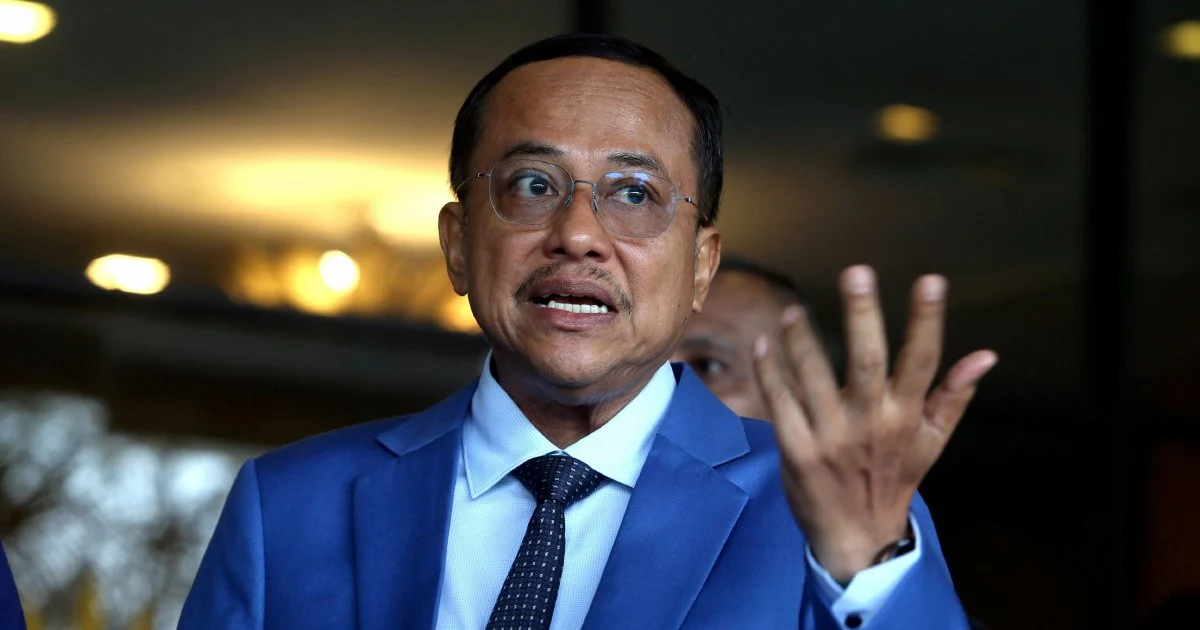
Bersatu's information chief Datuk Tun Faisal Ismail Aziz has mounted a scathing attack on Perikatan Nasional chairman Datuk Seri Dr Ahmad Samsuri Mokhtar, alleging that the coalition leader has neglected his fundamental responsibilities to the tripartite alliance. The criticism points to what Faisal characterizes as a fundamental misunderstanding of the PN chairmanship role, suggesting that Samsuri has conflated his duties as a party functionary with the broader mandate required of a coalition leader.
The accusation carries significant weight within the context of PN's internal dynamics. Faisal's statement highlights a recurring tension within multi-party coalitions in Malaysia, where maintaining equitable representation and balanced decision-making proves challenging. By suggesting that Samsuri has forgotten his position is coalition chairman rather than merely Pas chairman, Faisal is essentially arguing that the PN chief has failed to mediate between the interests of Bersatu, Pas, and the third component party, instead prioritizing Pas's agenda. This distinction matters considerably, as it affects how policy decisions are made and resources allocated within the alliance.
The nature of the underlying crisis remains central to understanding why such accusations have surfaced. Coalition leadership failures typically emerge when a chairman either sidelines certain members or fails to address disputes that threaten the alliance's stability. Faisal's use of the term "irresponsible" suggests not merely administrative oversight but a fundamental dereliction of duty that could have material consequences for PN's coherence and effectiveness. In Malaysian politics, where coalitions form the backbone of government structures, such internal friction between major component parties often signals deeper fractures.
Bersatu's public criticism reflects the party's growing frustration with how PN affairs are being managed. As one of PN's founding parties alongside Pas and Amanah's departure from the coalition structure, Bersatu holds considerable influence and legitimacy to challenge the chairman's conduct. The party would likely view itself as having sufficient standing to hold leadership accountable, particularly if it believes its interests are being marginalized in coalition decision-making. This public rebuke therefore serves both as a corrective mechanism and a warning to other coalition members that Bersatu will not silently accept what it perceives as discriminatory treatment.
The broader political context amplifies the significance of this internal squabble. Malaysia's political landscape has become increasingly fragmented in recent years, with multiple coalitions competing for parliamentary majority and state-level dominance. Any sign of weakness or internal division within PN weakens its overall negotiating position and raises questions about its ability to function effectively as a cohesive political force. Observers of Malaysian politics recognize that coalition stability directly impacts governmental stability, making leadership disputes far more consequential than mere factional positioning.
For Pas, which Faisal implicitly suggests is dominating PN decision-making at the coalition's expense, this criticism presents a delicate situation. Pas's dominance within PN, reflected in its substantial parliamentary representation and ministerial positions, may appear to justify its influence over coalition affairs. However, if other parties perceive that Pas interests are being prioritized over collective PN interests, resentment can accumulate and eventually destabilize the entire alliance. The party's leadership would need to demonstrate greater sensitivity to component party concerns to avoid further erosion of goodwill.
Regional implications extend beyond these three parties. States where PN holds power, such as Perlis, Kedah, Kelantan, and Terengganu, depend on coalition stability for consistent governance. Any deterioration in PN cohesion could complicate state-level administration and create openings for rival coalitions to exploit local divisions. The governance challenges in managing multi-party state governments become exponentially more difficult when the parent coalition is fractious or poorly led.
Samsuri's response to these allegations will be telling for PN's immediate future. A robust defense of his leadership record might stem further criticism, while a defensive or dismissive response could embolden Bersatu to escalate its complaints. The chairman faces the difficult task of demonstrating that he weighs all component parties' interests equally while acknowledging Pas's numerical strength and electoral contributions to the coalition. This balancing act lies at the heart of effective coalition leadership in Malaysian politics.
Historically, Malaysian coalitions have weathered internal disagreements by employing pragmatic compromise and established protocols for dispute resolution. Whether PN can employ such mechanisms effectively depends largely on whether Samsuri and Faisal, alongside other senior leaders, prioritize coalition preservation over partisan advantage. Should tempers continue escalating, the entire structure could unravel at a moment when political alternatives remain uncertain and unstable.
The timing of this public criticism may also warrant examination. Faisal's willingness to air grievances publicly rather than through private coalition channels suggests that behind-the-scenes resolution attempts have either failed or never materialized. This escalation indicates that Bersatu views the leadership issues as sufficiently serious to risk coalition stability by bringing them into public view. For Malaysian voters and political observers, such public disputes serve as windows into how different political parties manage power-sharing arrangements, ultimately informing assessments of their fitness to govern.
Looking forward, PN's ability to resolve these tensions constructively will determine whether the coalition can function effectively during Malaysia's upcoming political cycle. Should internal divisions persist unresolved, they may fundamentally weaken PN's positioning ahead of any potential electoral contests or parliamentary negotiations that determine government formation.