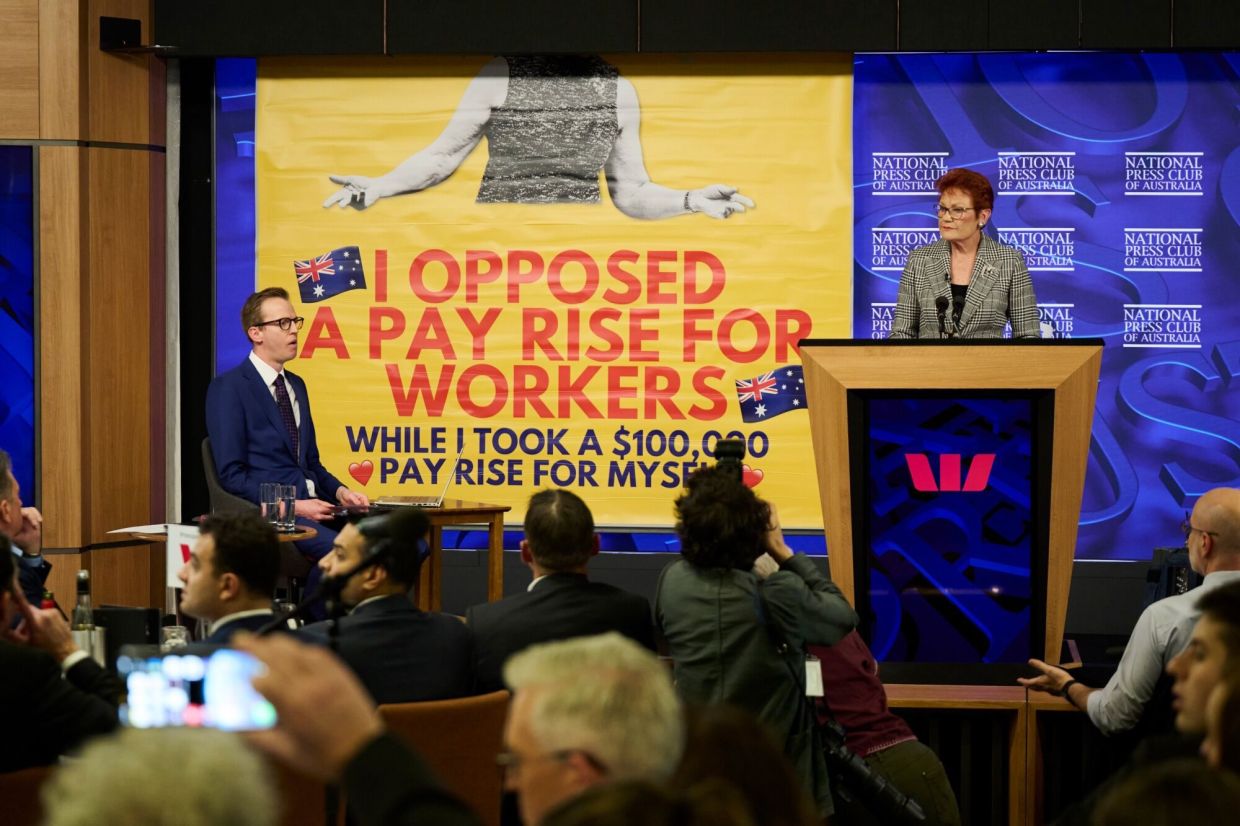
Australia's hard-right One Nation party leader Pauline Hanson has launched a frontal assault on multiculturalism, calling instead for a monocultural society that operates under a unified cultural framework. In remarks to the National Press Club in Canberra on Wednesday, Hanson articulated a vision starkly at odds with Australia's immigration-dependent model of the past several decades, framing multicultural policy as fundamentally flawed and responsible for the nation's acute housing affordability challenges. The speech marked a significant platform for Hanson, representing her first appearance at the prestigious venue across three decades in politics.
The One Nation leader drew a deliberate distinction between racial and cultural composition, acknowledging that Australia remains multiracial but insisting the nation must adopt singular cultural values. Her formulation—that "we are a multiracial society, but we must be monocultural"—attempts to separate demographic reality from ideological prescription, arguing that Australians should coexist under what she termed "the one cultural umbrella." This framing sidesteps accusations of explicit racism while promoting cultural assimilation as policy doctrine. The distinction matters because it allows Hanson to position her argument as cultural unity rather than racial homogeneity, though critics contend the practical effect would be similarly exclusionary.
Hanson's housing crisis diagnosis centers on immigration as the primary culprit. She has called for dramatic reductions in migration intake, positioning curbed immigration as essential to easing pressure on residential property markets where prices and rents have spiraled beyond reach for many Australians. The housing affordability squeeze has emerged as one of the nation's most politically volatile issues, affecting younger voters and working families across socioeconomic strata. By attributing this multifaceted problem—rooted in supply constraints, investment patterns, zoning restrictions, and financing structures—primarily to immigration, Hanson offers a simplified narrative that resonates with voters struggling with cost-of-living pressures.
The One Nation chief also proposed restricting entry of individuals from what she characterized as regions "immersed in extremism like radical Islam," signalling her party's hardline stance on both migration selection and religious minorities. This language conflates geographic origin with ideological threat, a rhetorical move that has become increasingly common among populist movements globally. Such framing allows advocates to present discriminatory immigration policies as security measures rather than expressions of cultural preference or religious prejudice. For Southeast Asian readers, such rhetoric carries particular relevance given the region's significant Muslim populations and historical experience with religious and ethnic tensions.
One Nation's political momentum has accelerated markedly over the past year, with the party consolidating support across opinion polling. This surge gained particular traction following the collapse of the centre-right coalition's electoral fortunes in May of the previous year, which triggered a political realignment and created space for populist challengers to capture disaffected voters. Hanson's party has positioned itself as responsive to grassroots frustration while mainstream parties grapple with complex policy trade-offs and institutional constraints.
The political environment Hanson inhabits is characterized by compounding economic stress. Australians have endured resurging inflation, elevated interest rates that increase mortgage servicing costs, and elevated fuel prices partially attributable to regional instability including the Iran conflict. These interconnected pressures have created a receptive audience for populist messaging that identifies villains—immigration, green energy policies, international conflicts—and proposes straightforward solutions. Hanson's speech bundled these grievances together, amplifying immigration's supposed role while criticizing the cost burdens associated with climate mitigation investments.
The government led by Prime Minister Anthony Albanese has attempted targeted interventions to cushion these economic shocks. Labor has implemented temporary reductions to fuel excise tax and pursued broader tax reform initiatives designed to address housing affordability. These measures represent orthodox economic policy responses attempting to manage demand-side pressures and improve household disposable income. However, they do not address the structural constraints in housing supply or the emotional resonance of narratives attributing societal problems to immigration and cultural change.
Albanese himself has diagnosed the rise of One Nation and similar movements as symptomatic of deeper economic malfunction. He has characterized the political appeal of what he terms "simplistic grievance-based politics" as a rational response to an economic system no longer delivering broadly distributed prosperity. This analysis suggests that Hanson's ascendancy reflects genuine material discontent rather than mere rhetorical manipulation, implying that addressing populism requires economic restructuring alongside political counter-messaging. The Prime Minister's framing acknowledges that voters experiencing real hardship will naturally gravitate toward political actors offering direct explanations and promised remedies, however contested their validity.
For Malaysia and broader Southeast Asia, Hanson's resurgence and her specific policy prescriptions carry important implications. Australia remains a critical regional power, a major trading partner for many Southeast Asian economies, and a source of migration and educational opportunities for the region's citizens. A sustained shift toward restrictive immigration policies and cultural nationalism in Australian politics would affect regional populations directly through tighter visa regimes and altered social integration prospects. Furthermore, Hanson's rhetoric regarding "radical Islam" and Islamic extremism carries potential to influence regional security narratives and bilateral relationships, particularly with Muslim-majority nations like Malaysia, Indonesia, and Brunei.
The deeper significance of Hanson's monocultural vision lies in what it reveals about contemporary democratic politics across developed nations. Economic inequality, inadequate housing supply, and unsustainable inflation are genuinely pressing problems requiring sophisticated policy responses integrating fiscal, monetary, and regulatory dimensions. When mainstream political parties struggle to deliver tangible improvements, space opens for movements offering simpler narratives that identify scapegoats—immigrants, minorities, foreign interests—as problem sources. Hanson's political success reflects not primarily her personal charisma but rather the vacuum created by conventional politics' apparent inability to resolve the material grievances animating her base.
Looking forward, the trajectory of Australian politics will significantly influence regional dynamics. Should One Nation consolidate and expand electoral support, Australia's approach to immigration, cultural policy, and regional engagement could shift substantially. Trade relationships, educational partnerships, and security cooperation might all feel the reverberations of a more nationalist Australian political consensus. Conversely, if Labor and opposition parties successfully reframe the debate around economic solutions beyond migration restriction, Hanson's momentum could plateau. The outcome remains uncertain, but her current political resonance signals broader challenges facing liberal democracies in reconciling cultural diversity, economic prosperity, and social cohesion.