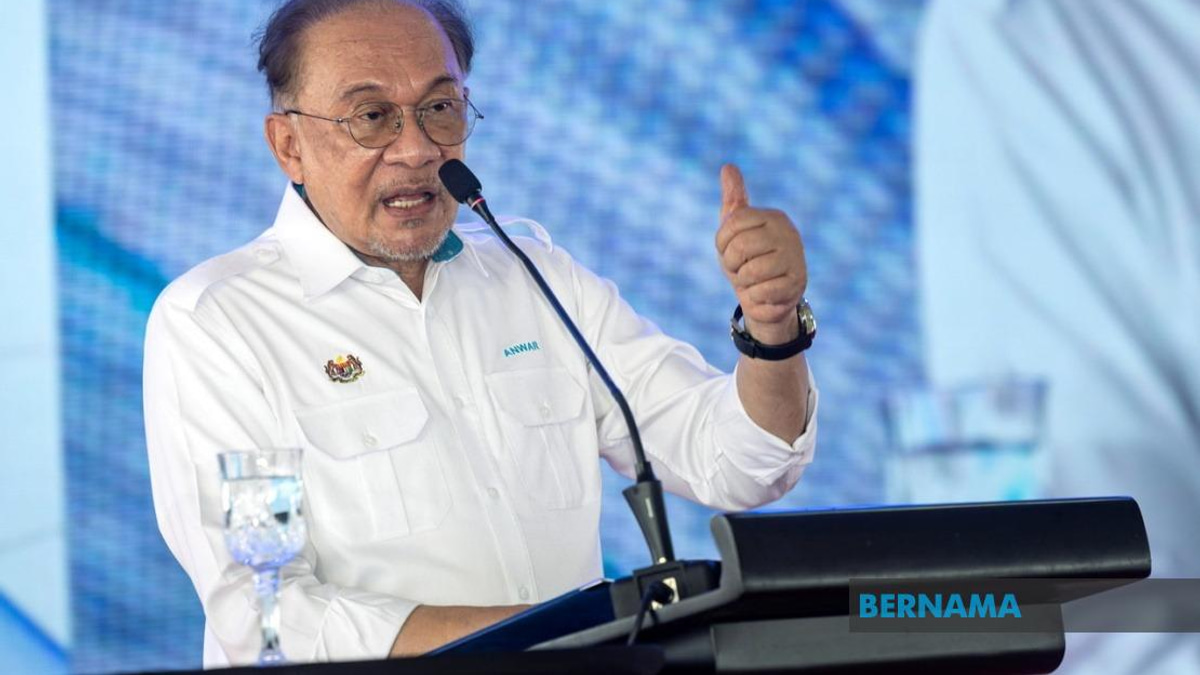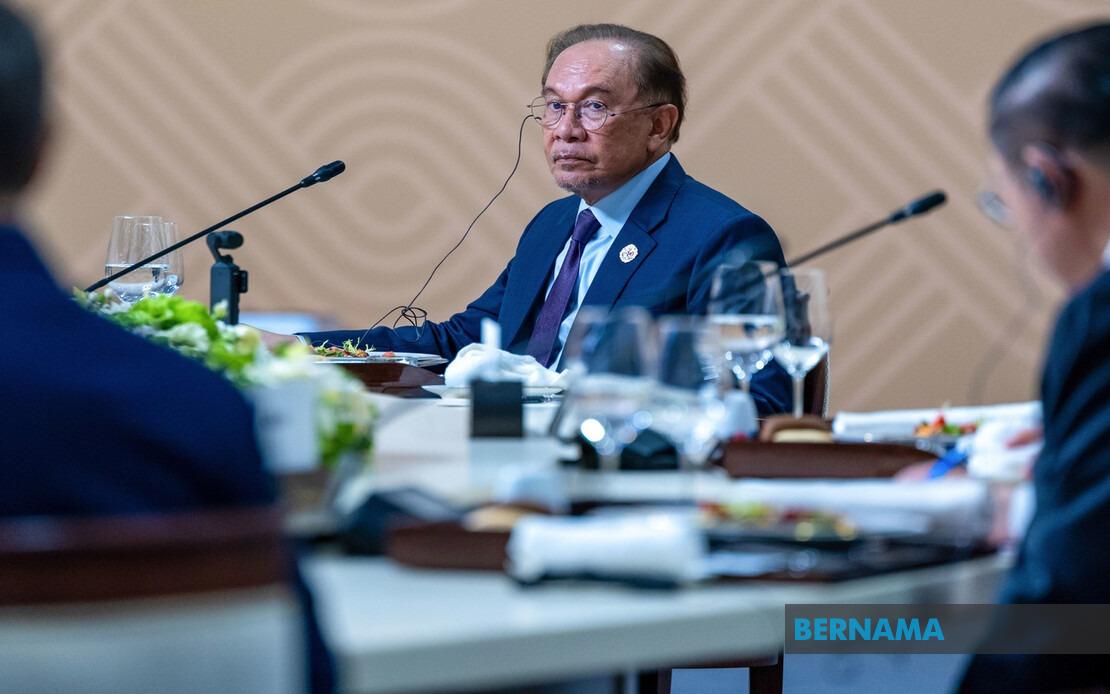
Prime Minister Datuk Seri Anwar Ibrahim has called for ASEAN and the Shanghai Cooperation Organisation to marshal their collective resources in addressing transnational crime and advancing regional energy security, arguing that these challenges transcend borders and demand coordinated regional responses. Speaking during an ASEAN-Russia working lunch in Kazan, the Malaysian leader emphasised that neither bloc can effectively combat these threats alone, and that existing bilateral frameworks provide a solid foundation upon which to build deeper collaboration.
The foundation for such cooperation already exists through a 2005 memorandum of understanding between the two regional groupings, which established parameters for working together on counter-terrorism, narcotics control, money laundering prevention, and economic cooperation. Rather than starting from scratch, Anwar suggested that ASEAN and the SCO should strategically focus on specific sectors where meaningful outcomes can be achieved within defined periods. This pragmatic approach reflects a recognition that sweeping, unfocused initiatives often fail to deliver tangible results across diverse member states with varying capabilities and priorities.
The Prime Minister painted a sobering picture of modern transnational crime, highlighting how online fraud schemes, illicit financial networks, and human trafficking operations now move across borders with alarming speed, often faster than law enforcement agencies can mount effective responses. The traditional nation-state model of policing, designed for a pre-digital era, struggles against criminal organisations that operate in virtual spaces and exploit gaps in international coordination. By establishing joint intelligence-sharing mechanisms and building capacity among law enforcement agencies across ASEAN and SCO nations, the two blocs could significantly enhance their ability to detect, investigate, and prosecute perpetrators of these crimes before they strike again.
On energy matters, Anwar highlighted the strategic advantage that the SCO represents as a grouping encompassing major energy producers and repositories of advanced energy technology expertise. The organisation currently brings together ten member states and two observer states, spanning from China and India to Russia and Iran, making it a vital hub for energy cooperation and innovation. This concentration of production capacity and technological knowledge creates unique opportunities for practical collaboration that individual nations cannot replicate alone. Malaysia, as an energy-conscious nation navigating its own transition to cleaner fuel sources, stands to benefit substantially from accessing the collective wisdom and technological capabilities embedded within the SCO framework.
The Malaysian leader outlined a comprehensive energy agenda that extends beyond traditional hydroelectric power and biofuels into contemporary concerns such as grid reliability, liquefied natural gas infrastructure, renewable energy integration, and operational resilience. These areas demand not merely theoretical discussion but hands-on technical cooperation, knowledge exchange, and joint problem-solving between institutions and private sector entities across member nations. For Southeast Asian countries seeking to balance economic growth with environmental sustainability, the expertise available within the SCO network could prove invaluable in avoiding costly mistakes and adopting proven methodologies for energy transition.
Apart from the SCO, Anwar also identified the Eurasian Economic Union as a partner grouping where ASEAN could deepen commercial and investment ties. Here too, existing frameworks remain underutilised, with considerable potential for strengthening business confidence and expanding trade flows between the two regional blocs. The Prime Minister stressed that frameworks alone are insufficient without deliberate steps to activate them and create practical opportunities for business engagement.
An important initiative the Malaysian leader advocated involves creating regular platforms for private sector dialogue and participation. By encouraging companies from both ASEAN and EAEU nations to attend and engage at trade expos, investment forums, and business conferences, the blocs can facilitate direct connections between firms seeking partners and market opportunities. Events such as the Eastern Economic Forum and St Petersburg International Economic Forum present ideal venues for hosting bilateral business dialogues that generate concrete commercial relationships.
Acknowledging the asymmetries in market power and technological access that characterise regional trade, Anwar identified support for smaller enterprises as a critical priority. Small and medium-sized enterprises from ASEAN nations often lack the scale, capital, and technical expertise to compete effectively in larger foreign markets. By facilitating technology transfer, providing market access information, and building workforce skills through targeted capacity-building programmes, ASEAN and EAEU can create more balanced competitive conditions that allow smaller firms to participate in regional commerce.
Beyond traditional trade sectors, Anwar identified emerging domains where ASEAN and EAEU interests increasingly converge. The digital economy, artificial intelligence applications, cybersecurity infrastructure, and food security represent frontier areas where both blocs face similar challenges and could benefit from shared research, standards-setting, and regulatory harmonisation. These sectors are particularly relevant for Southeast Asia, where digital transformation is reshaping economies and societies while creating novel security vulnerabilities and opportunities simultaneously.
The Prime Minister's remarks came during a two-day working visit to Kazan, the capital of Russia's Tatarstan republic, where he attended the ASEAN-Russia Commemorative Summit. This engagement reflects Malaysia's broader positioning as an active player in wider Asian geopolitics, engaging not only with regional Southeast Asian neighbours but also with major powers and neighbouring blocs to advance Malaysian interests and promote regional stability. The visit underscores how Malaysia continues leveraging ASEAN's diplomatic weight to negotiate partnerships that deliver tangible benefits for its citizens and businesses.

%22%2F%3E%3C%2Fpattern%3E%3C%2Fdefs%3E%3Crect%20width%3D%22100%25%22%20height%3D%22100%25%22%20fill%3D%22url(%23ph523ndg)%22%2F%3E%3Crect%20width%3D%22100%25%22%20height%3D%22100%25%22%20fill%3D%22url(%23ph523ndp)%22%2F%3E%3Ctext%20x%3D%2250%25%22%20y%3D%2250%25%22%20text-anchor%3D%22middle%22%20dominant-baseline%3D%22central%22%20fill%3D%22rgba(255%2C255%2C255%2C0.95)%22%20font-family%3D%22Georgia%2C%20'Times%20New%20Roman'%2C%20serif%22%20font-weight%3D%22700%22%20font-size%3D%22272%22%20letter-spacing%3D%22-0.02em%22%3EAnwar%3C%2Ftext%3E%3C%2Fsvg%3E)