Prime Minister Datuk Seri Anwar Ibrahim has moved to dispel concerns that the urban poor are being neglected in the government's development agenda, insisting that his administration prioritises their welfare and actively safeguards their rights in the pursuit of improved living standards.
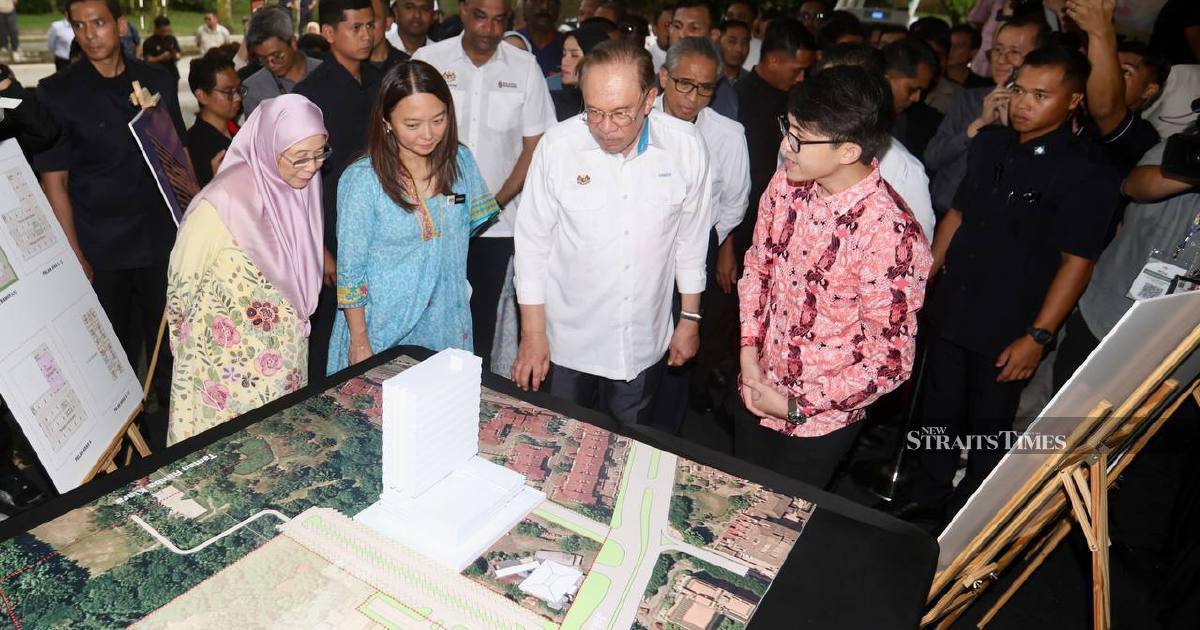
The assertion comes as the government advances plans for the Bukit Kiara development initiative, which officials contend demonstrates a tangible commitment to addressing housing challenges faced by lower-income communities in urban centres. The project has become something of a litmus test for whether the administration's pro-poor rhetoric translates into substantive policy action at a time when affordable housing remains a contentious political issue across Malaysia.
Anwar's comments reflect growing sensitivities around urban development and gentrification in Malaysia's major cities. As property prices continue their upward trajectory and rental costs strain household budgets, questions persist about whether government initiatives genuinely protect vulnerable populations or inadvertently contribute to their displacement. The Bukit Kiara scheme appears designed to address these anxieties head-on by positioning affordable housing development as a core policy priority rather than a secondary concern.
The timing of the Prime Minister's remarks carries significance given Malaysia's complex relationship with urban development and social equity. Over recent decades, rapid urbanisation and infrastructure projects have transformed Malaysian cities, though critics argue that benefits have accrued disproportionately to wealthier segments while lower-income residents faced displacement or gentrification pressures. The government's current framing of projects like Bukit Kiara suggests an attempt to rebalance this narrative.
The Bukit Kiara initiative itself represents part of a broader portfolio of housing policies the current administration has pursued since taking office. Officials have consistently emphasised the need to make homeownership accessible to those earning modest incomes, recognising that housing affordability remains a persistent concern affecting economic mobility and social stability in urban Malaysia. By explicitly linking development projects to urban poor welfare, the government signals that social considerations are integrated into planning rather than treated as afterthoughts.
Context matters considerably here. Malaysia's urban poor comprise diverse demographics—low-wage workers, retirees on fixed incomes, and precarious gig economy participants—who compete increasingly for limited affordable accommodation in city centres. When housing projects are announced, stakeholders watch closely to determine whether benefits flow to actual target groups or whether market forces ultimately price out intended beneficiaries. The government's confidence in the Bukit Kiara model suggests internal assessments that appropriate safeguards exist.
Anwar's intervention also reflects the political economy of Malaysian governance. Urban constituencies increasingly determine electoral outcomes, and lower-income urban voters represent a significant political constituency whose support matters substantially. Demonstrating concrete commitment to their material welfare forms part of the broader political calculus that justifies government resource allocation and policy choices. When the Prime Minister personally champions specific projects, it signals organisational commitment and attempts to build political capital with constituencies experiencing housing insecurity.
The reference to "rights" in Anwar's framing proves particularly noteworthy, as it positions housing access and urban development participation within a human rights framework rather than treating them merely as welfare questions. This rhetorical move reflects evolving international discourse around housing as a fundamental right rather than a commodity determined entirely by market mechanisms. Malaysian policymakers are increasingly conscious of these global conversations, particularly as the nation positions itself as a middle-income country committed to inclusive development.
However, rhetoric alone rarely satisfies stakeholders scrutinising government action. The success of initiatives like Bukit Kiara will ultimately be measured through implementation metrics—how many units are completed, how affordability is maintained over time, what mechanisms prevent eventual market-driven price increases, and whether residents selected to benefit genuinely represent the intended demographic. Skeptics will likely monitor whether project timelines slip, whether construction quality meets standards, and whether promised support services materialise.
For Malaysian policymakers navigating urban development, the challenge involves balancing multiple competing priorities. Cities require continuous upgrading to maintain competitiveness and accommodate growing populations. Yet development projects risk pricing out existing residents if not carefully structured. The government's emphasis on initiatives like Bukit Kiara suggests an understanding that inclusive development—where expansion actively incorporates lower-income communities rather than displacing them—represents both a moral imperative and a political necessity.
Regionally, Malaysia's approach to urban poor welfare and development inclusion carries implications for neighbouring Southeast Asian countries confronting similar urbanisation pressures. Policymakers across the region increasingly recognise that sustainable urban development requires addressing inequality rather than exacerbating it. By placing the Bukit Kiara project in the foreground of its urban narrative, the Malaysian government positions itself as attempting to model inclusive development, even as observers remain cautious about whether the reality will match the rhetoric.
Moving forward, the government's credibility on urban poor welfare questions will hinge substantially on successful Bukit Kiara execution. Political capital invested in such announcements must be backed by demonstrated results to maintain public confidence in government commitments. For urban Malaysians concerned about housing security and development inclusion, the coming months and years will reveal whether prime ministerial assurances reflect genuine policy substance or represent optimistic framing of complex implementation challenges.