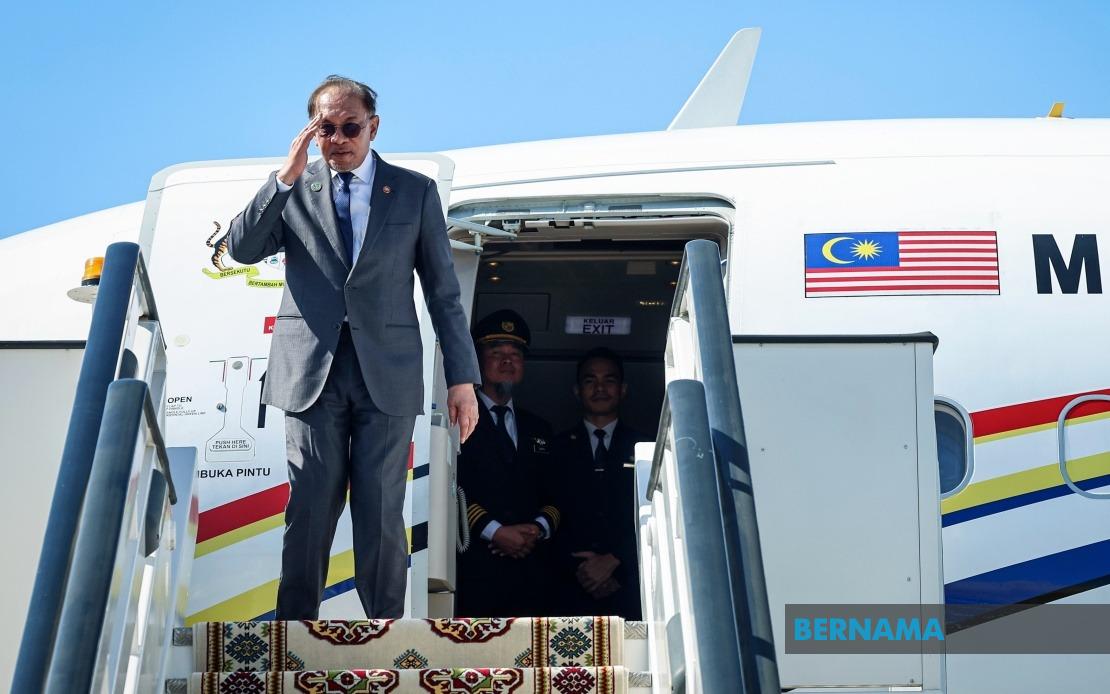
Prime Minister Datuk Seri Anwar Ibrahim touched down in Penang on Wednesday following his completion of an official visit to Turkmenistan, diving immediately into a series of high-profile engagements across the northern state. The PM's departure from Ashgabat International Airport at 4.45 pm local time marked the conclusion of Malaysia's top elected official's first trip to the Central Asian nation since his assumption of the premiership in November 2022, an invitation extended by Turkmenistan's President Serdar Berdimuhamedov.
Anwar's latest international sojourn was itself part of a broader diplomatic swing through the region. Prior to entering Turkmenistan, the PM had been in Kazan, Russia, where he participated in the 35th ASEAN-Russia Commemorative Summit alongside Investment, Trade and Industry Minister Datuk Seri Johari Abdul Ghani and Economy Minister Akmal Nasrullah Mohd Nasir. These engagements underline Malaysia's continued engagement with strategic partners across Eurasia, even as the country navigates complex geopolitical currents.
Upon arrival in Penang, Anwar wasted no time in leveraging his platform to spotlight industrial investment and private-sector development on the island. His opening ceremony for MKS Instruments Malaysia Sdn Bhd at Bandar Cassia Technology Park in Batu Kawan, scheduled for 11 am, represents the type of manufacturing and technology-focused enterprise that aligns with the government's economic diversification agenda. The semiconductor and instrumentation sectors remain critical to Malaysia's aspirations for high-value manufacturing and knowledge-economy growth, particularly as regional competition intensifies from Vietnam, Thailand, and Indonesia.
Shortly after, Anwar was set to preside over a groundbreaking ceremony for the Setia Fontaines Industrial Park at the Setia Experience Centre in Bandar Setia Fontaines, Kepala Batas. This development project carries particular significance for Penang's long-term economic trajectory, as Setia's commitment to the initiative signals confidence in the Northern Corridor as a destination for sustained industrial expansion. The event was also scheduled to feature the launch of two additional strategic collaborations within the broader Setia Fontaines township, suggesting a multi-layered approach to economic development that encompasses not only manufacturing but also ancillary services and ecosystem support.
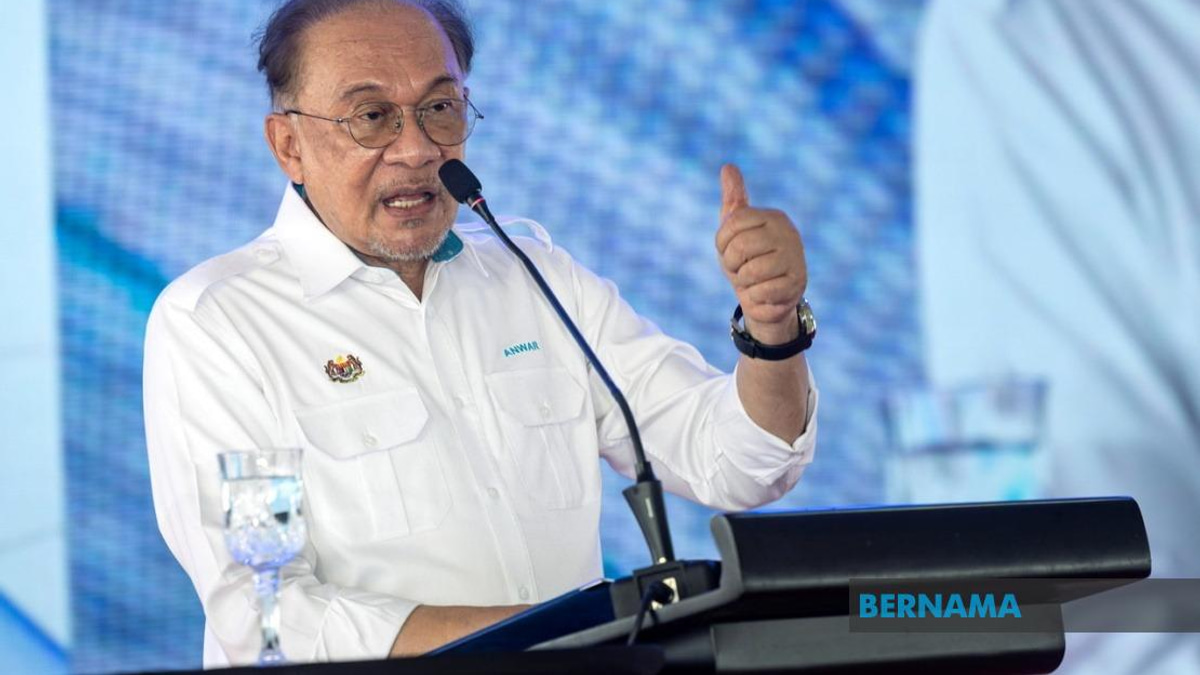
The afternoon portion of Anwar's Penang visit centered on the HAWANA 2026 Grand Finale, held at the PICCA Convention Centre @ Butterworth Arena. HAWANA, an annual recognition platform organised by the Communications Ministry and implemented by the Malaysian National News Agency (Bernama), serves as Malaysia's primary occasion for honouring media professionals who have advanced journalism and shaped public discourse. The event was expected to draw approximately 1,000 media practitioners from across Malaysia and internationally, making it a significant gathering for the country's fourth estate.
During the HAWANA ceremony, Anwar's responsibilities included presenting the institution's core HAWANA Award and Special HAWANA Award to recipients whose careers have exemplified excellence and integrity in journalism. Such recognition carries weight within Malaysia's media landscape, where professional standards and editorial independence remain subjects of ongoing public debate. By appearing as the primary presenter, the Prime Minister underscored the government's official commitment to acknowledging journalistic contribution, even as press freedom advocates continue monitoring the political-media relationship.
An additional component of the PM's HAWANA involvement entailed distributing contributions from Tabung Kasih@HAWANA, a welfare fund earmarked for media practitioners facing financial hardship. This element reflects a broader recognition within government circles that journalism, particularly at local and regional levels, often provides modest remuneration, and that professional sustainability depends partly on institutional support. The initiative addresses a legitimate concern within the industry, where economic pressures have contributed to newsroom consolidation and reduced investigative capacity across much of Southeast Asia.
Anwar's orchestrated schedule across Penang demonstrates the calculated rhythm of Malaysian prime ministerial diplomacy and domestic engagement. The sequence—international relations, industrial development, media sector recognition—reflects the multiple constituencies a sitting premier must address. For Penang specifically, the itinerary acknowledged the state's status as a manufacturing and technology hub while simultaneously recognising the media's role in democratic governance and public information dissemination.
Following the Penang engagements, Anwar's evening commitments took him to Negeri Sembilan for a dinner hosted by Himpunan Pertubuhan Lima Generasi (PLG) Malaysia, an organisation focused on multi-generational civic participation. This final event of his one-day northern circuit again highlights the PM's broad engagement across business, professional, and civil society sectors. For Malaysian observers tracking governmental priorities, the compacted schedule illustrates how contemporary prime ministerial work encompasses simultaneous diplomacy, industrial promotion, and domestic institutional engagement—all within a compressed timeframe that tests both physical stamina and political messaging coherence.

%22%2F%3E%3C%2Fpattern%3E%3C%2Fdefs%3E%3Crect%20width%3D%22100%25%22%20height%3D%22100%25%22%20fill%3D%22url(%23ph523ndg)%22%2F%3E%3Crect%20width%3D%22100%25%22%20height%3D%22100%25%22%20fill%3D%22url(%23ph523ndp)%22%2F%3E%3Ctext%20x%3D%2250%25%22%20y%3D%2250%25%22%20text-anchor%3D%22middle%22%20dominant-baseline%3D%22central%22%20fill%3D%22rgba(255%2C255%2C255%2C0.95)%22%20font-family%3D%22Georgia%2C%20'Times%20New%20Roman'%2C%20serif%22%20font-weight%3D%22700%22%20font-size%3D%22272%22%20letter-spacing%3D%22-0.02em%22%3EAnwar%3C%2Ftext%3E%3C%2Fsvg%3E)