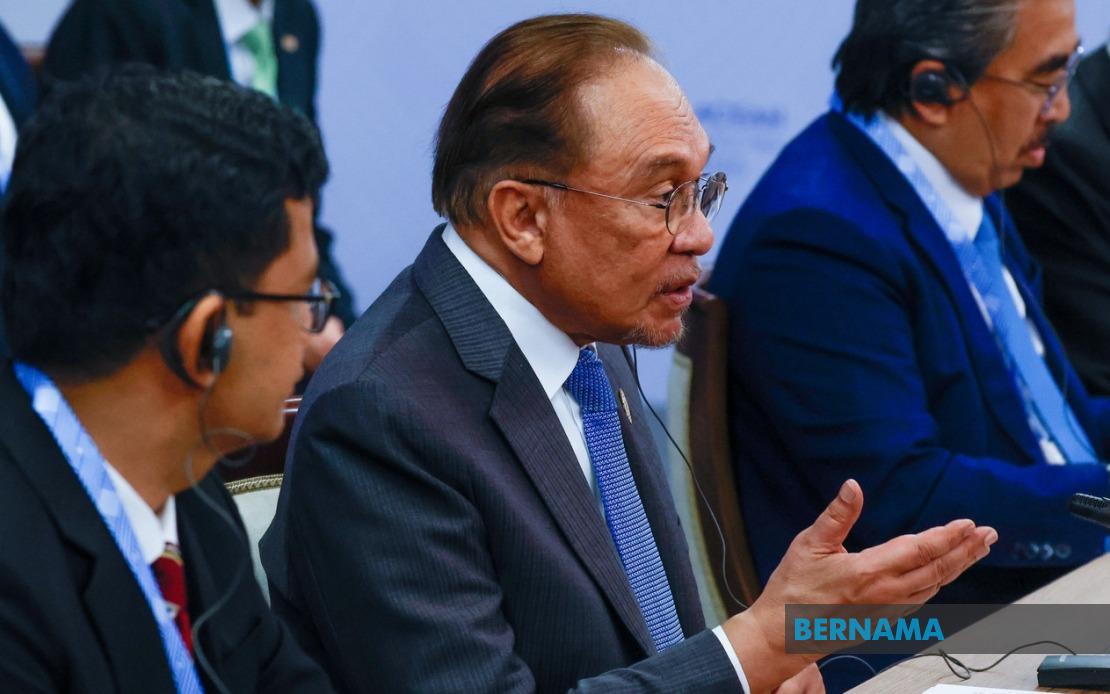
Malaysia's Prime Minister Datuk Seri Anwar Ibrahim used a bilateral meeting with Russian President Vladimir Putin in Kazan on Wednesday evening to acknowledge Russia's unwavering approach to two of the most pressing geopolitical challenges confronting the Middle East. Speaking during opening remarks, Anwar singled out Moscow's handling of both the Gaza conflict and broader Iran-related tensions, describing Russia's diplomacy as notably principled and steadfast amid a complex regional environment.
The Malaysian leader framed his comments as a recognition of qualities he believes extend beyond Moscow's immediate interests. Anwar stated that Malaysians and numerous other observers worldwide held deep admiration for Putin's commitment to sustaining these positions despite international pressure and shifting diplomatic currents. The tone suggested Malaysia views Russia's approach as aligned with principles that resonate across the Global South, particularly among nations seeking alternatives to Western-led geopolitical frameworks.
Russia's trajectory on Gaza has centred on advocacy for an immediate cessation of hostilities, coupled with insistence that humanitarian corridors remain open to Palestinian populations affected by the conflict. Moscow has consistently framed its position as promoting de-escalation rather than perpetuating cycles of confrontation. This stance, articulated repeatedly through diplomatic channels and United Nations forums, contrasts sharply with the approach taken by some Western powers that Malaysia and other non-aligned nations perceive as favouring one party over another.
On Iran specifically, Russia has maintained robust diplomatic and economic ties with Tehran while simultaneously positioning itself as a voice for dialogue and negotiated resolutions rather than military interventionism. This balancing act reflects Moscow's broader strategic interest in preventing further destabilisation across the Middle East, a region where Russia has significant stakes through its operations in Syria and its energy-dependent relationship with OPEC members. Russia's refusal to align with efforts to isolate Iran further or support military escalation represents a consistent thread through its recent foreign policy.
For Malaysia, Anwar's explicit commendation of Russia signals several underlying strategic calculations. Firstly, it reinforces Malaysia's own non-aligned positioning during a period when many Southeast Asian nations face pressure to choose sides between major power blocs. By praising Russia's principled approach, Malaysia subtly reiterates its belief that smaller nations and the Global South can chart independent courses on contentious international issues rather than automatically deferring to Western positions or those of other great powers.
Secondly, the emphasis on consistency and conviction holds particular weight in Malaysia's diplomatic vocabulary. Anwar's government has positioned Malaysia as a champion of Palestinian rights and advocate for peaceful resolution of Middle Eastern disputes, often at odds with some Western allies. Russia's unwavering support for these principles, regardless of international sanctions or diplomatic isolation, provides Malaysia with a reference point for its own foreign policy choices and domestic political messaging.
The Gaza situation remains deeply sensitive throughout the Islamic world and Southeast Asia, where Muslim-majority Malaysia maintains strong cultural and religious affinity with Palestinians. Russia's sustained calls for ceasefires and humanitarian access align with the sentiments expressed repeatedly by Malaysian government officials, civil society, and the general public. Conversely, Malaysia has been critical of what it perceives as bias in how Western powers handle Middle Eastern conflicts, making Russia's alternative diplomatic voice particularly valuable for agenda-setting and coalition-building.
Iran also holds strategic importance for Malaysia beyond religious considerations. As a significant energy producer and regional power with growing ties to Southeast Asia, Iran features prominently in Malaysia's broader calculations regarding Asian geopolitics and economic partnerships. Russia's maintenance of productive relations with Tehran despite Western pressure demonstrates that engagement and cooperation remain possible even amid international tension, a model Malaysia itself attempts to follow through its diplomatic flexibility and reluctance to impose sanctions or isolatoires on any nation.
The Kazan meeting itself occurred during a period of heightened global tension, with multiple unresolved conflicts simmering across continents. Malaysia's decision to engage directly with Russia, and to publicly acknowledge Russia's diplomatic positions, reflects Kuala Lumpur's commitment to maintaining relationships across geopolitical divides. For a middle-power nation like Malaysia, the ability to engage constructively with all major powers remains essential to pursuing national interests and advancing regional stability.
Anwar's carefully calibrated remarks also serve a domestic political function. They demonstrate to Malaysia's substantial Muslim population and opposition voices that the government takes seriously the concerns affecting Islamic societies worldwide, particularly Palestinians. By linking Malaysian identity and values to Russia's positions, Anwar frames Malaysia not as isolated or marginal, but as aligned with principled actors on the global stage who refuse to bend to what Malaysia views as hegemonic pressure.
Looking forward, Malaysia's engagement with Russia on these Middle Eastern issues will likely deepen as both nations navigate an international system increasingly fragmented along ideological and geopolitical lines. Malaysia has neither the capacity nor the desire to choose definitively between great power blocs, but rather seeks to maintain constructive relationships while advancing specific policy objectives. Russia's consistent stance on Gaza and Iran provides convenient anchors for this strategy, allowing Malaysia to pursue its own Middle Eastern policy agenda while benefiting from alignment with a major power that shares similar skepticism toward Western-led interventionism.
The bilateral discussions also underscore how smaller nations like Malaysia participate in shaping global discourse on major issues. By publicly commending Russia's positions, Anwar contributes to a growing international narrative that questions prevailing Western interpretations of events in Gaza and Iran, offering alternative framings rooted in principles of non-intervention, sovereign equality, and dialogue. For Malaysia and the wider non-aligned movement, such engagements represent opportunities to influence how global problems are understood and addressed, despite possessing limited military or economic power compared to established great powers.