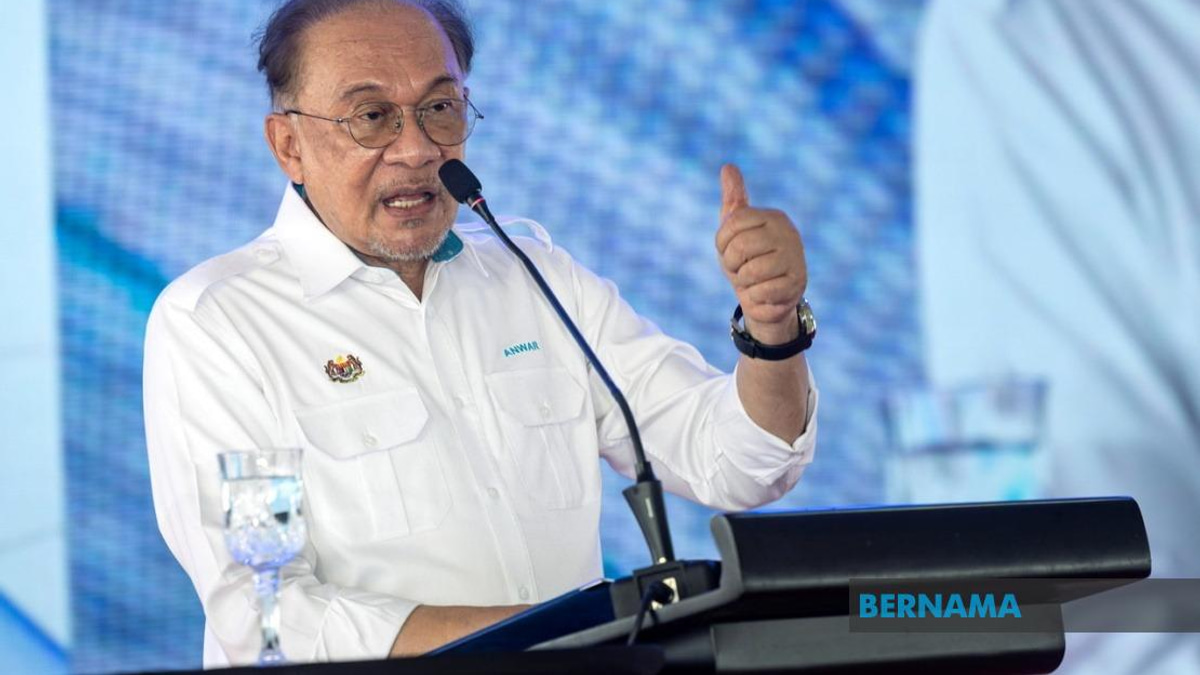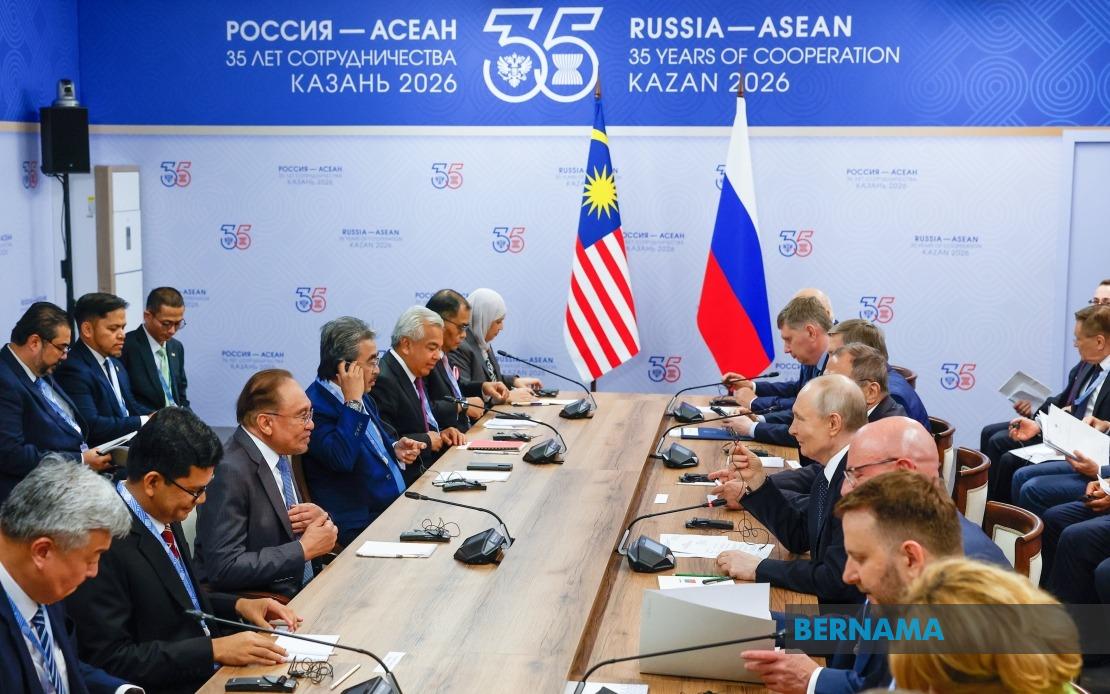
Prime Minister Datuk Seri Anwar Ibrahim has publicly acknowledged the positions taken by Russian President Vladimir Putin and Chinese President Xi Jinping regarding conflicts in the Middle East, specifically their advocacy for peace and their condemnation of violence affecting civilian populations in Gaza, Iran and Lebanon. The Malaysian leader made these remarks during an exclusive interview with Russian television network RT while visiting Kazan for the Commemorative Summit marking the 35th anniversary of ASEAN-Russia diplomatic relations.
Anwar's acknowledgement reflects Malaysia's broader foreign policy trajectory under his administration, which has consistently positioned the country as an independent voice on global affairs despite pressures from major powers. The Prime Minister emphasised that Malaysia's approach differs fundamentally from traditional neutrality, describing instead what he terms "centrality"—a diplomatic framework that allows Malaysia and ASEAN to take principled stances on human rights violations and atrocities without being beholden to any ideological bloc or superpower.
The distinction between centrality and neutrality has become increasingly important in Malaysian diplomatic discourse as geopolitical tensions reshape global alignments. By articulating this difference, Anwar seeks to position Malaysia as a nation capable of moral clarity on specific issues—particularly regarding Middle Eastern conflicts—while maintaining strategic flexibility in broader international relations. This nuanced approach reflects the reality that for a Southeast Asian nation with significant Muslim populations and diverse regional partnerships, remaining silent on humanitarian crises carries significant domestic and international consequences.
Anwar detailed Malaysia's multifaceted engagement strategy regarding Middle Eastern conflicts, noting that he has actively consulted with leadership across the Gulf states, Pakistan, Turkey and Iran as part of coordinated efforts to facilitate a just resolution to ongoing disputes. This extensive diplomatic outreach demonstrates Malaysia's commitment to serving as a bridge between different regions and perspectives, leveraging its position as a respected voice within both the Islamic world and the Non-Aligned Movement. The Prime Minister expressed optimism that such engagement would ultimately contribute to fair outcomes, though he acknowledged the inherent difficulties in navigating such deeply complex geopolitical terrain.
A significant portion of Anwar's critique focused on what he characterised as Western hypocrisy in relation to Israeli military actions and American foreign policy. He directly challenged the logic of international condemnation of certain military actions while the same actors either condone or actively support similar conduct when undertaken by allied nations. This argument represents a core grievance shared across much of the developing world, where the selective application of international law and humanitarian principles is perceived as a fundamental inconsistency undermining global governance structures.
The Prime Minister questioned how the international community can reconcile supporting principles of national sovereignty and territorial integrity in some contexts while appearing indifferent in others. He emphasised that the ramifications of Middle Eastern conflicts extend far beyond the immediate region, with economic disruptions and security consequences rippling across global markets and affecting international stability. For Malaysian policymakers, these cascading effects carry particular relevance given the country's significant trade dependencies and shipping routes traversing volatile regions.
Anwar also addressed the asymmetry in international attention devoted to different actors' conduct. He observed that while Iran's responses to regional developments receive substantial criticism, the aggression against Iran itself is often met with relative silence from major Western powers and their allies. This contradiction, which Anwar explicitly identified as hypocrisy, undermines the legitimacy of international human rights advocacy and makes it difficult for moderate voices in the Islamic world to maintain positions advocating for restraint and dialogue.
The Prime Minister's comments occurred against a backdrop of Malaysia's consistent parliamentary positions on Middle Eastern matters. Anwar noted that Malaysia adopted a bipartisan parliamentary stance condemning what he termed initial attacks by the Israeli state, with such positions taken independently despite the geopolitical power dynamics at play. This parliamentary consensus reflects broad Malaysian public opinion regarding Middle Eastern conflicts, though Anwar's willingness to publicly commend Russia and China for their peace advocacy marks a notable articulation of Malaysia's strategic calculations regarding global power distribution.
For Southeast Asian readers, Anwar's diplomatic messaging carries implications beyond immediate Middle Eastern contexts. His emphasis on centrality rather than neutrality suggests Malaysia's positioning as regional diplomatic leadership strengthens when the nation clearly articulates values while maintaining practical engagement with all relevant powers. This approach contrasts with earlier periods when Malaysia occasionally appeared caught between competing great power interests, and it reflects confidence in Malaysia's growing diplomatic capital within ASEAN and among Non-Aligned nations.
The timing of these remarks during a visit focused on commemorating ASEAN-Russia relations further signals Malaysia's comfort in diversifying partnerships and taking positions independent of traditional Western-aligned frameworks. While Malaysia maintains economic and security relationships with Western democracies, the public acknowledgement of Russian and Chinese diplomatic positions on Middle Eastern peace indicates a recalibration toward multipolarity that reflects contemporary geopolitical realities. For Malaysian observers, this represents not a fundamental realignment but rather a more candid acknowledgement of a multipolar world requiring independent judgement.
Anwar's articulation of Malaysia's foreign policy principles addresses a recurring tension in Malaysian politics: how to balance pro-Palestinian sentiment and Islamic solidarity with maintaining pragmatic relationships across the international spectrum. By framing the issue through centrality and principled independence rather than ideological alignment, Anwar attempts to resolve this tension in ways that both satisfy domestic constituencies and preserve Malaysia's international credibility. This diplomatic articulation will likely shape Malaysia's continued engagement on Middle Eastern matters and influence how the country positions itself within broader ASEAN consensus-building processes.

%22%2F%3E%3C%2Fpattern%3E%3C%2Fdefs%3E%3Crect%20width%3D%22100%25%22%20height%3D%22100%25%22%20fill%3D%22url(%23ph523ndg)%22%2F%3E%3Crect%20width%3D%22100%25%22%20height%3D%22100%25%22%20fill%3D%22url(%23ph523ndp)%22%2F%3E%3Ctext%20x%3D%2250%25%22%20y%3D%2250%25%22%20text-anchor%3D%22middle%22%20dominant-baseline%3D%22central%22%20fill%3D%22rgba(255%2C255%2C255%2C0.95)%22%20font-family%3D%22Georgia%2C%20'Times%20New%20Roman'%2C%20serif%22%20font-weight%3D%22700%22%20font-size%3D%22272%22%20letter-spacing%3D%22-0.02em%22%3EAnwar%3C%2Ftext%3E%3C%2Fsvg%3E)