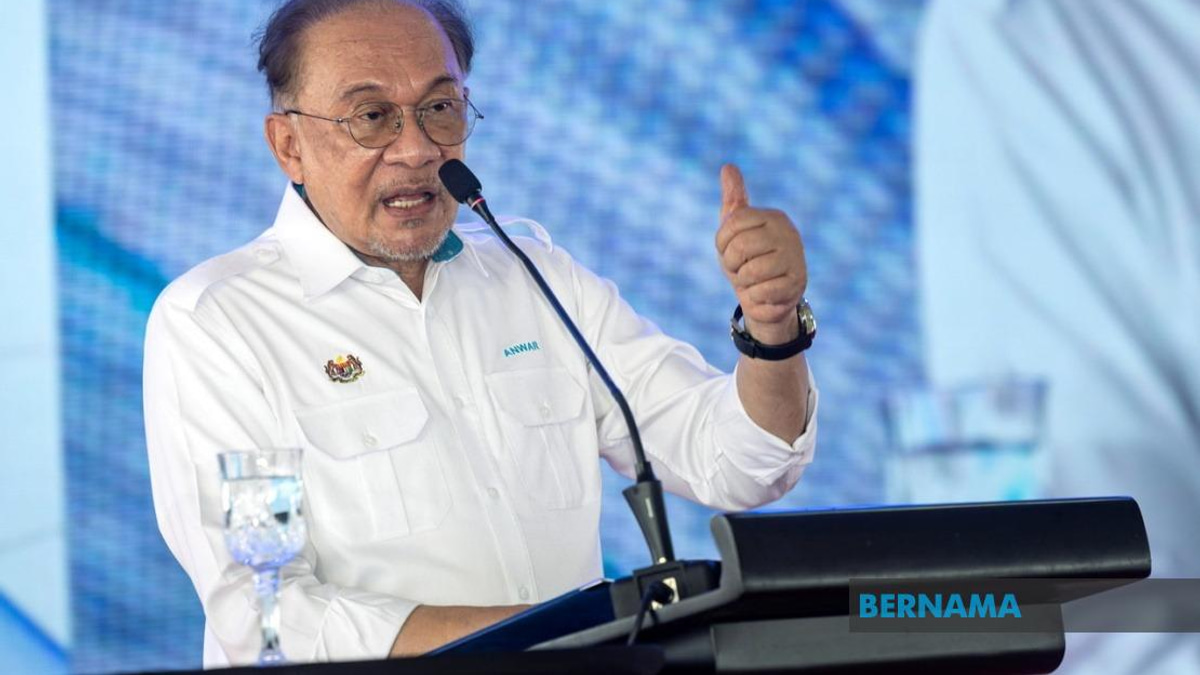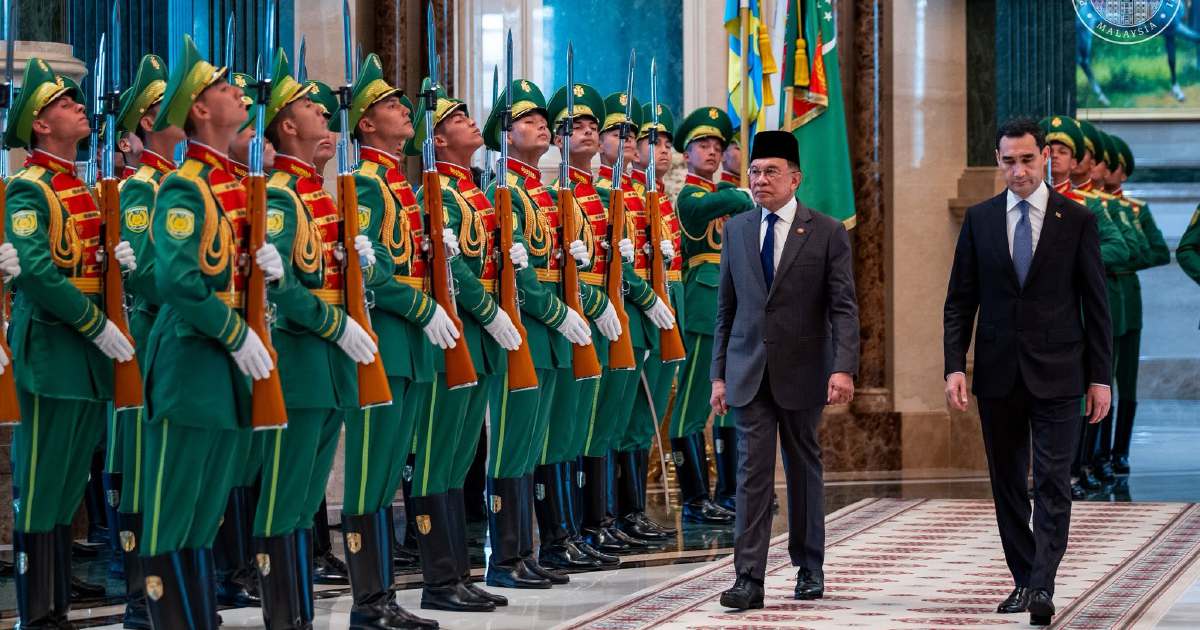
Prime Minister Datuk Seri Anwar Ibrahim was formally received with full diplomatic honours at the Presidential Palace in Ashgabat today, underscoring the significance Malaysia attaches to strengthening ties with Turkmenistan and the broader Central Asian region. The official welcome ceremony represents a milestone in bilateral relations, as this constitutes Anwar's first state visit to the energy-rich nation since his appointment as Prime Minister.
The ceremonial reception at the presidential residence signals both nations' commitment to elevating their diplomatic engagement beyond traditional channels. For Malaysia, the visit represents an intentional pivot towards diversifying its international partnerships, particularly in regions historically less prominent in Malaysian foreign policy deliberations. Turkmenistan, strategically positioned between the Caspian Sea and the Persian Gulf, presents considerable opportunities for Malaysian businesses and investors seeking footholds in Central Asian markets.
The timing of this visit reflects deliberate diplomatic scheduling. Malaysia has increasingly sought to position itself as a bridge between Southeast Asia and Central Asia, leveraging its experience as chair of the Non-Aligned Movement and its respected voice in multilateral forums. Turkmenistan, while maintaining a policy of permanent neutrality in international affairs, has been receptive to deepening economic and cultural partnerships with nations across diverse regions, making the Malaysian overture particularly timely.
Historically, Malaysia's engagement with Central Asian nations has been selective, with focus traditionally concentrated on ASEAN affairs and Middle Eastern geopolitics. However, the emergence of new trade corridors and the strategic importance of energy security have compelled Malaysian policymakers to recalibrate their regional priorities. Turkmenistan ranks among the world's largest natural gas reserves holders, a factor that cannot escape notice when Malaysia considers its long-term energy requirements and supply diversification strategies.
The presidential reception carries symbolic weight beyond ceremonial formality. In the protocol-conscious world of diplomatic relations, an official welcome at the highest level of state apparatus indicates that host governments view visiting dignitaries as partners worthy of substantive engagement. Such gestures typically precede substantive discussions on trade agreements, investment frameworks, and cooperation mechanisms across multiple sectors.
For Malaysian businesses, particularly those in energy, petrochemicals, and infrastructure development, the visit opens potential channels for partnership discussions. Turkmenistan's ongoing modernisation efforts and infrastructure expansion projects could present contracting and investment opportunities for Malaysian firms seeking regional diversification beyond their traditional markets in Southeast Asia and the Middle East.
The visit also carries implications for Malaysia's positioning within broader geopolitical currents affecting Asia. As great powers increasingly compete for influence across Central Asia, nations like Malaysia that maintain non-aligned stances can serve valuable roles as neutral intermediaries and trusted trading partners. This positioning enhances Malaysia's diplomatic standing and economic relevance in regions where traditional Cold War divisions have given way to more nuanced, pragmatic engagement patterns.
Cultural and educational exchanges often accompany high-level state visits, and such initiatives between Malaysia and Turkmenistan could yield long-term benefits through people-to-people connections. Scholarship programmes, student exchanges, and cultural diplomacy initiatives frequently emerge from official visits, creating sustained engagement channels that transcend purely governmental relationships.
The Central Asian region's significance continues growing as global supply chains reshape and energy transitions accelerate. Turkmenistan's natural gas reserves position it as a crucial player in energy geopolitics, while its geographic location enables it to serve as a transit hub for goods moving between continents. Malaysian policymakers recognise these structural realities and are positioning their nation to participate meaningfully in these emerging patterns of regional commerce and cooperation.
From Turkmenistan's perspective, welcoming the Malaysian Prime Minister at the highest level reflects interest in strengthening South-South cooperation and building partnerships with emerging economies that share similar development aspirations. Both nations are similarly positioned as middle powers seeking to leverage their geographic advantages and resource endowments within an increasingly multipolar international system.
The diplomatic visit establishes a foundation for future cooperation frameworks that could encompass trade, investment, technology transfer, and multilateral coordination within international bodies. Subsequent technical delegations and commercial missions often follow official high-level visits, translating ceremonial goodwill into concrete bilateral projects.
Moving forward, Malaysian observers should monitor whether this visit catalyses substantive institutional mechanisms for bilateral engagement. The establishment of joint commissions, business councils, or formal cooperation agreements would indicate that the ceremonial visit translates into sustained strategic partnership rather than serving as a one-time diplomatic courtesy.
Ultimately, Anwar's reception at the Presidential Palace demonstrates Malaysia's active engagement in pursuing its national interests across diverse geographic regions. As the global system continues fragmenting into competing spheres of influence, Malaysia's strategy of building bridge relationships across multiple regions and maintaining its non-aligned credentials appears increasingly prescient.

%22%2F%3E%3C%2Fpattern%3E%3C%2Fdefs%3E%3Crect%20width%3D%22100%25%22%20height%3D%22100%25%22%20fill%3D%22url(%23ph523ndg)%22%2F%3E%3Crect%20width%3D%22100%25%22%20height%3D%22100%25%22%20fill%3D%22url(%23ph523ndp)%22%2F%3E%3Ctext%20x%3D%2250%25%22%20y%3D%2250%25%22%20text-anchor%3D%22middle%22%20dominant-baseline%3D%22central%22%20fill%3D%22rgba(255%2C255%2C255%2C0.95)%22%20font-family%3D%22Georgia%2C%20'Times%20New%20Roman'%2C%20serif%22%20font-weight%3D%22700%22%20font-size%3D%22272%22%20letter-spacing%3D%22-0.02em%22%3EAnwar%3C%2Ftext%3E%3C%2Fsvg%3E)