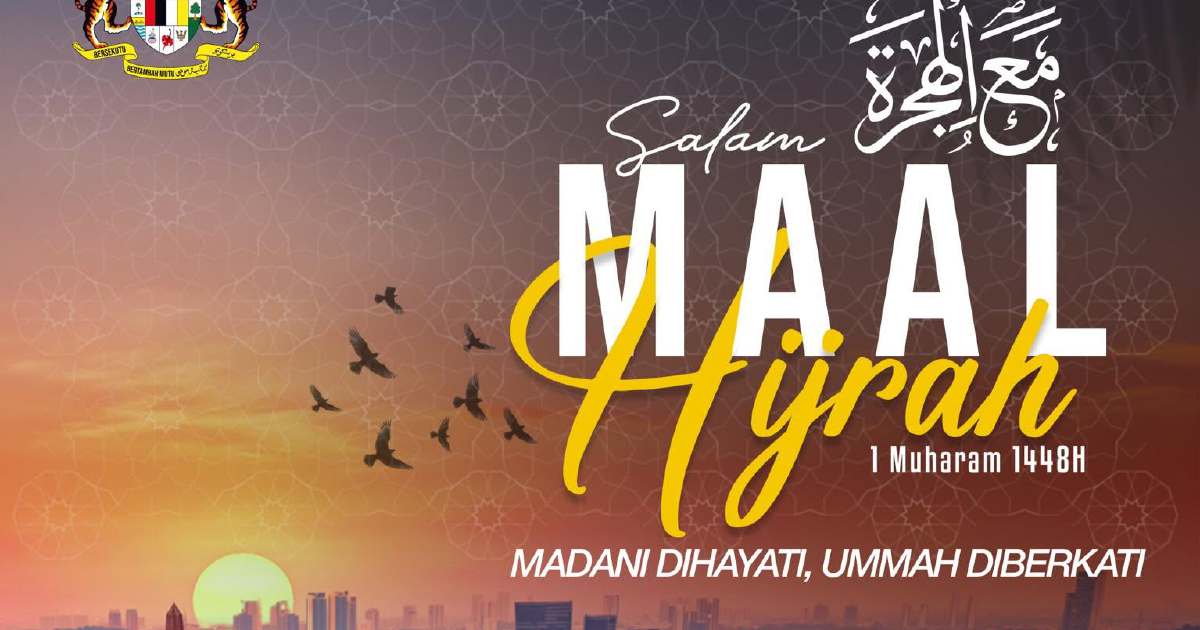
Prime Minister Datuk Seri Anwar Ibrahim has called on Malaysians to embrace the principles embedded in the concept of Hijrah, a spiritual and philosophical framework that emphasizes truth, prosperity and security as foundational values for both individual and collective advancement.
The invocation of Hijrah represents a deliberate framing of national purpose around Islamic principles, connecting religious philosophy with practical governance objectives. For Anwar, who has long positioned himself as a bridge between Malaysia's Islamic foundations and modern democratic governance, the message carries particular significance. The Hijrah concept—traditionally understood as the migration of Prophet Muhammad and his followers from Mecca to Medina—has evolved in contemporary Islamic discourse to symbolize transformation, moral renewal, and the establishment of a just society.
In the Malaysian political context, Anwar's emphasis on this framework reflects an attempt to rally diverse constituencies around shared moral imperatives rather than divisive partisan interests. The invocation of truth addresses persistent concerns about governmental transparency and accountability, issues that have dominated Malaysian politics following years of high-profile corruption scandals and institutional failures. By anchoring this demand within a religious and philosophical tradition, Anwar seeks to elevate accountability from a technical or legal requirement into a spiritual obligation, potentially deepening its appeal among Muslim-majority populations.
The prosperity dimension of Anwar's message responds to mounting economic anxieties within Malaysian society. Cost-of-living pressures, employment uncertainties, and wealth inequality have become increasingly salient political issues, particularly affecting younger voters and urban middle-class families. By linking material wellbeing to Hijrah principles, Anwar attempts to reframe economic policy as a moral enterprise rooted in Islamic values of fairness and communal care, rather than purely technocratic management. This positioning could influence how Malaysians evaluate government economic initiatives, embedding them within a broader narrative of spiritual and moral progress.
Security concerns—both physical and existential—resonate throughout Southeast Asian societies facing transnational terrorism, organized crime, and regional geopolitical tensions. Anwar's inclusion of security within the Hijrah framework suggests a holistic vision of national stability that encompasses not merely freedom from violence but also institutional resilience, social cohesion, and protection of Malaysia's sovereignty and interests. This framing acknowledges that contemporary security threats extend beyond traditional military concerns to encompass economic disruption, social fragmentation, and ideological challenges.
The timing of this appeal carries particular weight given Malaysia's complex political landscape. With Anwar's government navigating coalition politics involving parties with varying ideological orientations and competing regional interests, invoking unifying principles becomes strategically essential. The Hijrah concept offers language that can appeal across religious and secular divides—Muslims may engage with its theological dimensions while secular observers might interpret it as a call for principled governance and collective progress.
For Southeast Asian readers, Anwar's rhetoric illuminates broader patterns in how Islamic-majority democracies negotiate the relationship between religious identity and modern governance. Malaysia's experience differs from Indonesia's or Pakistan's in significant ways, yet all grapple with similar tensions between Islamic principles, democratic institutions, and pluralistic societies. The successful invocation of religious frameworks for political purposes depends crucially on whether implementation matches rhetoric, a challenge facing governments throughout the region.
The concept of Hijrah also speaks to Malaysian concerns about national identity and purpose. As the country confronts economic disruptions, technological change, and shifting regional power dynamics, Anwar's appeal to spiritual and moral renewal suggests that material progress alone insufficient for national cohesion. Instead, he proposes grounding development efforts in shared ethical foundations that transcend narrow self-interest. This proves particularly relevant for a multicultural nation where national unity cannot rest solely on economic performance or institutional efficiency.
Anwar's articulation of Hijrah principles will ultimately be evaluated against concrete policy outcomes and behavioral consistency within government. Public calls for truth encounter skeptics who point to ongoing questions about transparency in resource allocation and political decision-making. Prosperity rhetoric requires visible improvements in employment, wage growth, and opportunity accessibility. Security assurances demand effective execution of law enforcement and institutional competence. The credibility gap between aspirational statements and actual delivery remains a persistent challenge facing Malaysian governance.
The message also reflects Anwar's broader political strategy of positioning himself as a leader capable of synthesizing Malaysia's Islamic heritage with contemporary democratic and developmental imperatives. By consistently returning to Hijrah as a unifying concept, he attempts to move beyond the fractious zero-sum politics that has characterized recent Malaysian history, where religious identity often becomes a tool for exclusion rather than a foundation for inclusion. Whether this philosophical reframing can translate into meaningful institutional reform and sustained policy coherence will shape not only his government's legacy but also influence how successive Malaysian leaderships approach the fundamental question of balancing faith and governance.