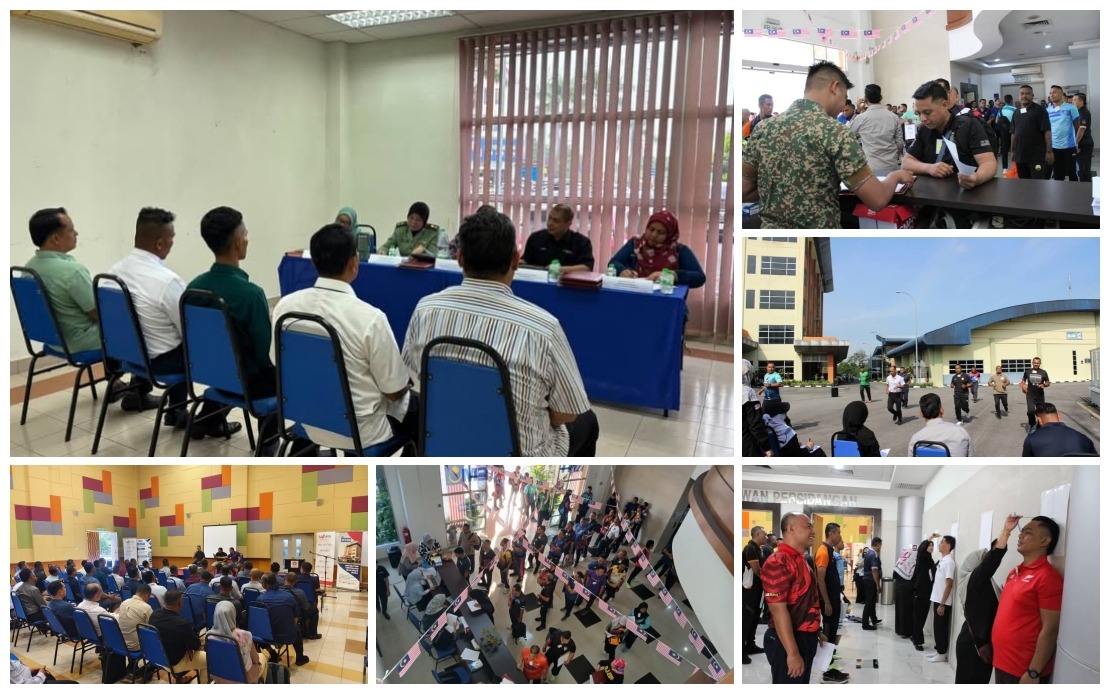
The MARA organisation has advanced its warden recruitment drive for the MARA Junior Science Colleges (MRSM) network, with 147 candidates drawn from the former military community undergoing comprehensive assessment at facilities in Kepong during the first week of June. The recruitment process represents a significant staffing initiative aimed at strengthening residential college management across Malaysia's premier science education institutions, with selected wardens set to assume their posts from 1 July onwards.
According to MARA Chairman Datuk Dr Asyraf Wajdi Dusuki, the candidates who participated in the physical interview sessions had previously cleared two rigorous phases of online screening. This multi-stage approach reflects MARA's commitment to identifying individuals with both the professional background and personal qualities suitable for residential college leadership. The preliminary online assessments served as an initial filter, allowing the organisation to identify the most promising applicants before committing resources to the intensive in-person evaluation process.
The physical interview sessions themselves comprised three distinct assessment components designed to evaluate candidates comprehensively. Body Mass Index screening provided a baseline health indicator, while the Bleep Test measured cardiovascular fitness—an important consideration for individuals responsible for the welfare and safety of young residents. The face-to-face interview component allowed assessors to evaluate candidates' suitability beyond academic or fitness metrics, examining their understanding of pastoral care responsibilities and their alignment with MARA's educational philosophy.
Warden roles in Malaysian residential colleges carry substantial responsibility. Beyond the visible functions of maintaining discipline and ensuring student safety, wardens serve as mentors and role models to young people away from their families for extended periods. MARA's emphasis on its education philosophy suggests an expectation that wardens will actively nurture intellectual curiosity and character development alongside their more traditional disciplinary functions. This broader conception of the warden's role reflects evolving approaches to residential college management in Southeast Asia, where institutions increasingly recognise the importance of holistic student development.
Datuk Dr Asyraf Wajdi articulated an ambitious agenda for the newly appointed wardens, framing their appointment as part of a wider institutional effort to address behavioural challenges in residential college environments. Bullying, disciplinary infractions, and social problems have emerged as persistent concerns in Malaysian boarding schools and residential colleges. By selecting wardens with military backgrounds, MARA appears to be prioritising individuals with established experience in hierarchical environments, leadership training, and duty-oriented cultures. The organisation evidently hopes this will create a safer, more structured campus environment conducive to academic excellence.
The recruitment initiative demonstrates the scale of MARA's residential college operation. The fact that 147 male candidates were interviewed in a single two-day session indicates the organisation manages multiple facilities across the country, each requiring dedicated warden teams. This scale of recruitment is unusual and suggests either significant expansion of existing facilities, wholesale replacement of existing warden cohorts, or previously unfilled positions being addressed simultaneously. The timeline for taking up duties in July indicates a planned, coordinated transition rather than ad hoc staffing.
Immediate follow-up sessions will involve 162 female candidates, indicating that MARA is pursuing gender balance in its warden appointments. This approach aligns with contemporary educational best practice, recognising that students benefit from interaction with diverse role models and mentors. Female wardens can provide particular value in addressing issues affecting female residents and offering gender-specific mentoring. The substantial number of female candidates suggests that MARA has successfully recruited from the female former military community, reflecting broader shifts in military force composition across Southeast Asia.
The emphasis on former military personnel merits closer examination. Military backgrounds offer several advantages: structured training in leadership, discipline, and duty; experience managing hierarchies and institutional rules; and generally strong physical fitness. However, this recruitment preference also reflects assumptions about what qualities make effective residential college wardens. It signals MARA's prioritisation of order and structure, though effective residential college environments require balancing discipline with pastoral support and emotional intelligence.
For Malaysian families and students, this recruitment drive carries practical implications. The quality of wardens directly affects the residential college experience, influencing not only student safety but also social development, mental health support, and the overall quality of life outside the classroom. Parents of MRSM students should view this systematic recruitment process positively, as it indicates institutional commitment to improving residential facilities management. The selection criteria—physical fitness, interview performance, and previous military service—provide some assurance that wardens meet defined standards.
The regional context is also relevant. Several Southeast Asian nations operate prestigious residential science colleges or boarding schools, and approaches to warden recruitment vary considerably. Malaysia's decision to prioritise former military personnel reflects its own institutional culture and assumptions about management. This may differ from approaches in neighbouring countries, which might emphasise teaching credentials, psychological training, or other qualifications. The MRSM warden model thus represents a distinctly Malaysian approach to residential college leadership.
The timeline suggests these wardens will be in place for the academic year beginning July, a critical moment for residential college operations. New wardens taking up duties at this point will oversee transitions as the academic year begins and students return from holidays. First impressions matter significantly in institutional settings, and the effectiveness of these newly appointed wardens will substantially influence the campus climate for the entire academic year. MARA's investment in systematic recruitment and assessment reflects recognition that residential college quality depends fundamentally on the quality of warden leadership.
Looking forward, the success of this recruitment initiative will be measurable through incident rates, student satisfaction surveys, academic performance correlations, and qualitative feedback. MARA should establish baseline metrics to assess whether the newly appointed wardens actually achieve the organisation's stated goals of reducing bullying, misconduct, and social problems while improving campus safety and conduciveness. This evidence-based approach would allow the organisation to refine its warden selection criteria and training programmes over subsequent recruitment cycles, ensuring continuous improvement in residential college management across the MRSM network.

%22%2F%3E%3C%2Fpattern%3E%3C%2Fdefs%3E%3Crect%20width%3D%22100%25%22%20height%3D%22100%25%22%20fill%3D%22url(%23ph523ndg)%22%2F%3E%3Crect%20width%3D%22100%25%22%20height%3D%22100%25%22%20fill%3D%22url(%23ph523ndp)%22%2F%3E%3Ctext%20x%3D%2250%25%22%20y%3D%2250%25%22%20text-anchor%3D%22middle%22%20dominant-baseline%3D%22central%22%20fill%3D%22rgba(255%2C255%2C255%2C0.95)%22%20font-family%3D%22Georgia%2C%20'Times%20New%20Roman'%2C%20serif%22%20font-weight%3D%22700%22%20font-size%3D%22272%22%20letter-spacing%3D%22-0.02em%22%3EAnwar%3C%2Ftext%3E%3C%2Fsvg%3E)