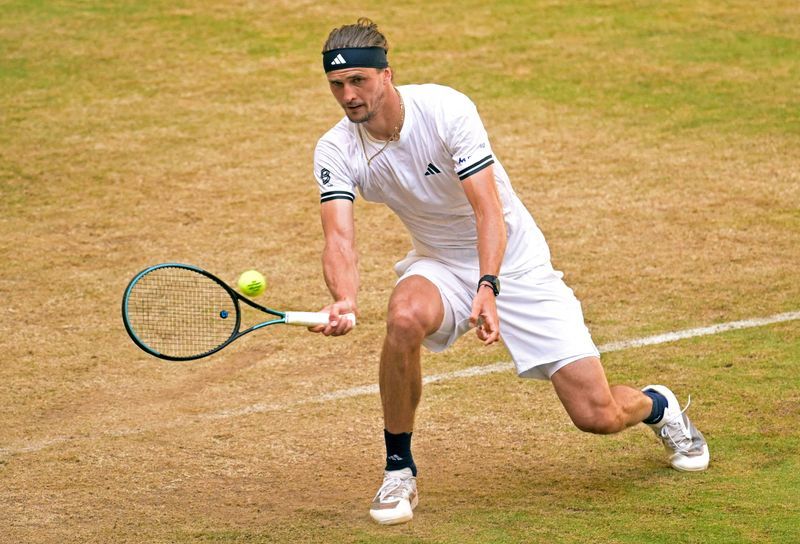
Alexander Zverev's hopes of claiming the Halle Open title came to an abrupt end on Saturday when he fell to American Taylor Fritz in the semi-finals, but the world number three has pointed to a critical equipment failure rather than pure tennis skill as the decisive factor in his 6-7(4) 6-4 7-5 defeat. The two-hour 39-minute contest unfolded with mounting difficulties for the German, who manages Type 1 diabetes and relies on sophisticated monitoring equipment to maintain his competitive edge at the highest levels of professional sport.
The crux of Zverev's explanation centred on his continuous glucose monitoring device, which inexplicably malfunctioned during the crucial encounter. The sensor provided readings that were fundamentally inverted from reality—displaying dangerously high glucose levels when his actual blood sugar was running critically low. This algorithmic failure had profound consequences for his medical management during the match. Acting on the false information, Zverev administered significantly more insulin than his body actually required, creating a potentially dangerous metabolic situation on court.
The impact on his physical condition became unbearably apparent as the match progressed. In the opening 45 minutes alone, Zverev consumed approximately 350 grams of sugar in an effort to counteract the effects of the miscalibrated insulin injection. He described the experience as overwhelming, stating plainly that he felt "absolutely terrible" throughout the early stages of play. For context, such rapid sugar consumption represents an extreme measure undertaken only when facing severe hypoglycaemic conditions, underscoring just how destabilised his metabolic state had become.
Despite these considerable physical obstacles, Zverev demonstrated the competitor's mindset that has defined his career trajectory. Rather than making excuses for the eventual loss, he extended genuine credit to his opponent, acknowledging that Fritz executed his game plan with superior execution on the day. This gracious acceptance was particularly noteworthy given that Zverev entered the match already struggling against the American, having lost their previous six consecutive encounters. The psychological burden of that losing streak, combined with the physiological challenges created by his malfunctioning equipment, presented a formidable combination of obstacles.
Zverev's use of continuous glucose monitoring technology from Medtronic represents the cutting edge of sports medicine adaptation for athletes managing chronic conditions. Since being diagnosed with Type 1 diabetes at just four years old, the German has transformed his condition from a potential career-limiting factor into something he manages with clinical precision. His adoption of these monitoring sensors roughly nine years ago—around 2016 or 2017—has been instrumental in allowing him to compete at elite levels alongside healthy rivals without compromise.
What renders this incident particularly striking is its rarity within Zverev's extensive experience with the technology. Over nearly a decade of reliance on these sensors, this represented his first encounter with such a significant malfunction. The magnitude of the error—misrepresenting glucose levels by a substantial margin in both directions—fell far outside the normal parameters of device reliability. For someone whose career depends on the precision and consistency of his medical equipment, such an unexpected failure carries both immediate competitive and broader psychological implications.
The timing of this mishap carries additional significance given the tournament calendar. Just days after the Halle Open, professional tennis turns its attention to Wimbledon, which runs from June 29 through July 12. Zverev demonstrated appropriate perspective by stating that this isolated incident would not present concerns for his preparation at the grass court major. This reassurance suggests he views the failure as a discrete technical problem rather than indicative of broader issues with his equipment management or the reliability of his monitoring system.
For Malaysian and Southeast Asian sports enthusiasts, Zverev's situation illuminates the evolving intersection of sports science, chronic disease management, and elite athletic performance. His willingness to compete at the highest levels while openly discussing his diabetes management has helped normalise conversations around athletes managing medical conditions. In a region where diabetes prevalence continues to rise, Zverev's example demonstrates that such diagnoses need not preclude achievement at the most competitive levels.
The loss to Fritz, while disappointing in immediate terms, ultimately serves as a reminder of the countless variables that determine outcomes in professional sport beyond pure technique and tactical acumen. Equipment reliability, physiological stability, and psychological resilience operate in concert with shot-making ability and court positioning. For Zverev, the coming weeks offer opportunity to address the sensor malfunction with Medtronic engineers while maintaining his focus on the grass court season ahead, where his capabilities remain undiminished despite this rare setback.


%22%2F%3E%3C%2Fpattern%3E%3C%2Fdefs%3E%3Crect%20width%3D%22100%25%22%20height%3D%22100%25%22%20fill%3D%22url(%23ph1a04ig)%22%2F%3E%3Crect%20width%3D%22100%25%22%20height%3D%22100%25%22%20fill%3D%22url(%23ph1a04ip)%22%2F%3E%3Ctext%20x%3D%2250%25%22%20y%3D%2250%25%22%20text-anchor%3D%22middle%22%20dominant-baseline%3D%22central%22%20fill%3D%22rgba(255%2C255%2C255%2C0.95)%22%20font-family%3D%22Georgia%2C%20'Times%20New%20Roman'%2C%20serif%22%20font-weight%3D%22700%22%20font-size%3D%22151%22%20letter-spacing%3D%22-0.02em%22%3EBezzecchi%3C%2Ftext%3E%3C%2Fsvg%3E)