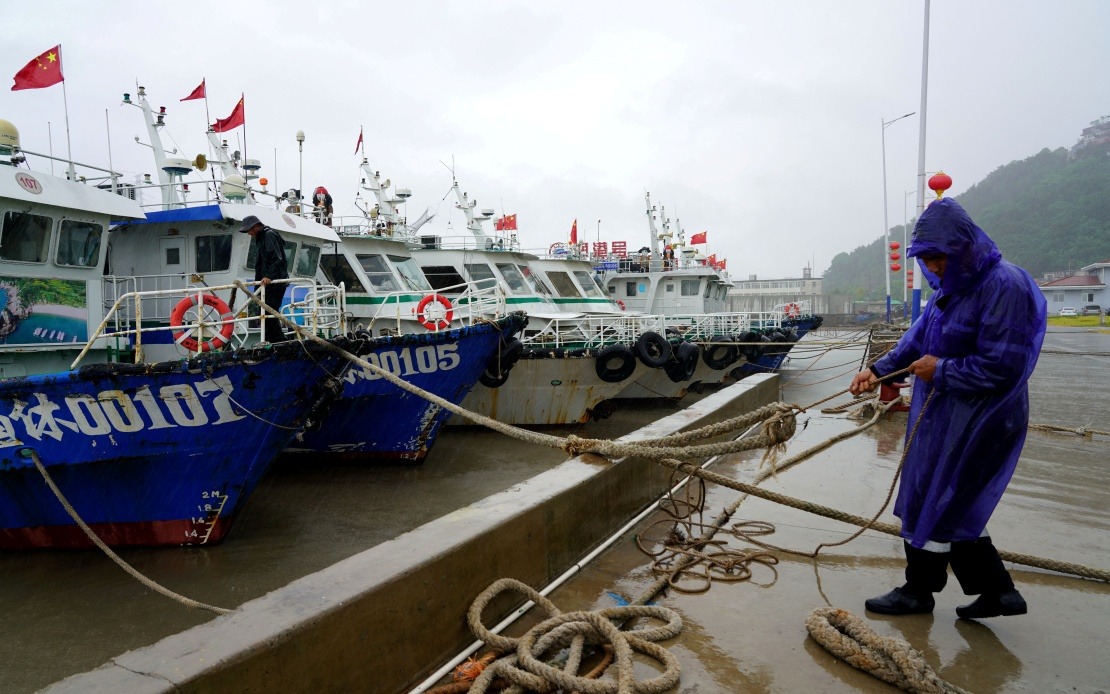
Zhejiang Province in eastern China has intensified its preparedness measures in response to the advancing Typhoon Dolphin, upgrading its emergency alert status from Level IV to Level III on Friday at midday. The decision reflects growing concern about the trajectory of the 13th typhoon to impact the country this year, as meteorological authorities track its steady movement toward the densely populated eastern coastal region. The upgrade signals a meaningful shift in operational tempo across the province, moving from routine precautions to heightened coordination among disaster management agencies.
At 8 am on Friday, the Zhejiang Meteorological Observatory pinpointed Typhoon Dolphin at approximately 763 kilometres east of Wenling, positioning it firmly in the western Pacific and on a collision course with the mainland. Current projections suggest the system will advance westward at a measured pace of 15 to 20 kilometres per hour, maintaining enough forward momentum to reach land within days rather than weeks. Critically, forecasters anticipate the storm's strength will either hold steady or intensify slightly as it continues its approach, a development that amplifies the potential for significant coastal damage.
China's National Meteorological Centre issued a formal yellow-level alert Thursday evening, establishing Sunday or Monday as the anticipated window for Typhoon Dolphin to make landfall along the coast stretching from Shanghai to Fuqing in neighbouring Fujian Province. The forecast positioning is significant because it places Zhejiang directly in the potential impact zone, given that the province sits geographically between Shanghai and Fujian. Lou Xiaofen, the chief forecaster at the Zhejiang Meteorological Observatory, underscored this risk by noting the typhoon carries a high probability of striking Zhejiang directly, a scenario that would expose the province's substantial population and infrastructure to considerable hazard.
The anticipated intensity of Typhoon Dolphin ranges from typhoon to severe typhoon classification, with meteorologists expecting it to generate heavy precipitation across areas north of the initial landfall location. This rainfall pattern would likely affect inland regions and could trigger secondary hazards including flooding and landslides in vulnerable terrain. For Malaysian and Southeast Asian observers, such developments are instructive: typhoon behaviour across the broader Western Pacific follows similar meteorological principles that influence tropical storm systems affecting the region.
Preventive action in Zhejiang has already reached substantial scale. By Friday morning, all 162 passenger ferry routes operating across the province had been suspended, effectively halting marine passenger transport and removing potential casualties from exposed waterways. Simultaneously, authorities ordered all 193 offshore industrial projects to cease operations, prioritising worker safety over continued commercial activity. The maritime authorities directed 474 construction vessels operating in vulnerable waters to return to port, a logistical undertaking that reflects the thoroughness of the evacuation protocol.
Beyond vessel movements, the provincial maritime authorities have executed an aggressive communication strategy to ensure awareness of the approaching danger. The agencies distributed 86,000 early warning messages to relevant parties and inspected 24,000 vessels to confirm safety compliance and readiness. These figures illustrate the scale of operational mobilisation required when a major storm system threatens a densely utilised coastal region. High-powered tugboats have been pre-positioned at strategic locations to enable rapid emergency response operations should vessels become imperilled or infrastructure sustain damage requiring immediate rescue assistance.
The Level III response protocol mandates specific actions from local governance structures. Authorities must maintain continuous monitoring of the typhoon's track and intensity, issuing updated forecasts and warnings as the situation evolves. Evacuation of residents from high-risk coastal and low-lying areas represents a central component, requiring coordination between civil administration, emergency services, and community organisations. Public guidance campaigns inform residents of safety procedures, shelter locations, and behavioural expectations during the typhoon event, attempting to reduce preventable casualties through awareness and preparedness.
For the wider Southeast Asian context, China's typhoon management protocols offer relevant lessons. The systematic escalation of alert levels, the pre-emptive shutdown of vulnerable operations, and the communication infrastructure deployed during such events demonstrate how advanced warning systems and institutional capacity can substantially mitigate disaster impacts. Malaysia's own meteorological services and disaster management agencies operate within a comparable regional environment where typhoons periodically pose threats, particularly to eastern Peninsular Malaysia and the northern zones of Sabah and Sarawak.
The decision to upgrade Zhejiang's response to Level III represents a calculated judgment that the storm's threat level justifies the economic costs of operational shutdowns and resource mobilisation. While such measures impose short-term disruptions on commerce and transport, they reflect a prioritisation of human safety that has become increasingly standard in China's disaster management approach. The investment in early warning systems, forecasting capability, and pre-positioned rescue assets demonstrates how institutional preparation can reduce vulnerability when natural hazards strike densely populated regions.
As Typhoon Dolphin continues its westward trajectory, the coming weekend will test the effectiveness of Zhejiang's preparations. The province's experience managing this event will add to the broader body of knowledge regarding typhoon response in the Western Pacific region, informing future decisions by regional authorities across Southeast Asia and East Asia. The challenge of protecting populations and assets in typhoon-prone areas remains perennial, but advances in forecasting and coordinated emergency protocols have steadily improved outcomes compared to historical events.

