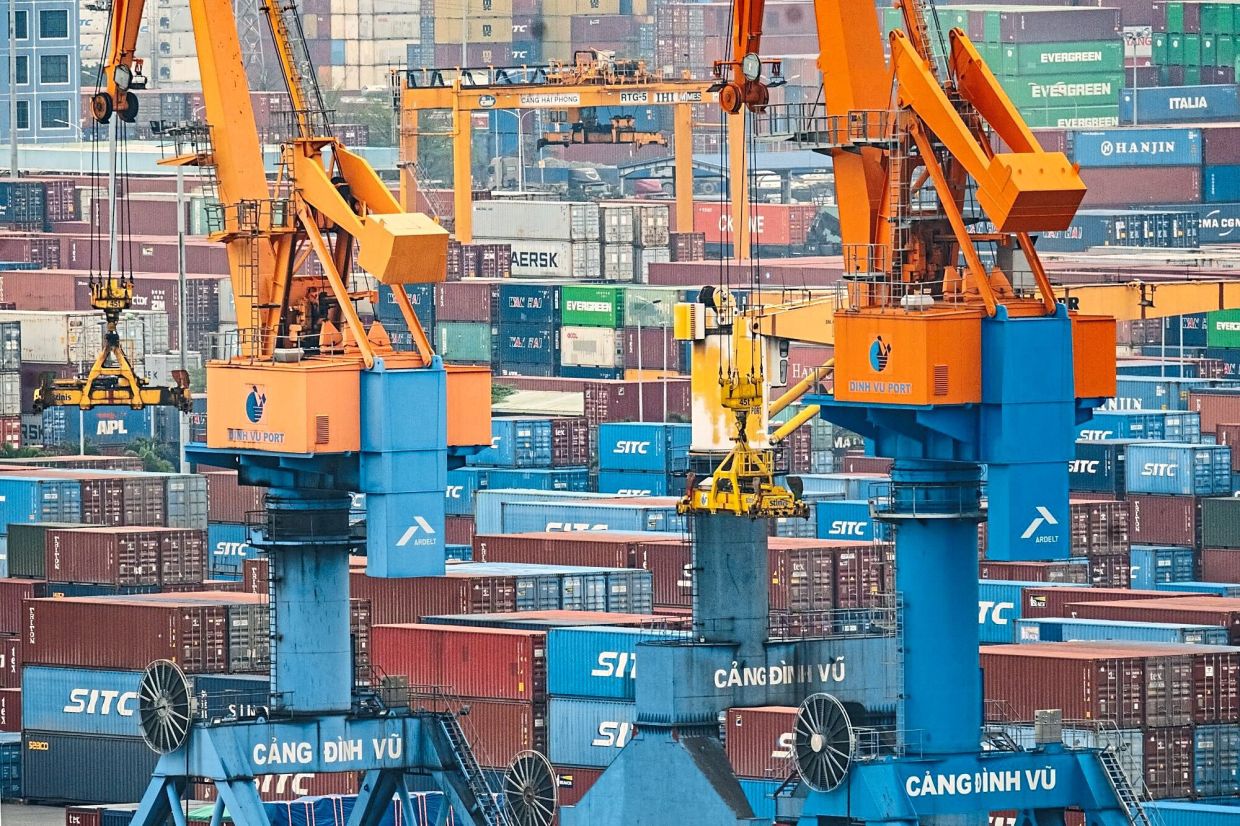
Vietnam's Deputy Prime Minister Nguyen Van Thang travelled to Washington this week to revive stalled trade negotiations with the Trump administration, conveying his country's commitment to "open, constructive" discussions on a reciprocal trade agreement. Meeting with US Trade Representative Jamieson Greer, Thang indicated that Vietnam is prepared to address American concerns about trade practices that have become flashpoints in months of protracted negotiations, signalling a potential shift toward compromise on issues that had previously deadlocked discussions between the two countries.
At the heart of the disagreement lies a structural problem that has grown increasingly acute for US policymakers: the routing of goods through Vietnam to circumvent American tariffs and trade restrictions. US officials contend that illicit Chinese merchandise reaches American consumers by transiting through Vietnamese ports and production facilities, effectively obscuring the true origin of products and undermining sanctions or tariff regimes. Thang's public commitment to easing these concerns represents a meaningful concession, suggesting Hanoi recognizes the political pressure facing both administrations to reach a settlement and resume normal trade flows between two economically interdependent nations.
The negotiations had achieved an initial framework agreement in October, yet momentum subsequently dissipated as disagreements over specific tariff levels and enforcement mechanisms proved difficult to resolve. During the Washington meeting, Greer reinforced the American position that the two countries should accelerate their efforts to finalize the agreement, reflecting Washington's desire to move forward after months of incremental progress. The Trump administration's emphasis on speed suggests awareness that protracted trade uncertainty damages American businesses operating in or importing from Vietnam, a country that has become a critical alternative to Chinese manufacturing for many US companies seeking supply chain diversification.
Underlying these diplomatic overtures is the reality of Vietnam's extraordinary trade surplus with the United States. In the first half of 2026, Vietnam recorded a trade imbalance of US$114 billion with America, the largest bilateral deficit among all US trading partners, surpassing even China, Mexico, and Taiwan. This figure underscores why the Trump administration views Vietnam as a priority in its broader effort to reduce American trade deficits, and why negotiating effective non-tariff barriers and transshipment controls has become essential to any agreement that Washington can credibly present to Congress and the business community as protecting American interests.
The situation is complicated by Vietnam's own economic dependence on Chinese inputs. Vietnamese manufacturers increasingly source components and raw materials from China as they ramp up production of goods destined for American markets, particularly in electronics and consumer goods sectors. This supply chain architecture, while economically rational for Vietnamese producers seeking cost advantages, creates precisely the transshipment risks that American officials fear. The challenge for Vietnamese negotiators lies in pledging stricter oversight and certification procedures without imposing burdensome requirements that undermine the competitive cost structure that makes Vietnamese manufacturing attractive to global companies seeking alternatives to direct Chinese sourcing.
The US Trade Representative's office has pursued an aggressive investigative posture toward Vietnam, launching three simultaneous Section 301 investigations into Vietnamese trade practices. These investigations encompass intellectual property protection, non-tariff barriers, and related trade concerns. In April, Greer's office formally designated Vietnam a "priority foreign country" in a report citing inadequate enforcement against online piracy and counterfeit goods, as well as insufficient controls at borders. The report noted that Vietnam's regulatory framework fails to prevent the flow of illicit merchandise and that customs procedures lack the rigor necessary to verify the true origin and legitimacy of exports, particularly those passing through major ports and free trade zones.
These investigations carry serious teeth: their formal findings, which are scheduled for November, could trigger unilateral American tariff increases if Vietnam fails to demonstrate meaningful progress on the identified concerns. For Vietnamese policymakers, the stakes are high. Additional tariffs would harm not only Vietnamese exporters but also American companies with production or assembly operations in Vietnam, creating a constituency within the US business community opposed to escalation. This dynamic may explain why senior Vietnamese officials are now emphasizing their country's willingness to work constructively rather than adopting a more defensive posture.
Beyond tariff negotiations, Thang held meetings with executives from major American technology and industrial companies, including Qualcomm, Visa, Axon Enterprise, and Caterpillar. These engagements reflect Vietnam's parallel strategy of deepening economic integration with the United States through foreign direct investment and supply chain expansion. Vietnamese officials recognize that attracting additional American investment in manufacturing, technology, and financial services creates mutual economic interests that transcend trade disputes, building political support within the US for maintaining positive bilateral relations.
For Southeast Asia more broadly, the Vietnam-US trade dynamics carry important implications. Vietnam's success in attracting manufacturing investment and becoming a regional trade hub depends partly on maintaining access to American markets at competitive tariff rates. Other countries in the region—including Thailand, Indonesia, and Malaysia—compete with Vietnam for similar investment flows and export markets. A successful resolution of US-Vietnam trade tensions could solidify Vietnam's position as a preferred manufacturing alternative, potentially at the expense of other regional economies. Conversely, escalating tariff conflict could reshape regional supply chain patterns, with investors potentially exploring alternatives in other Southeast Asian countries or returning to more established manufacturing hubs.
The timing of Thang's visit also reflects broader geopolitical positioning. As Vietnam seeks to balance its relationships between the United States and China—its largest trading partner—demonstrating responsiveness to American trade concerns signals alignment with the Trump administration's priorities while potentially limiting the scope of Chinese economic leverage over Hanoi. For Vietnamese leaders, maintaining this delicate equilibrium requires concrete progress on trade negotiations that can satisfy American demands while preserving the economic relationships with China that remain fundamental to Vietnam's development strategy.
The path forward remains uncertain, but Thang's Washington visit suggests both sides recognize the costs of prolonged negotiations. Vietnam's signalling of flexibility on transshipment and enforcement issues, combined with American expressions of eagerness to conclude discussions, creates diplomatic space for a settlement before November's Section 301 findings could trigger automatic tariff increases. Whether this momentum translates into a final agreement depends on whether Vietnam can credibly commit to border controls and verification procedures that address American concerns without imposing economically destructive compliance burdens on Vietnamese businesses operating in highly competitive global markets.

