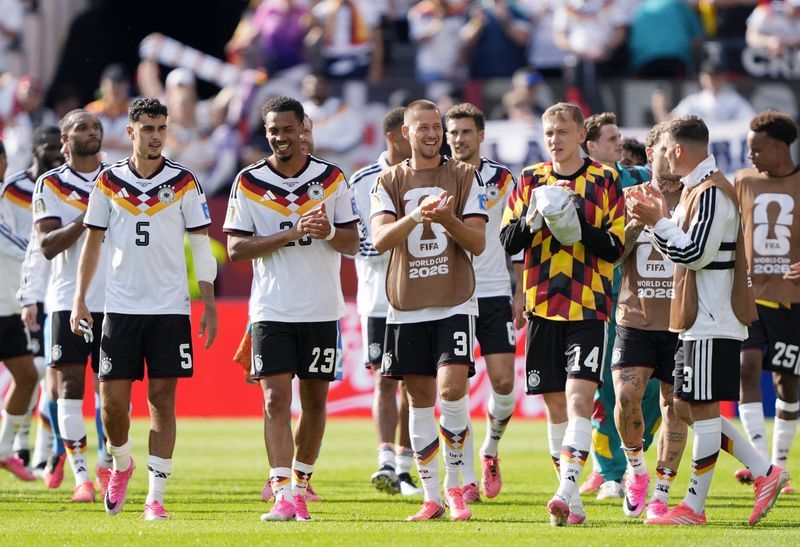
Germany has made it through to the knockout stage of the World Cup after a dramatic 2-1 victory over Ivory Coast in Toronto, with substitute striker Deniz Undav delivering the decisive goals in a match that showcased both teams' attacking ambitions. The result gives Julian Nagelsmann's squad six points and top spot in Group E, while Ivory Coast remain on three points from their opening two matches, with their hopes of advancing now resting on the final group encounter.
The match unfolded as a fascinating tactical contest between two sides intent on playing enterprising football. Germany, playing before a crowd bolstered by more than 100,000 people of German descent in the Toronto area, dominated possession and created numerous opportunities, yet they found themselves repeatedly frustrated by the officials' whistle. Ivory Coast, meanwhile, showed the kind of dynamic attacking verve that has become their hallmark in this tournament, combining swift counterattacking movements with intelligent build-up play from deep.
The West Africans struck first through Franck Kessie, who converted a rebound in the opening half after Amad Diallo's shot was blocked. The goal came from a well-constructed move down the left flank, initiated when Yan Diomande drove forward and delivered a cross that created the opportunity. This early breakthrough appeared to shake the Germans, who had themselves been denied what they believed was a legitimate goal moments earlier when Aleksandar Pavlovic rose to meet a short corner routine in the 25th minute, only to have the effort disallowed for a foul on goalkeeper Yahia Fofana.
The decision to rule out Pavlovic's goal clearly frustrated the German contingent in the stands, with the midfielder's visible disbelief reflecting a sense that the referee's interpretation had been overly harsh. Yet Germany refused to allow frustration to derail their approach. Instead, they persisted with the intricate passing patterns and positional movement that have become their hallmark under Nagelsmann, patiently seeking openings despite their inability to find the back of the net in the first 45 minutes, despite eight attempts on goal.
Chances continued to fall to Germany in the second half, but it was the introduction of Undav that proved transformative. The versatile forward, who has now scored nine goals in his last eight matches across all competitions, provided the spark Germany needed. In the 68th minute, he levelled proceedings with a well-executed volleyed finish, displaying the technical quality required to convert a difficult opportunity. Rather than settle for parity, Undav struck again shortly afterwards, collecting possession on the turn before swivelling and dispatching a shot that gave Fofana no realistic chance of making a save.
The momentum had decisively shifted toward the Germans by this stage, and although Ivory Coast continued to probe for opportunities, they could not find a way past the German defence. Simon Adingra came closest to drawing his side level when he won space in the penalty area late in the match, but he failed to produce a shot, allowing Germany to clear their lines with Nathaniel Brown's subsequent attempt blocked by Fofana.
Undav's two-goal contribution exemplified how Germany's attacking depth and willingness to make tactical changes from the bench can prove decisive in knockout football. The striker's impact was immediate and consequential, turning what had been an even contest into a convincing demonstration of German superiority in the second half. His form heading into the knockout stage will be a significant source of confidence for Nagelsmann as his squad prepares for the intensified demands of the latter stages.
Ivory Coast's performance, while ultimately unsuccessful, demonstrated why they remain one of Africa's most competitive World Cup representatives. Their ability to score in their seventh consecutive tournament match represents a remarkable achievement and suggests they possess sufficient attacking capability to trouble most opponents. However, the manner of their defeat—conceding twice in quick succession to a substitute—raises questions about their defensive organisation when momentum shifts during a match, an area they will need to address in their remaining fixtures.
The Group E standings now present a fascinating final round of fixtures. Germany's six points virtually guarantee their progression, barring an extraordinary collapse against Ecuador in New Jersey on Thursday. Ecuador, who face Curaçao in Kansas City later on Saturday, remain in the mix, while Ivory Coast must beat Curaçao in Philadelphia and hope Ecuador slip up against Germany to maintain any realistic chance of joining their conquerors in the last 32. The dynamics of the group ensure that all remaining matches carry genuine significance for the four teams involved.
%22%2F%3E%3C%2Fpattern%3E%3C%2Fdefs%3E%3Crect%20width%3D%22100%25%22%20height%3D%22100%25%22%20fill%3D%22url(%23ph2m8m0g)%22%2F%3E%3Crect%20width%3D%22100%25%22%20height%3D%22100%25%22%20fill%3D%22url(%23ph2m8m0p)%22%2F%3E%3Ctext%20x%3D%2250%25%22%20y%3D%2250%25%22%20text-anchor%3D%22middle%22%20dominant-baseline%3D%22central%22%20fill%3D%22rgba(255%2C255%2C255%2C0.95)%22%20font-family%3D%22Georgia%2C%20'Times%20New%20Roman'%2C%20serif%22%20font-weight%3D%22700%22%20font-size%3D%22320%22%20letter-spacing%3D%22-0.02em%22%3EIJN%3C%2Ftext%3E%3C%2Fsvg%3E)
%22%2F%3E%3C%2Fpattern%3E%3C%2Fdefs%3E%3Crect%20width%3D%22100%25%22%20height%3D%22100%25%22%20fill%3D%22url(%23ph9nuzg)%22%2F%3E%3Crect%20width%3D%22100%25%22%20height%3D%22100%25%22%20fill%3D%22url(%23ph9nuzp)%22%2F%3E%3Ctext%20x%3D%2250%25%22%20y%3D%2250%25%22%20text-anchor%3D%22middle%22%20dominant-baseline%3D%22central%22%20fill%3D%22rgba(255%2C255%2C255%2C0.95)%22%20font-family%3D%22Georgia%2C%20'Times%20New%20Roman'%2C%20serif%22%20font-weight%3D%22700%22%20font-size%3D%22226%22%20letter-spacing%3D%22-0.02em%22%3EMarcos%3C%2Ftext%3E%3C%2Fsvg%3E)
%22%2F%3E%3C%2Fpattern%3E%3C%2Fdefs%3E%3Crect%20width%3D%22100%25%22%20height%3D%22100%25%22%20fill%3D%22url(%23ph4a1v8g)%22%2F%3E%3Crect%20width%3D%22100%25%22%20height%3D%22100%25%22%20fill%3D%22url(%23ph4a1v8p)%22%2F%3E%3Ctext%20x%3D%2250%25%22%20y%3D%2250%25%22%20text-anchor%3D%22middle%22%20dominant-baseline%3D%22central%22%20fill%3D%22rgba(255%2C255%2C255%2C0.95)%22%20font-family%3D%22Georgia%2C%20'Times%20New%20Roman'%2C%20serif%22%20font-weight%3D%22700%22%20font-size%3D%22272%22%20letter-spacing%3D%22-0.02em%22%3EPerak%3C%2Ftext%3E%3C%2Fsvg%3E)