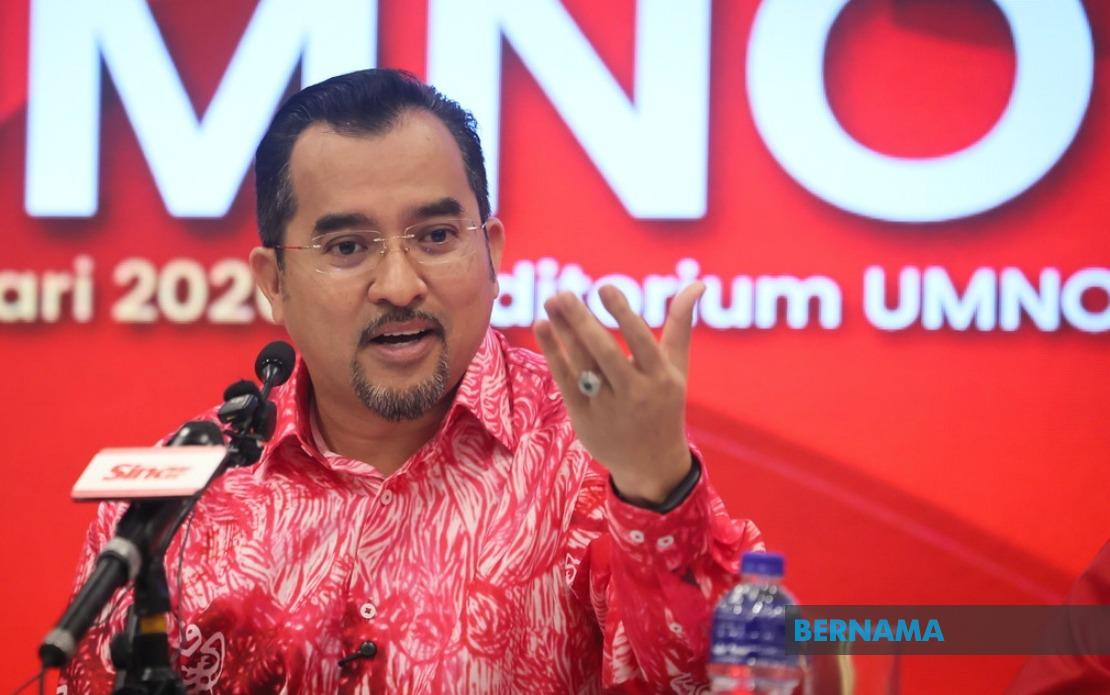
Senior UMNO member Datuk Dr Mohd Puad Zarkashi's departure from the party has been attributed to frustration over his son's exclusion from the candidate slate for the Rengit state assembly seat. The claim comes from UMNO secretary-general Datuk Dr Asyraf Wajdi Dusuki, who addressed the controversy through a Facebook statement on June 25, seeking to provide his interpretation of events leading up to Puad's resignation announcement.
Puad, a Supreme Council member within UMNO, had publicly declared his immediate withdrawal from the party earlier that day, citing a desire to express his views with greater freedom. However, Asyraf Wajdi's statement reframes the resignation as stemming from personal disappointment rather than any principled political disagreement. According to Asyraf Wajdi, Puad had written extensively to him warning that he would publicly criticise UMNO and leave the organisation should the leadership refuse to consider his son as a candidate for Rengit, one of the seats contested in the upcoming Johor state election.
The timing of this dispute is particularly significant given the imminent electoral cycle. The Johor State Legislative Assembly was dissolved on June 1, with nomination day scheduled for June 27 and polling set for July 11. Candidate selection therefore represents a critical juncture for UMNO as it prepares for what will be a crucial test of party unity and electoral strength in a state considered its traditional stronghold. The controversy surrounding Puad's resignation inevitably raises questions about how such decisions are made and whether party hierarchies respect meritocratic principles.
Ashraf Wajdi's response includes acknowledgement that Puad's son possesses youth and considerable potential for future political development. Yet the secretary-general argues that the party cannot operate on a basis of automatic progression or hereditary placement, emphasising instead that candidate selection requires consideration of multiple factors beyond individual promise. This defence appears designed to establish that the decision reflected organisational standards rather than personal animus toward Puad or his family.
The secretary-general further revealed that this was not Puad's first threat of party departure. During Datuk Seri Najib Tun Razak's presidency, Puad allegedly threatened to leave UMNO if he were not renominated as Member of Parliament for Batu Pahat, establishing a pattern according to Asyraf Wajdi of using resignation threats as leverage for political demands. By publicising this history, the UMNO leadership appears intent on characterising Puad's current exit as part of a continuing pattern of conditional loyalty rather than a sudden principled break.
Puad's resignation announcement also included allegations that the Johor palace exercised control over UMNO's Johor branch and had ordered the dissolution of the State Legislative Assembly. Asyraf Wajdi's response categorises these claims as slander, rejecting the suggestion of palace interference in party operations. This denial carries particular weight given longstanding questions within Malaysian political circles regarding the relationship between state institutions and party machinery, especially in states with active royal houses.
The secretary-general's statement articulates a forceful position on party discipline and the relationship between personal interest and organisational purpose. Asyraf Wajdi stressed that UMNO cannot be classified as a hereditary political party that allocates senior positions to family members or relatives primarily because of kinship. Instead, he framed the party as an institution larger than any individual ambition, whose struggle encompasses broader themes of race, religion and nationhood. This framing implicitly suggests that personal grievance over candidacy ought to be subordinated to party loyalty and the collective effort.
The contention that UMNO should not yield to pressure from individuals threatening to leave or attack the party represents a hardline position on internal governance. By making this stance explicit through the secretary-general, UMNO leadership signals that it will not negotiate with members who employ public criticism or resignation threats as bargaining tools. Such an approach reinforces hierarchical decision-making while potentially signalling inflexibility to those within the party structure who harbour similar frustrations.
For Malaysian observers, this episode illustrates persistent tensions within traditional parties between meritocratic advancement and factional interests. The Rengit candidacy dispute does not occur in isolation but reflects deeper questions about how UMNO selects and develops its future cohort of elected representatives. Whether candidate selection truly reflects merit and strategic considerations, or whether family and patronage networks continue to influence outcomes, remains contested terrain within Malaysian politics.
The broader context of Johor's upcoming state election adds urgency to such internal disputes. Dissatisfaction among party members, particularly senior figures like Puad, can translate into reduced campaign vigour, lost institutional knowledge, or defection to rival coalitions. UMNO's ability to retain unity while making decisions perceived as fair directly impacts its electoral performance in states where it remains the dominant force.
Ashraf Wajdi's public response also serves to establish the official party narrative regarding Puad's departure, framing it as an individual's failure to accept normal party processes rather than as symptomatic of deeper governance challenges. By highlighting Puad's previous threats and his son's relative youth, the secretary-general positions the party as having acted reasonably and consistently. Whether this narrative proves persuasive to the broader UMNO membership, and whether Puad's departure remains an isolated case or signals broader dissatisfaction, will become clearer as Johor approaches its July 11 election.

